
Driver’s guide
We answer the questions we hear most often in the workshop: how to recognise a fault, when to service your car and what the repair price depends on.
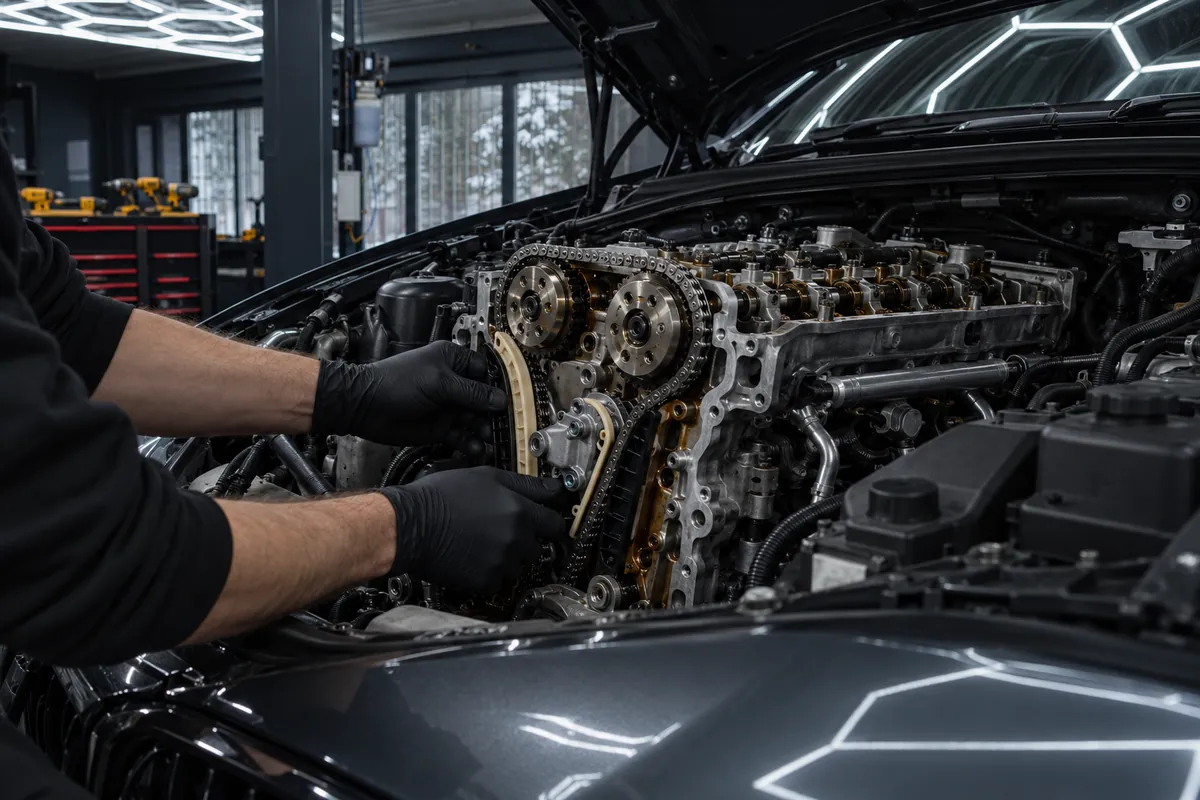
Timing Belt & Chain Replacement — Symptoms, When and How Much
The timing system is one of the few faults where delay can destroy the whole engine. We explain how to spot a worn belt or chain and what the replacement cost depends on.
Read
Wheel Alignment — When to Get It and How to Spot a Bad One
Misaligned wheels mean faster tyre wear, worse handling and higher fuel use. We explain when to get an alignment done and why it is worth checking the suspension first.
Read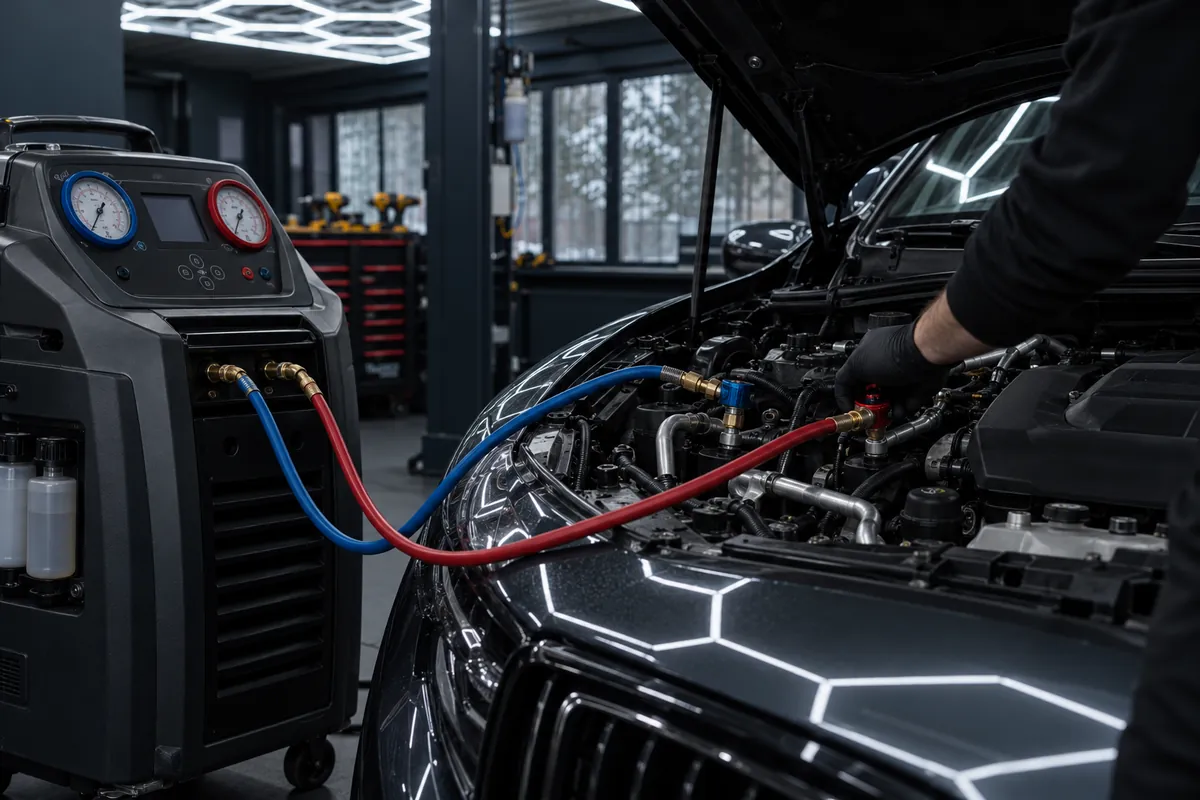
AC Refill — Cost, How Often, and Which Refrigerant
Air conditioning cools a little worse every year, because the system naturally loses refrigerant. We explain how often to service it and what the price is made up of.
Read
Check Engine Light — What It Means and Whether You Can Keep Driving
An orange engine light means the ECU has logged a fault. Sometimes it is minor, sometimes the start of something serious. We explain how to react.
Read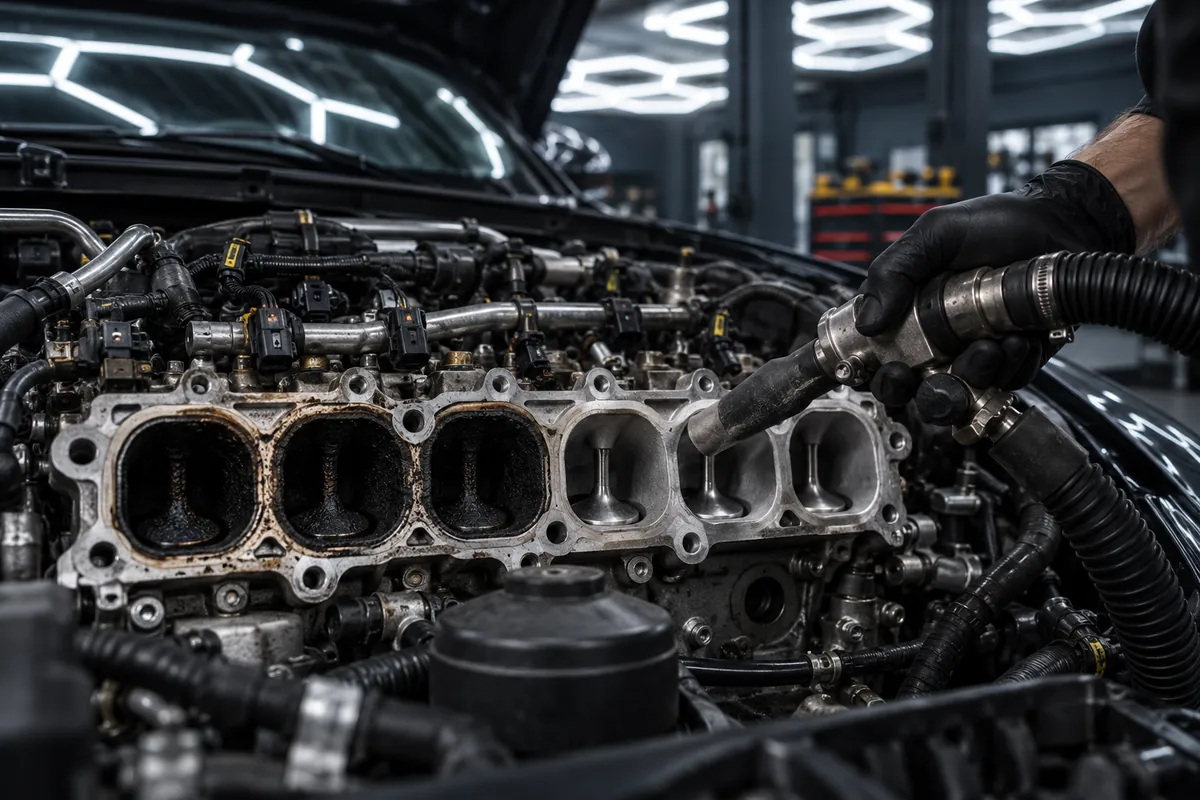
Intake Port Cleaning — Carbon Buildup Symptoms and When It’s Worth It
Direct-injection petrol engines have one weak point: carbon buildup on the intake valves. We explain where it comes from and how to remove it effectively.
Read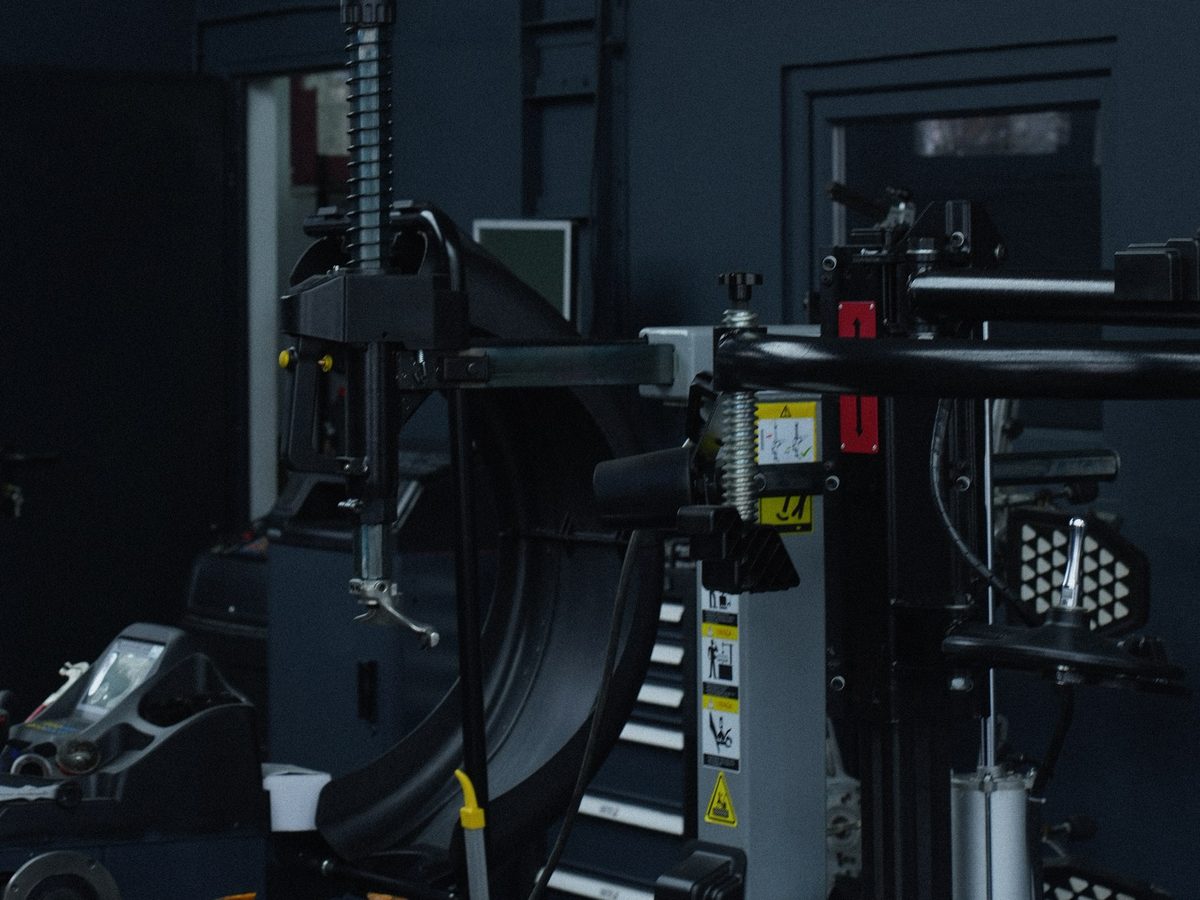
When to Switch to Winter and Summer Tyres
In Poland there is no legal requirement to use winter tyres, but the difference in braking distance on cold roads is huge. We explain when to switch tyres and how to judge their condition.
Read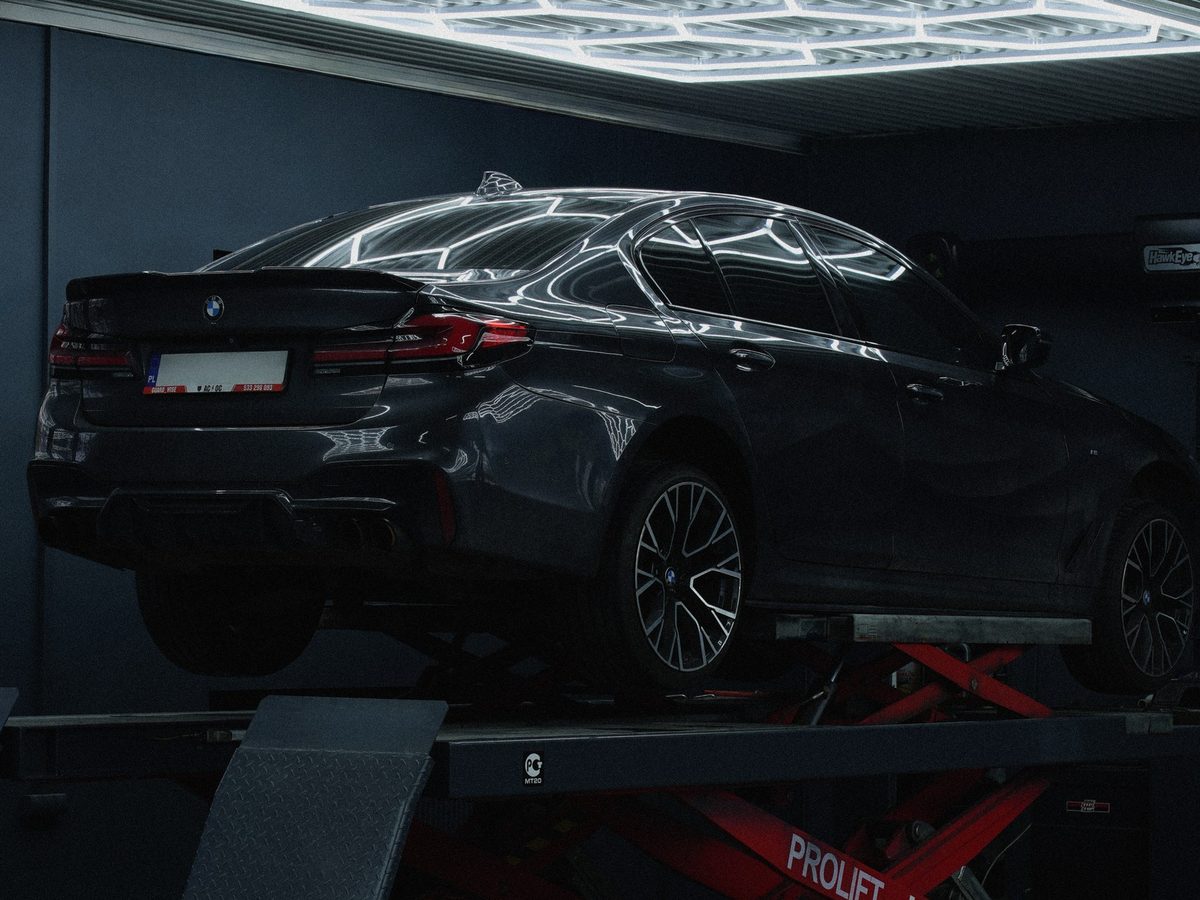
Pre-Purchase Car Inspection — What We Check
A few hundred zloty spent on a pre-purchase inspection can save you thousands. We describe what is worth checking and what the inspection looks like at our workshop.
Read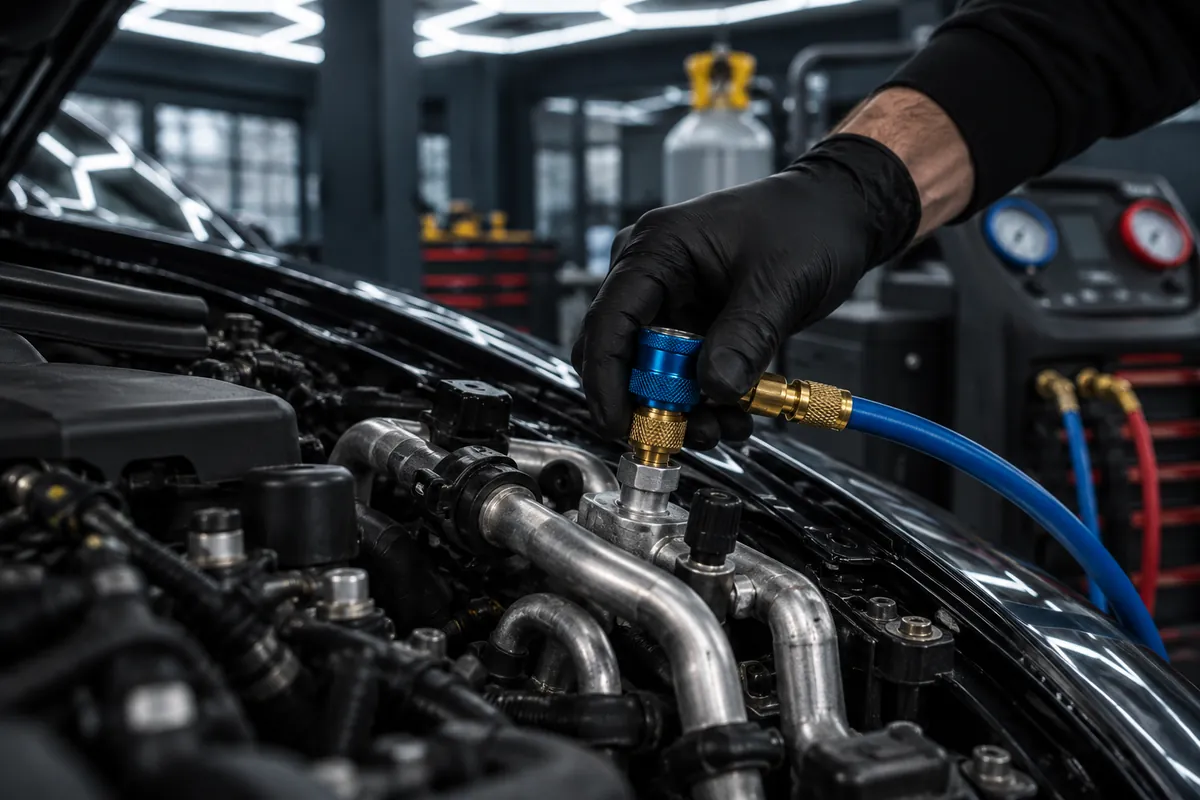
R1234yf vs R134a — differences, EU rules and whether you can switch
An A/C system is always filled with the refrigerant it was designed for — R1234yf or R134a. We explain the differences, the rules and why you should never swap or mix them.
Read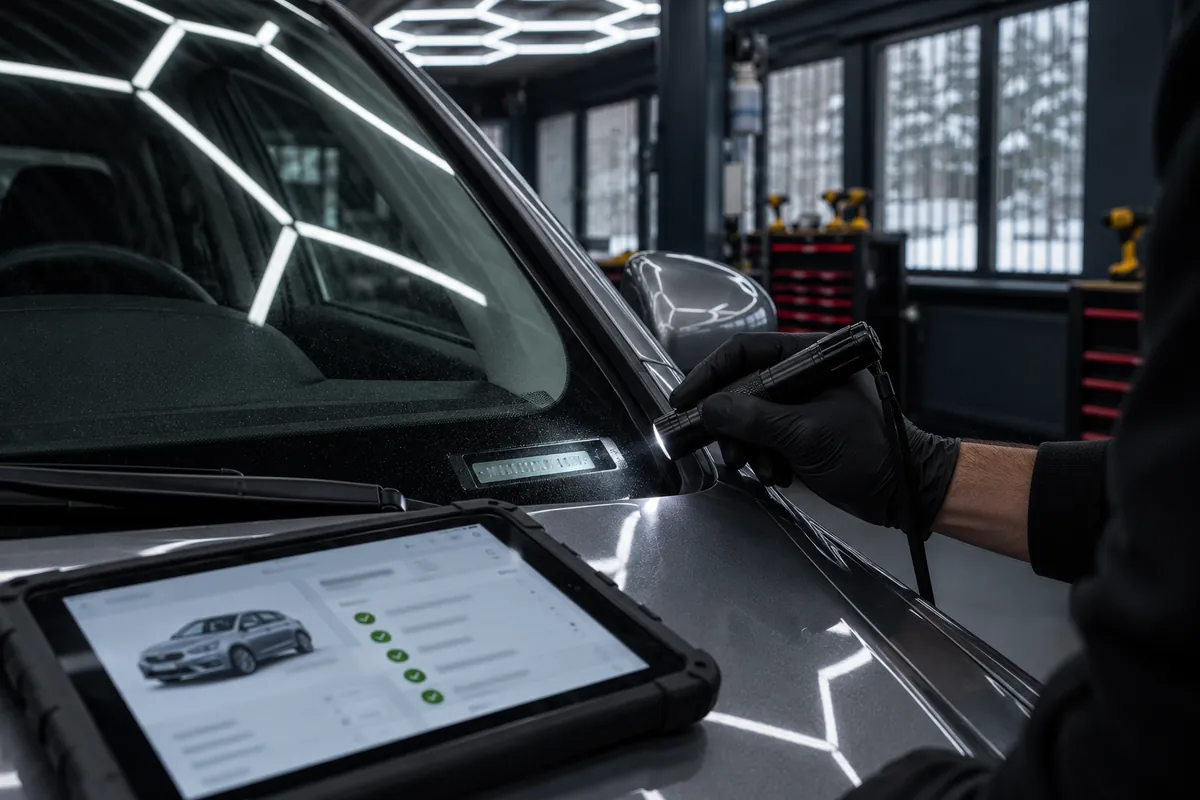
Checking a car by VIN number — vehicle history in Poland
The VIN is the fastest way to check a car’s mileage, inspections and status before you buy. We explain how to read it, where to check the history for free and why it does not replace an inspection.
Read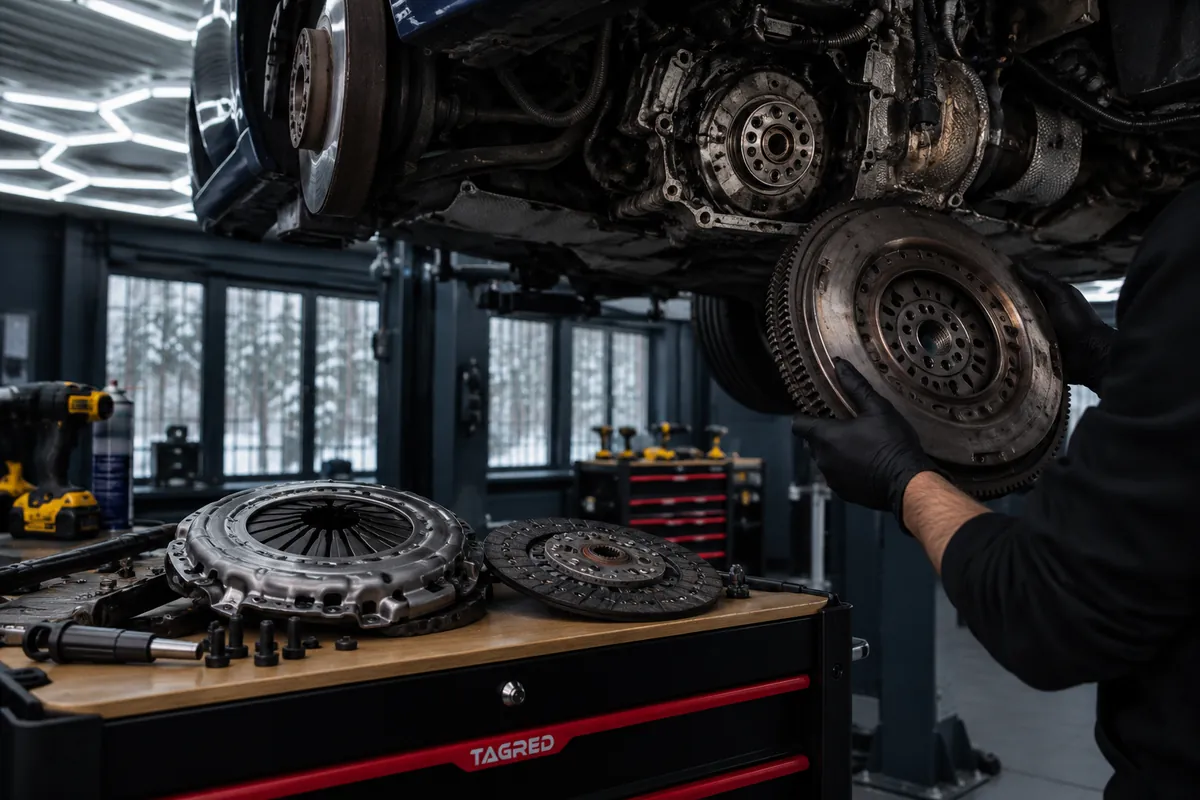
Dual-mass flywheel — symptoms, diagnosis and replacement with the clutch
A worn dual-mass flywheel shows itself through knocks and vibration that are easy to confuse with other faults. We explain how to recognise it, tell it apart from a worn clutch and when replacement is really needed.
Read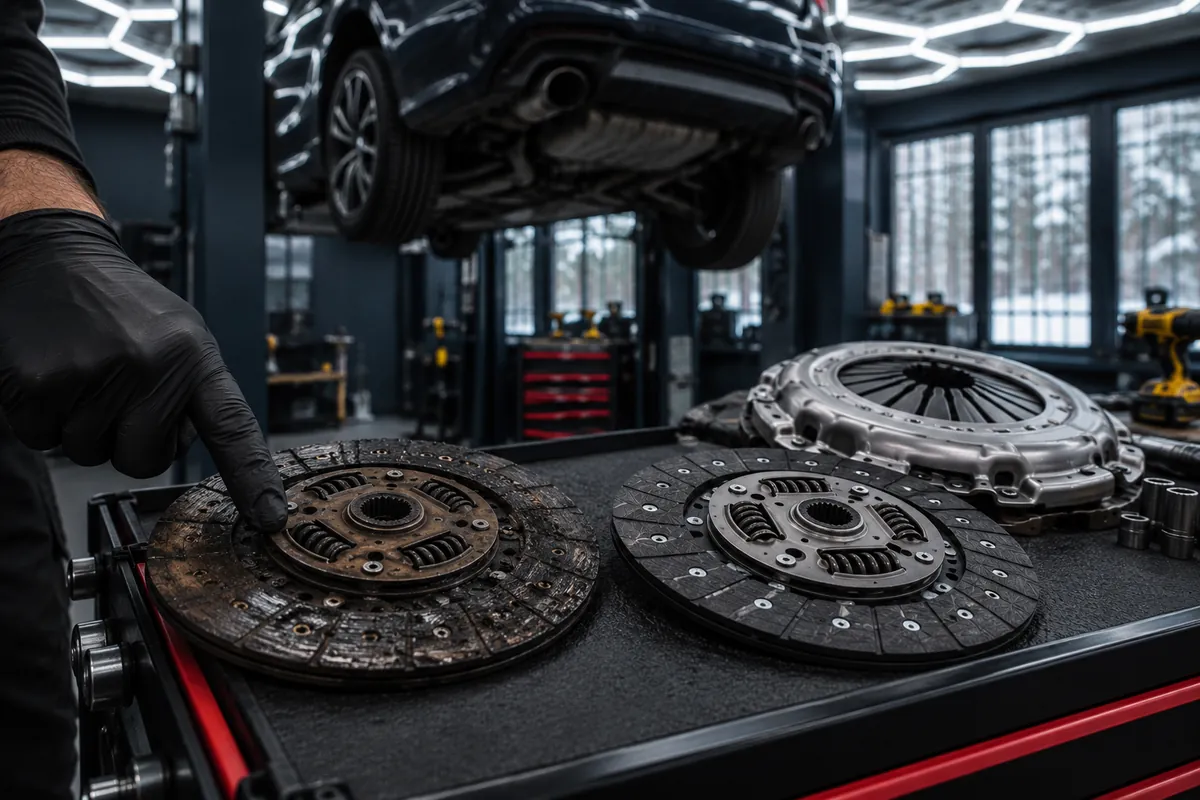
Slipping clutch — symptoms, a simple test and repair
The engine revs up but the car does not speed up? That is the classic sign of a slipping clutch. We show how to check it, what causes it and why the repair should not be put off.
Read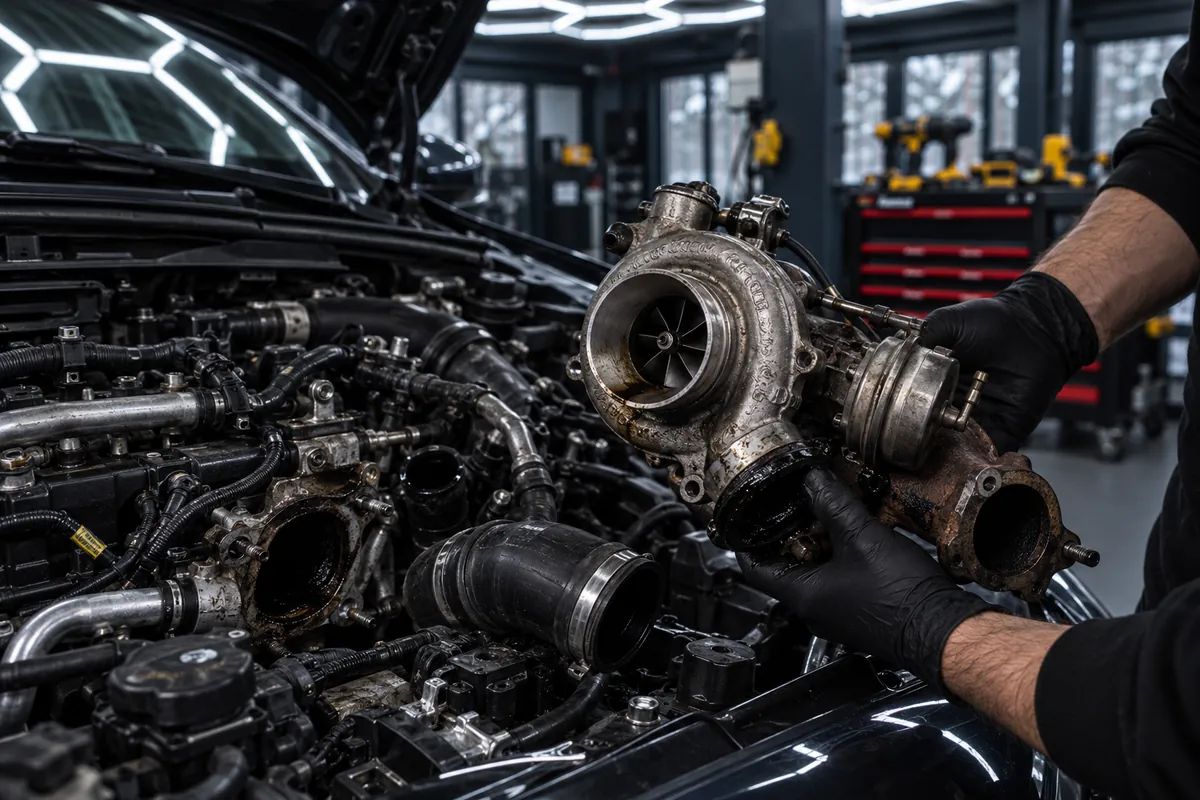
Turbo Failure Symptoms — How to Recognise a Bad Turbocharger
Power loss, whistling or smoke do not always mean a broken turbo — often a hose, actuator or sensor is to blame. We explain how to spot a real turbo failure, why turbos fail and what replacement costs.
Read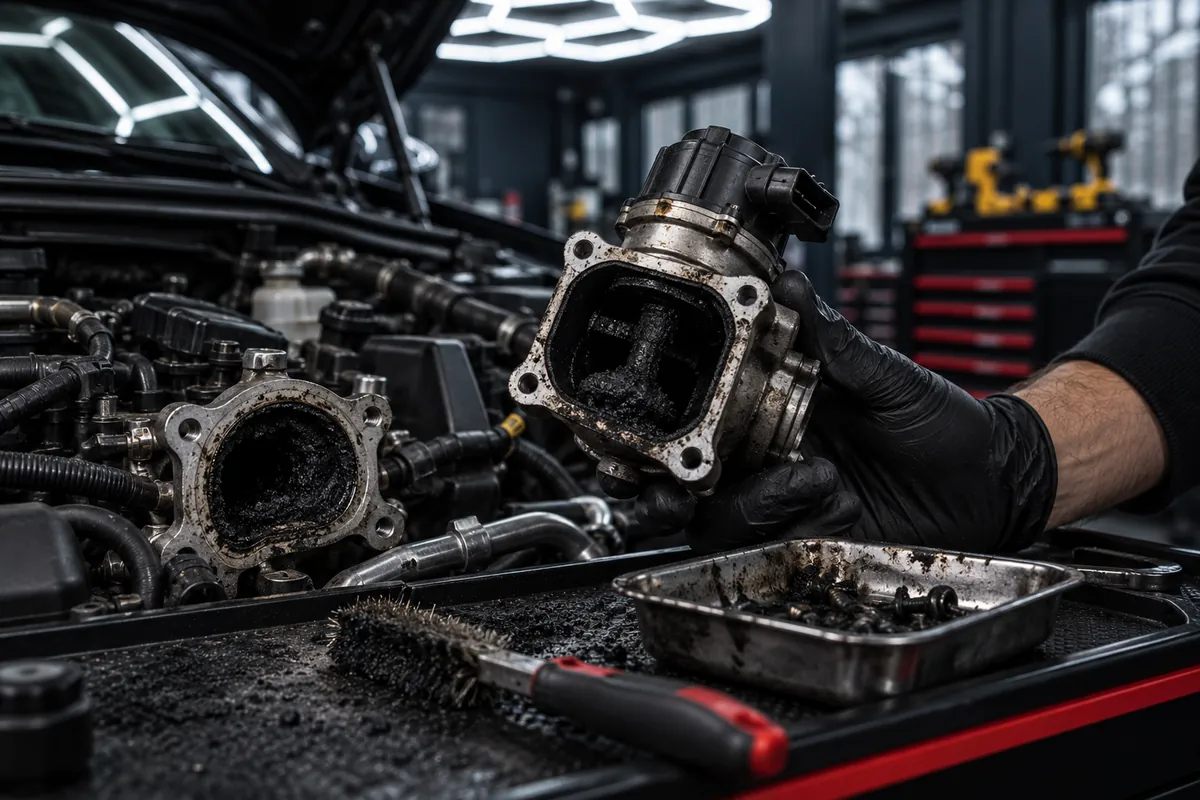
EGR Valve — Fault Symptoms, Cleaning or Replacement
A clogged EGR valve can seriously upset how an engine runs, especially in a diesel driven around town. We explain how to recognise the fault, when cleaning is enough and why disabling the EGR is not worth it.
Read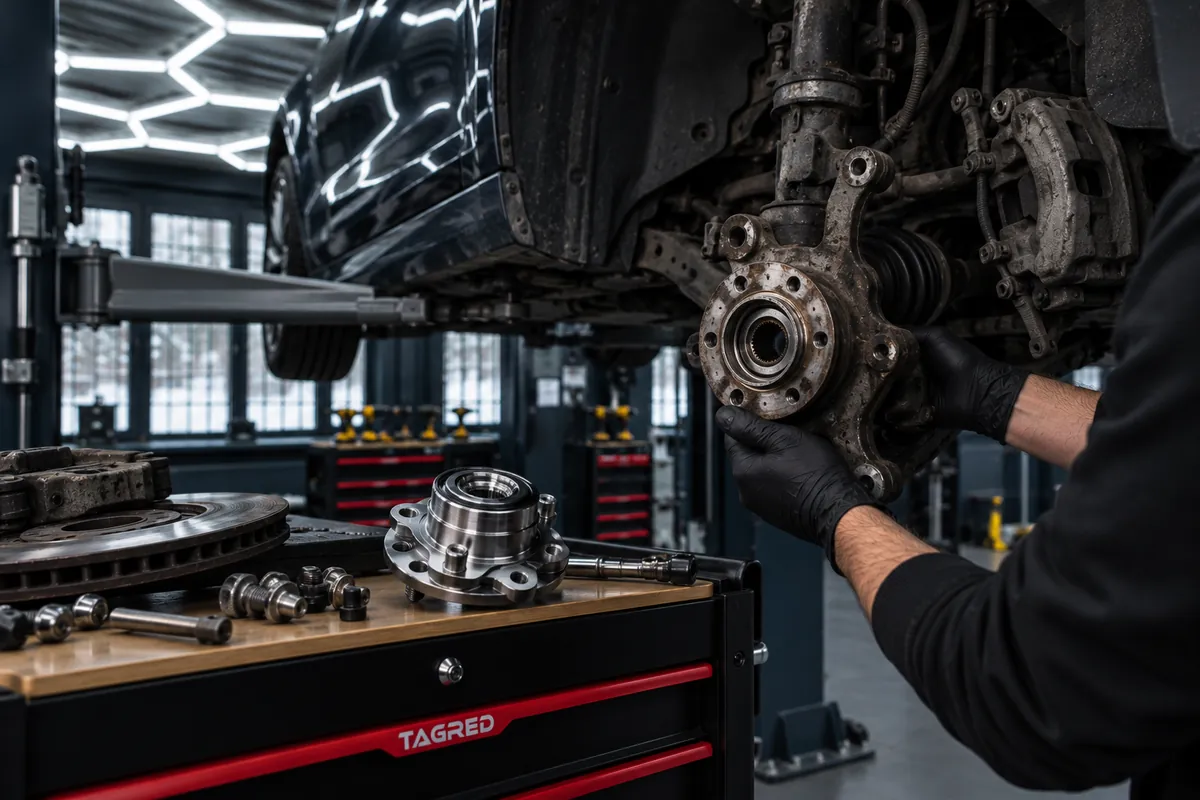
Wheel bearing — symptoms, diagnosis and when to replace it
Wheel bearing noise is easily mistaken for tyre noise, and a neglected bearing can seize. We explain how to recognise the symptoms, how we diagnose it and what the cost of replacement depends on.
Read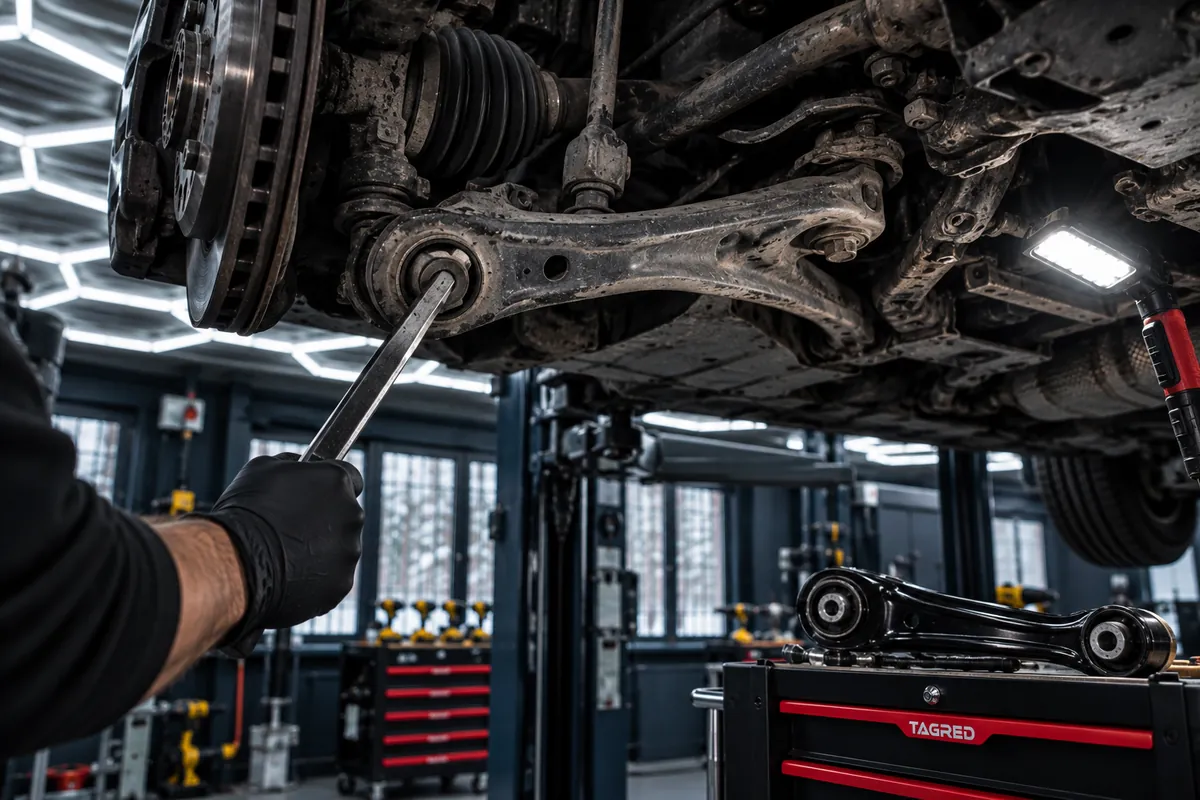
Control arm or bushings — signs of wear and what is worth replacing
You don’t always need a whole new control arm — sometimes new bushings are enough. We explain how to recognise worn rubber and ball joints, how we diagnose them and what the repair costs.
Read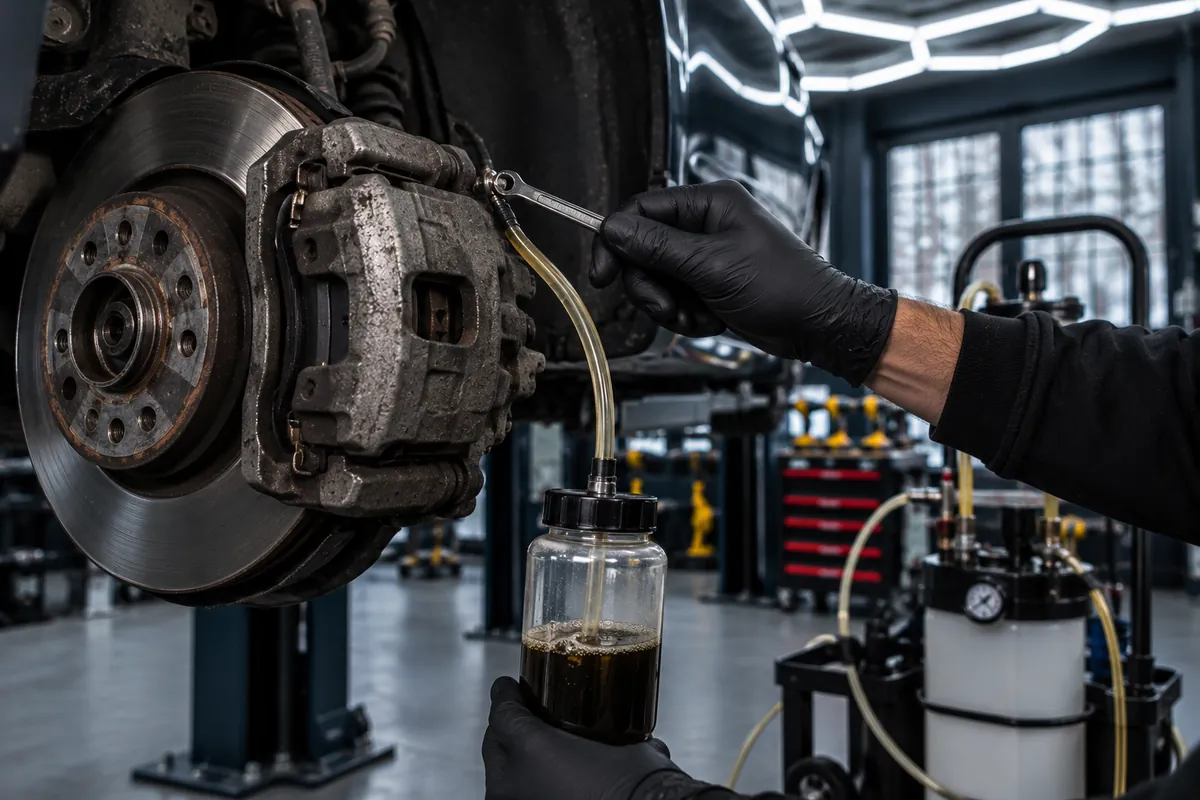
Soft Brake Pedal — Causes, What to Do and Repair Cost
A spongy or sinking brake pedal means the hydraulic system is losing effectiveness. We explain where it comes from, what to do right away and why brake fluid is changed every 2 years.
Read
Engine Oil Consumption — What Is Normal, Causes and Repair
Slight oil consumption is normal, but a litre every 1000–2000 km is a reason for a diagnosis. We show how to measure consumption correctly, where it comes from and what can be fixed.
Read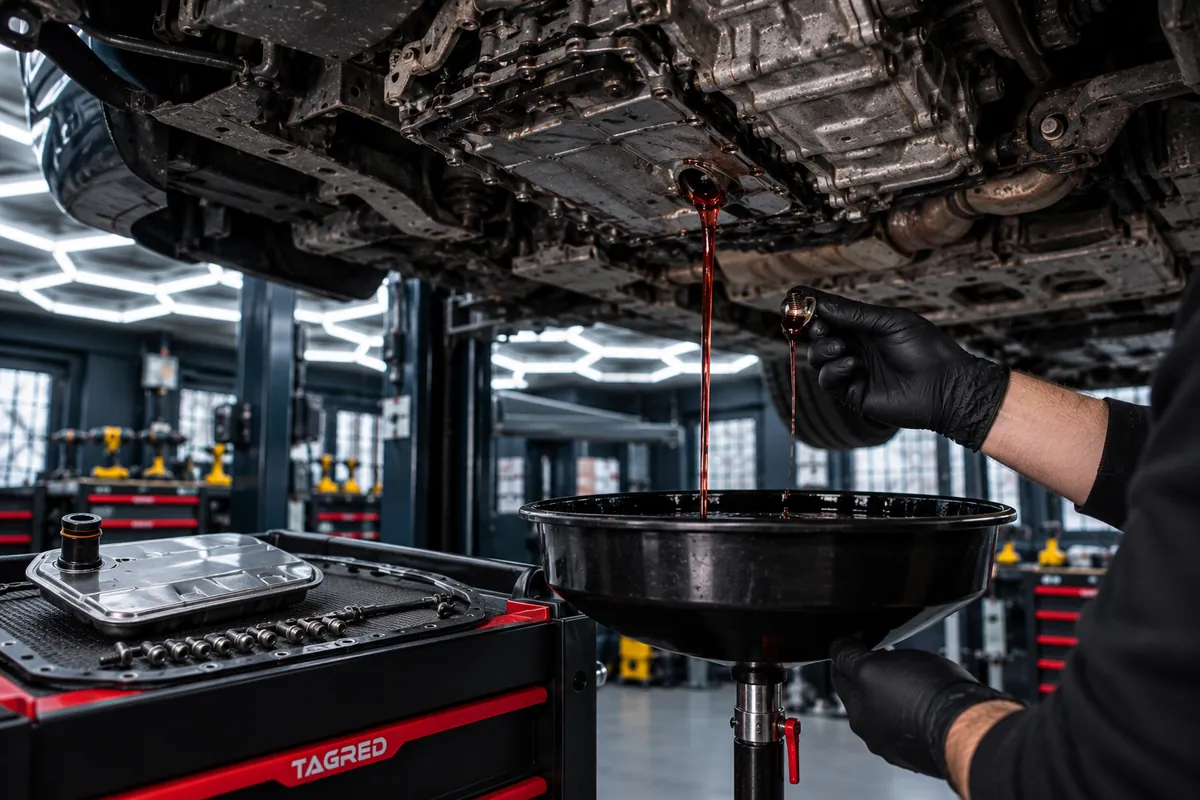
Automatic transmission fluid change — interval, symptoms and cost
“Lifetime” fluid wears out too, and neglected fluid can shorten a gearbox’s life. We explain how often to change the fluid in automatic, DSG and CVT gearboxes and what the cost depends on.
Read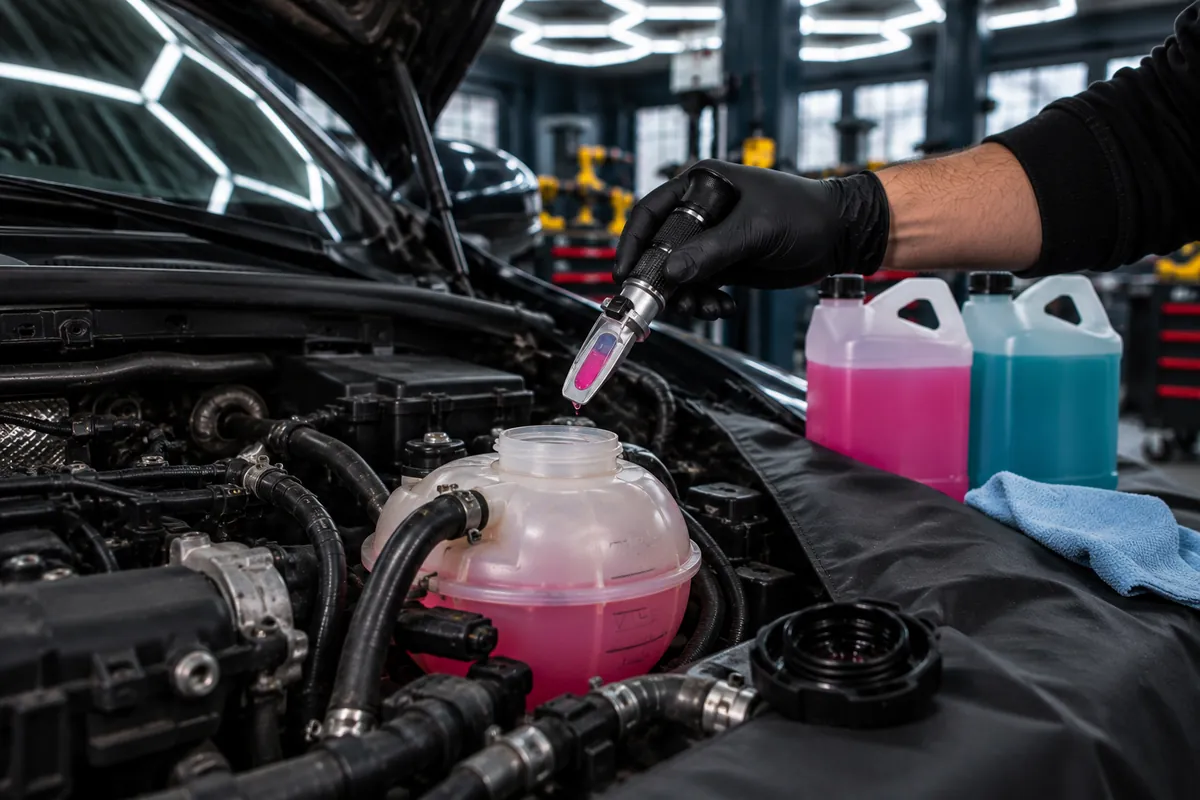
Which coolant to choose — types, mixing and replacement
Coolant is chosen by the manufacturer’s spec, not by colour. We explain how coolant types differ, what mixing can lead to, how to dilute concentrate and what to do when you run low on the road.
Read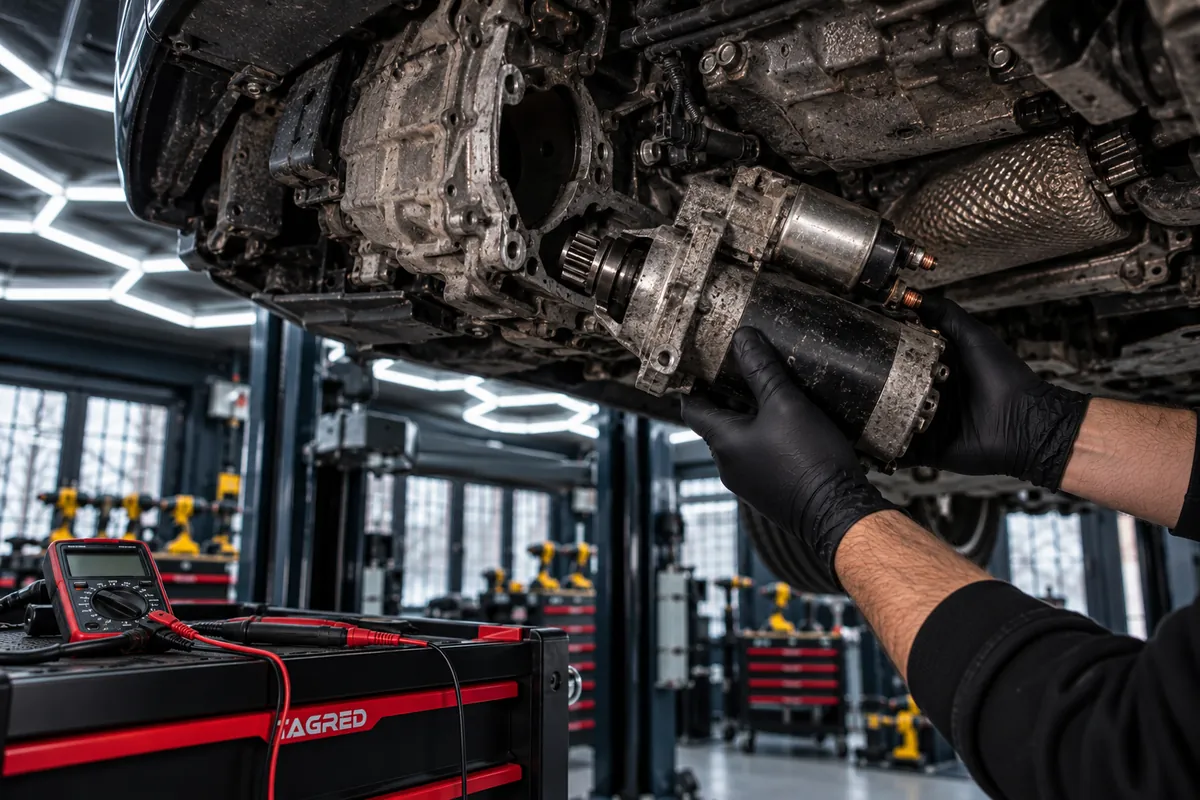
Starter motor — failure symptoms, diagnosis, remanufacture or replace
A click instead of a start does not always mean a dead starter — a weak battery or a corroded earth behaves the same way. We explain how to find the real cause and when remanufacturing pays off.
Read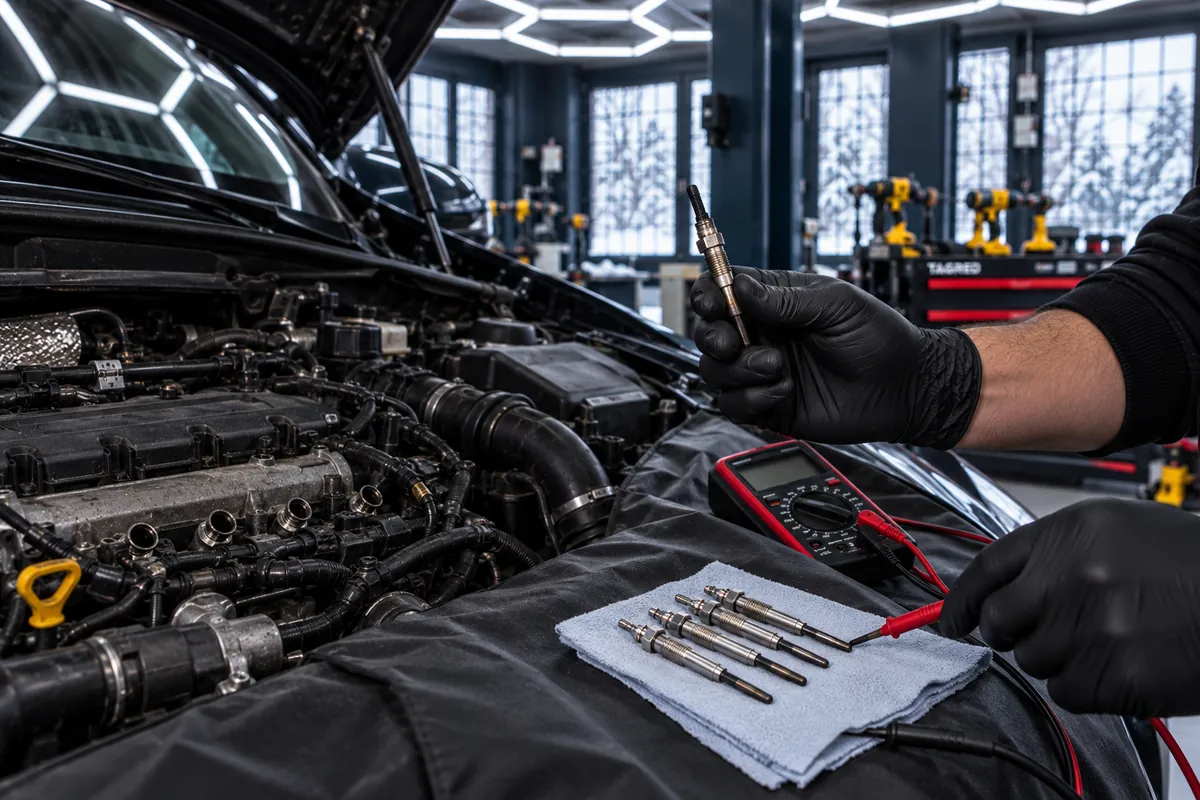
Glow plugs, spark plugs and the battery in winter — symptoms and replacement
The first frost mercilessly exposes worn plugs and a weak battery. We explain how to find the cause of hard starting in diesel and petrol cars and what to check before winter leaves you stranded.
Read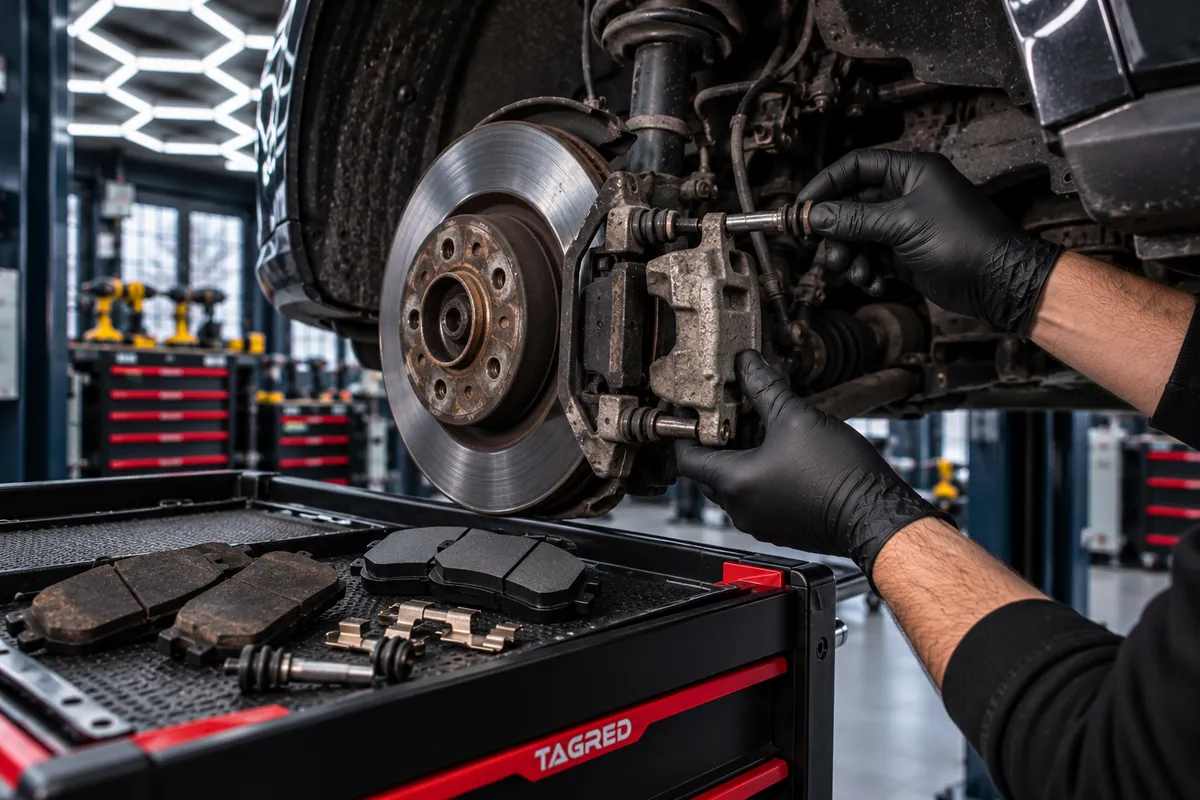
Knocking When Braking — Causes, How to Tell Them Apart and Repair Cost
A knock when braking can come from the brakes or from the suspension. We explain how to identify the cause from the symptoms, when you must stop and how we diagnose the problem.
Read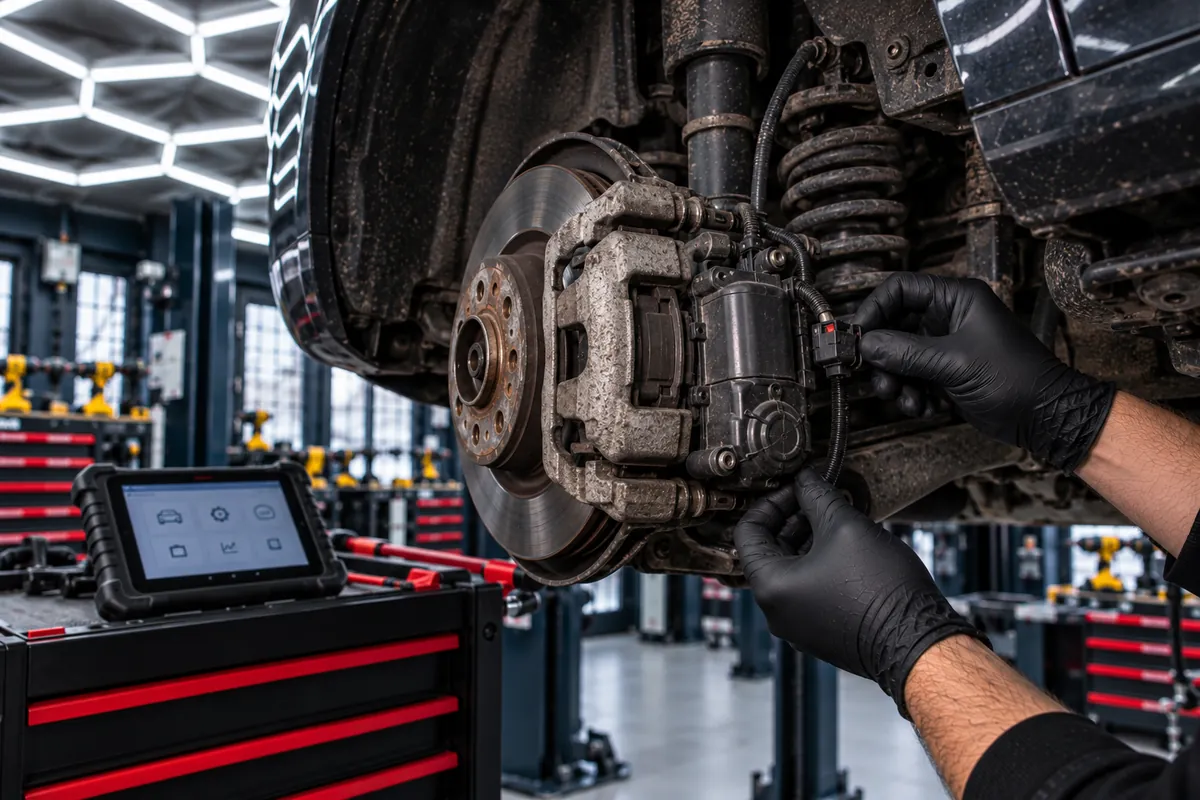
Handbrake — Adjustment, EPB Faults and Inspection Problems
A weak parking brake is not only a problem on a slope but also a common reason for failing the technical inspection. We explain when adjustment is enough and when the mechanism or EPB needs repair.
Read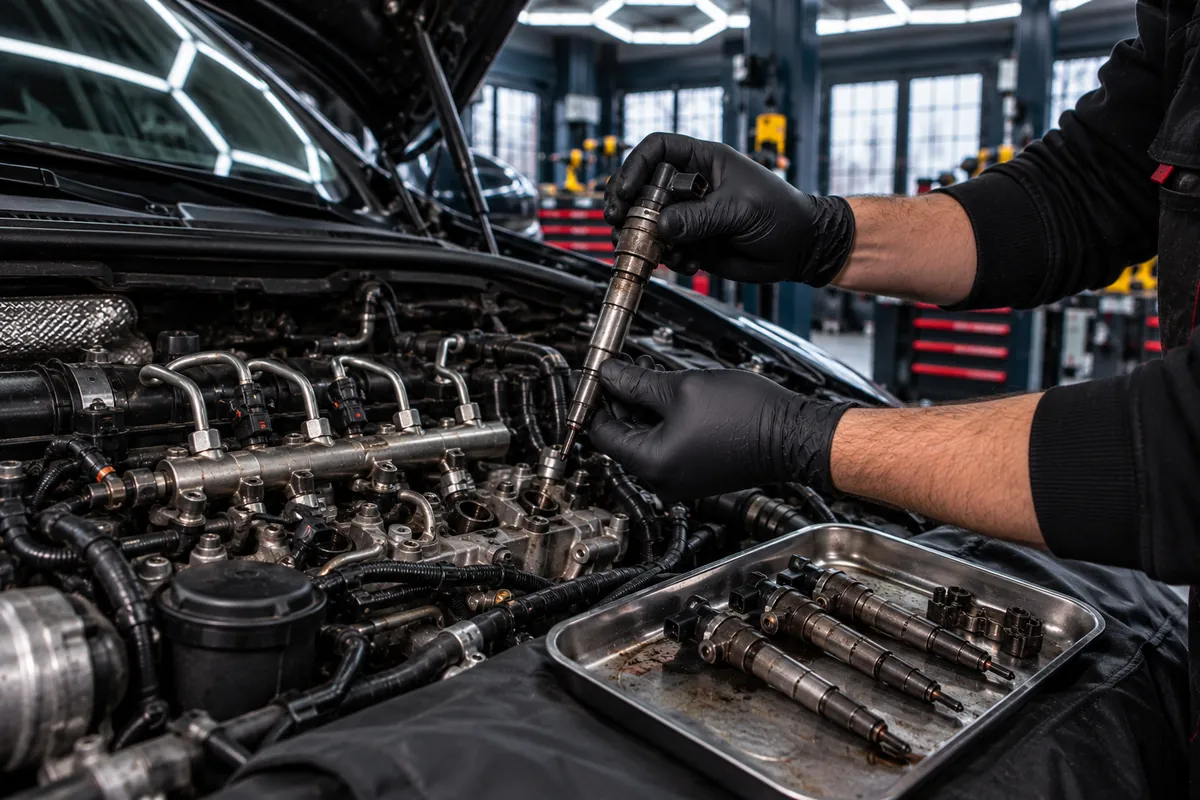
Faulty Fuel Injector Symptoms — Diagnosis, Rebuild or Replacement
A rough idle, hard starting or exhaust smoke do not always mean failed injectors. We explain what correction values and the leak-off test reveal, when cleaning is enough and when replacement with coding is needed.
Read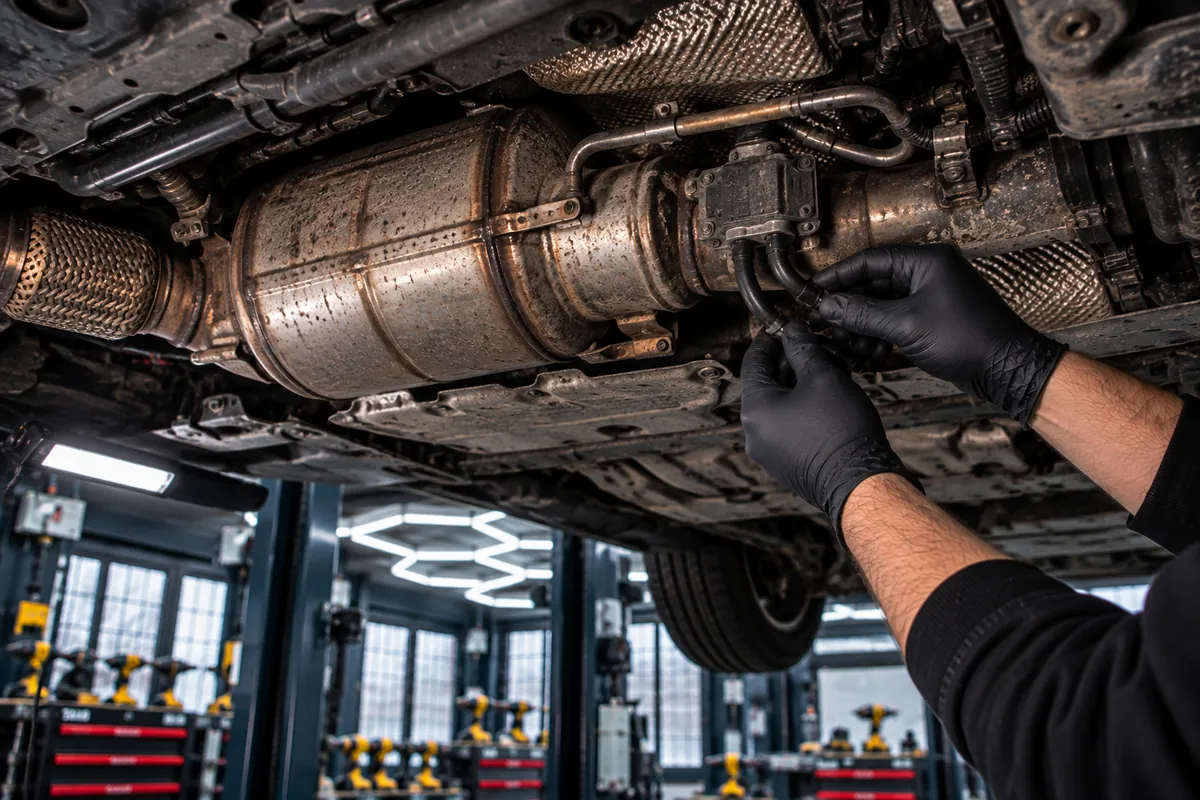
DPF and AdBlue in a Euro 6 Diesel — Fault Symptoms and How to Cut Costs
A Euro 6 diesel means a DPF, an SCR catalyst and AdBlue — systems that can get expensive if the car is used the wrong way. We explain how they work, how to spot a fault and what to do to avoid overpaying.
Read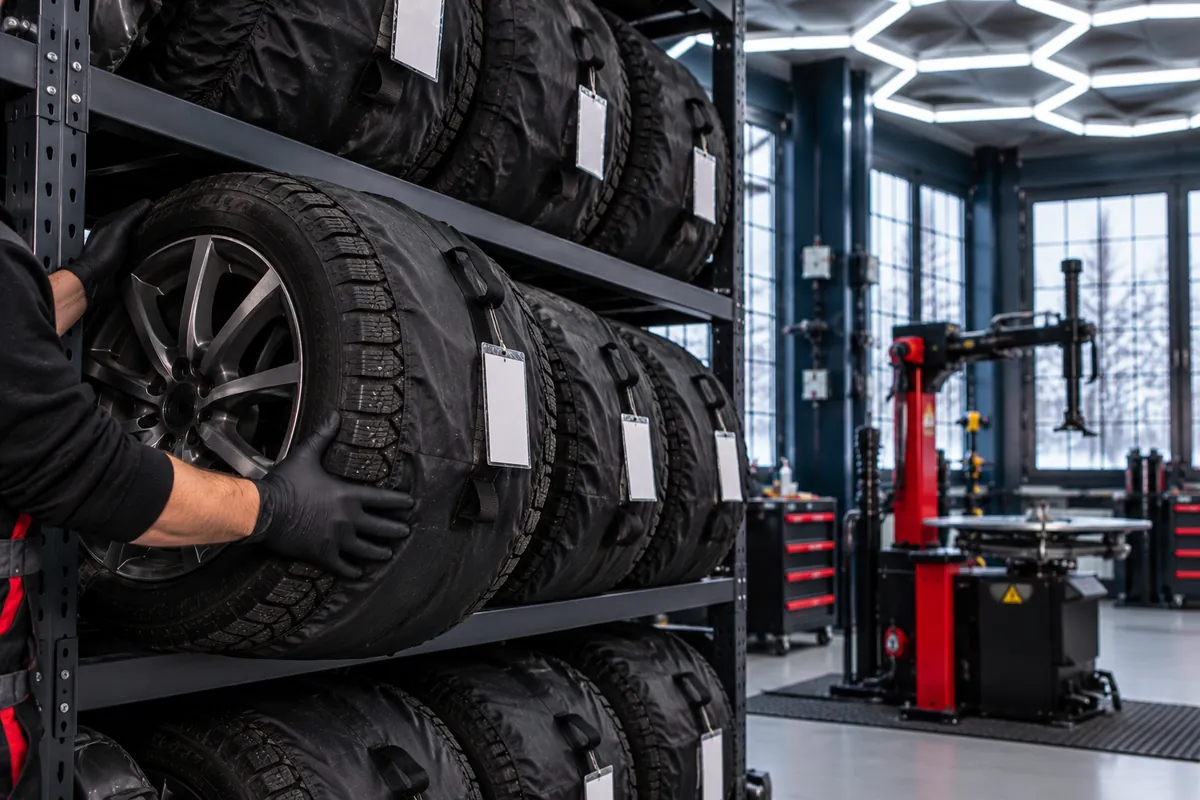
Tyre storage — how to do it so your tyres last longer
Badly stored tyres age faster and can deform before they even go back on the car. We explain how to store wheels on rims and bare tyres, which conditions to avoid and when it is simpler to use a tyre hotel.
Read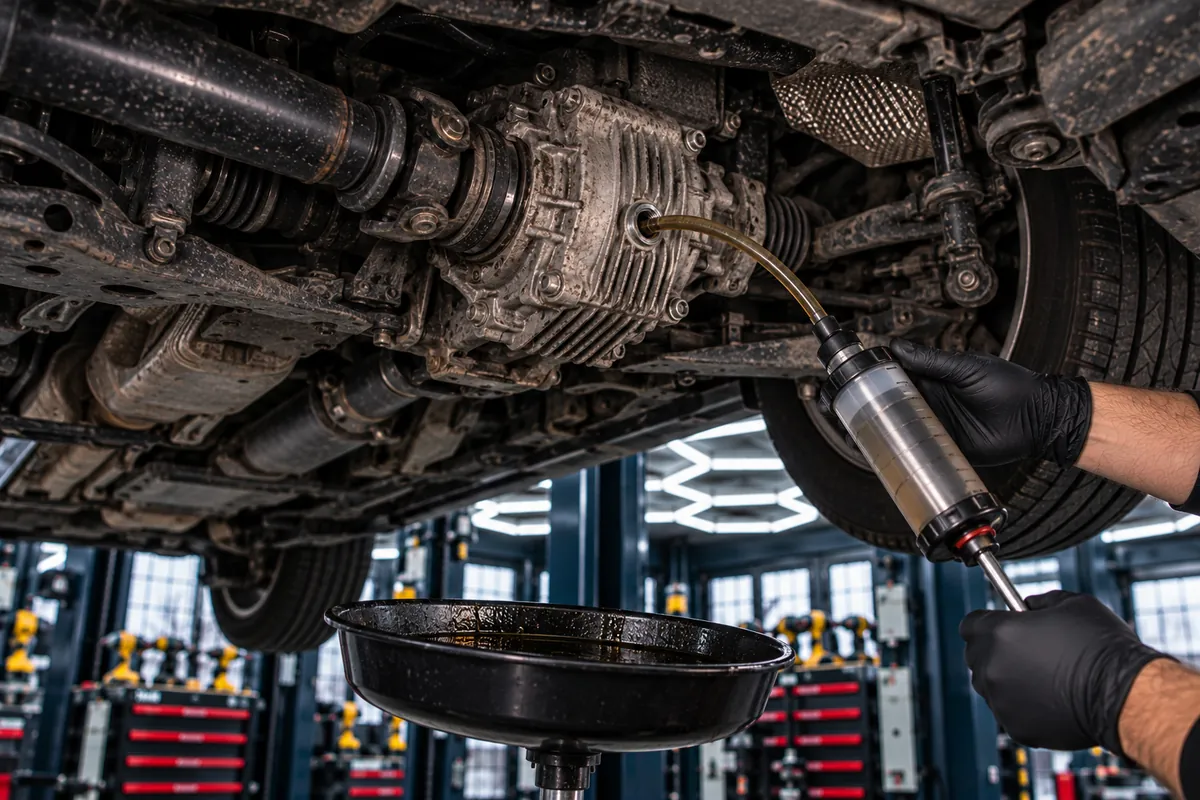
4x4 drivetrain — Haldex, xDrive and quattro oil: when to change it
Drivetrain oil rarely appears in the service schedule, yet the coupling, transfer case and differentials depend on it. We explain how Haldex, xDrive and quattro work, how to spot a neglected drivetrain and what servicing costs depend on.
Read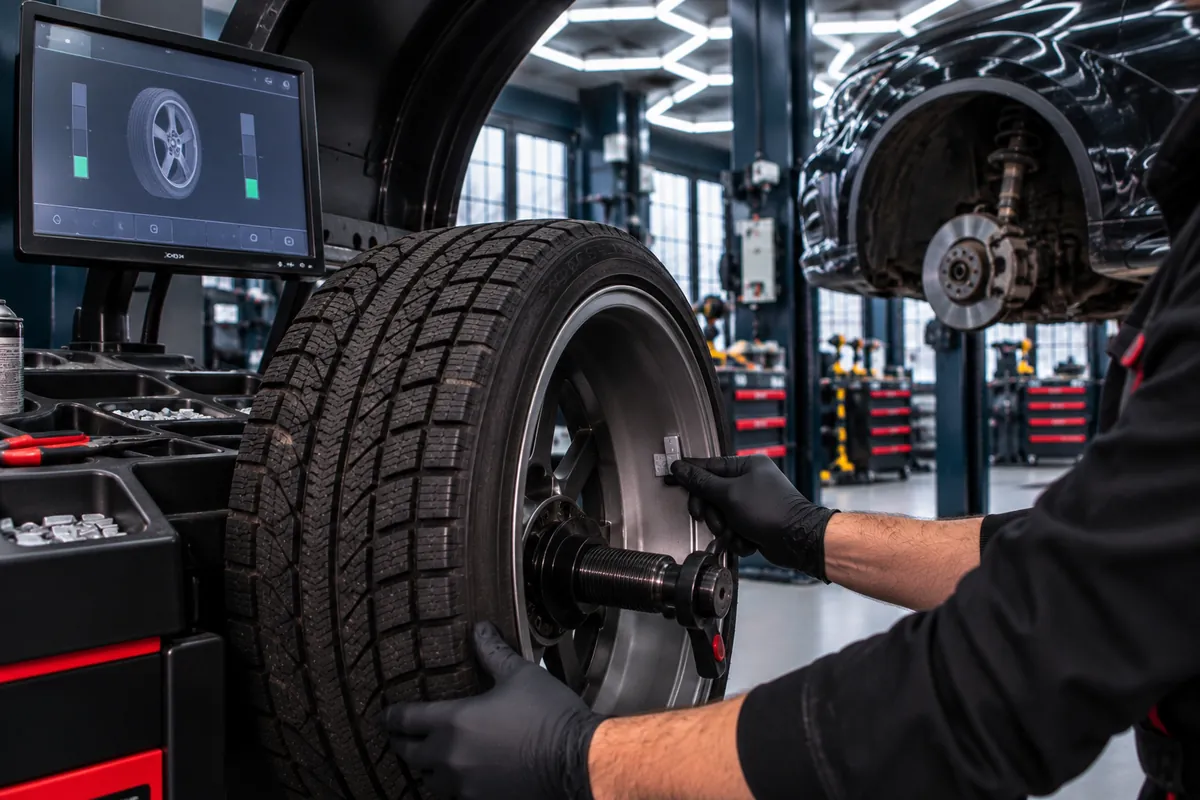
Steering wheel vibration — causes at speed, when braking and at idle
When the steering wheel shakes tells you most about the cause: wheels, brake discs, play in the steering or engine mounts. We explain how to recognise it, how we diagnose vibration and what the repair costs.
Read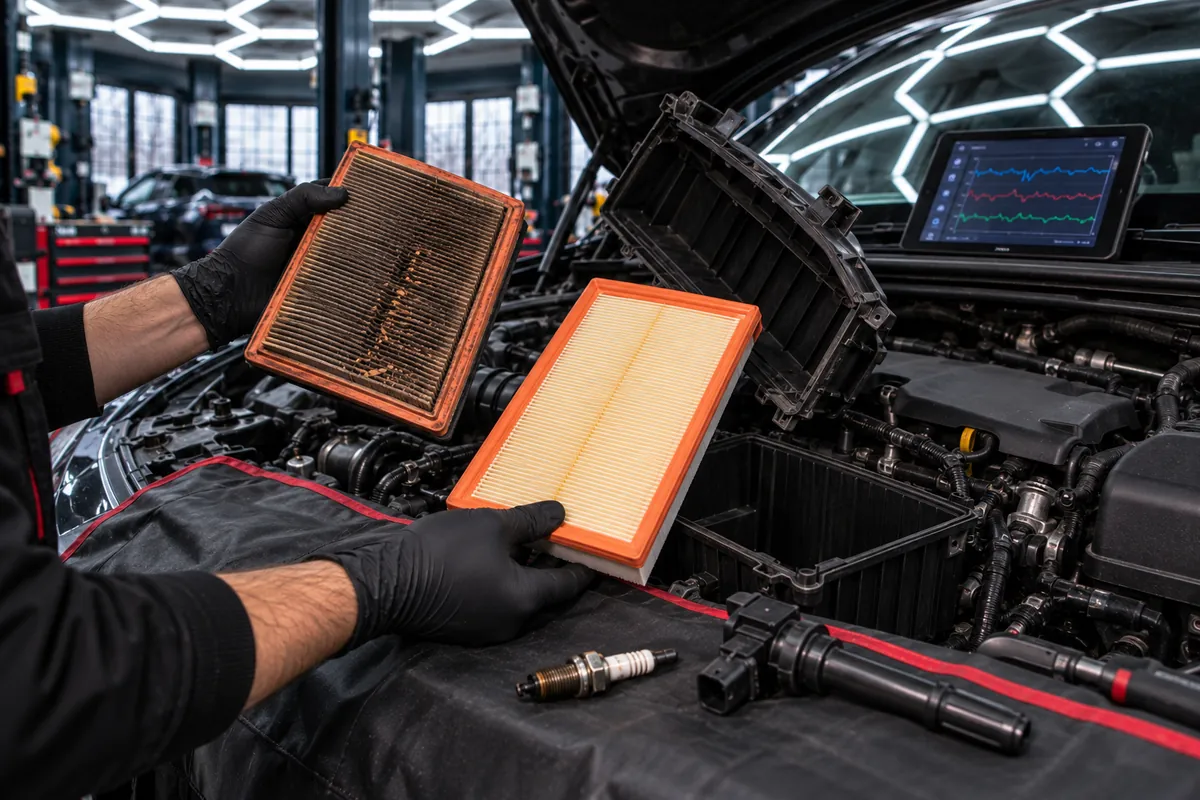
Higher fuel consumption — causes, measurement and diagnosis
Higher consumption can be normal in winter and on short trips, but it often signals a fault: a dragging brake, worn spark plugs, a lambda sensor or the thermostat. We show how to measure consumption correctly and how we find the cause.
Read
Car heater not working — why it is cold inside, diagnosis and repair
Cold air from the vents with a warm engine is most often down to the thermostat, low coolant or air in the system. We explain how to find the cause, what to check yourself and when a lack of heat points to a more serious fault.
Read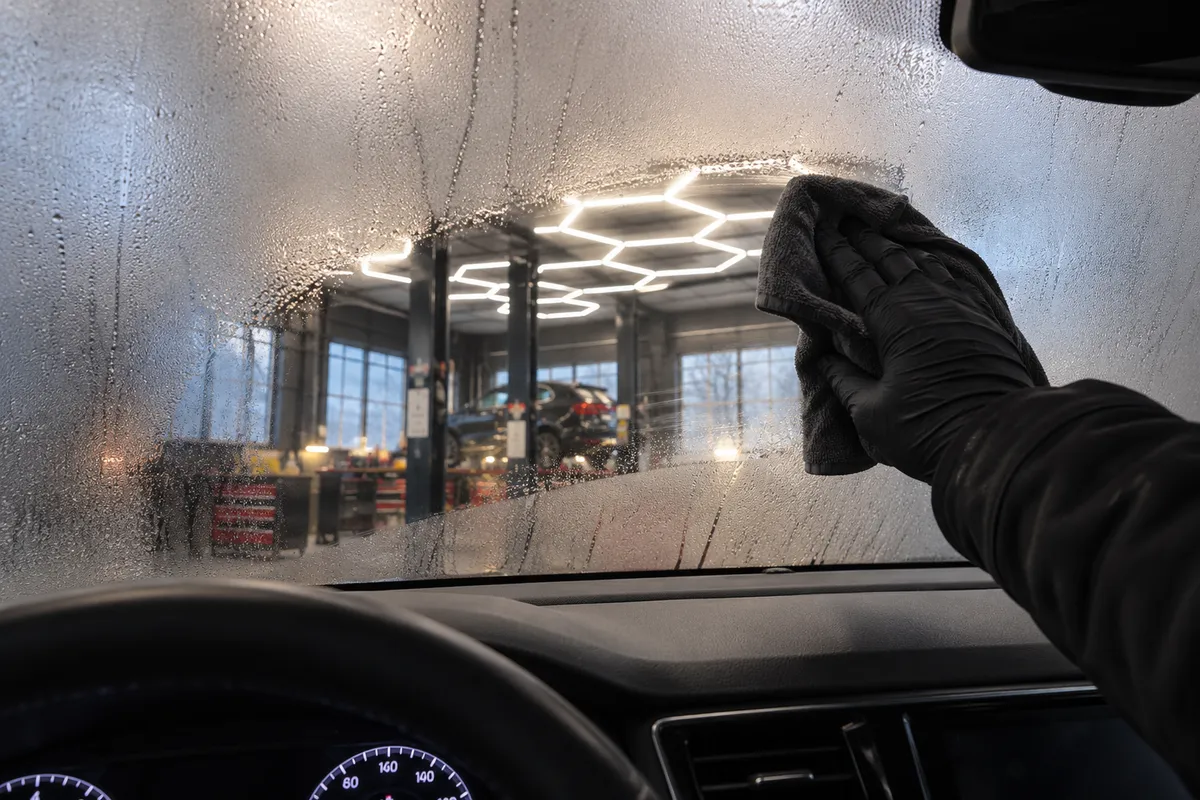
Car windows misting up — causes, quick demisting and prevention
Windows mist up on the inside when there is too much moisture in the cabin and the air is not being dried. We explain where water in the car comes from, how to clear the glass in a few minutes and when misting points to a fault such as a leaking heater core.
Read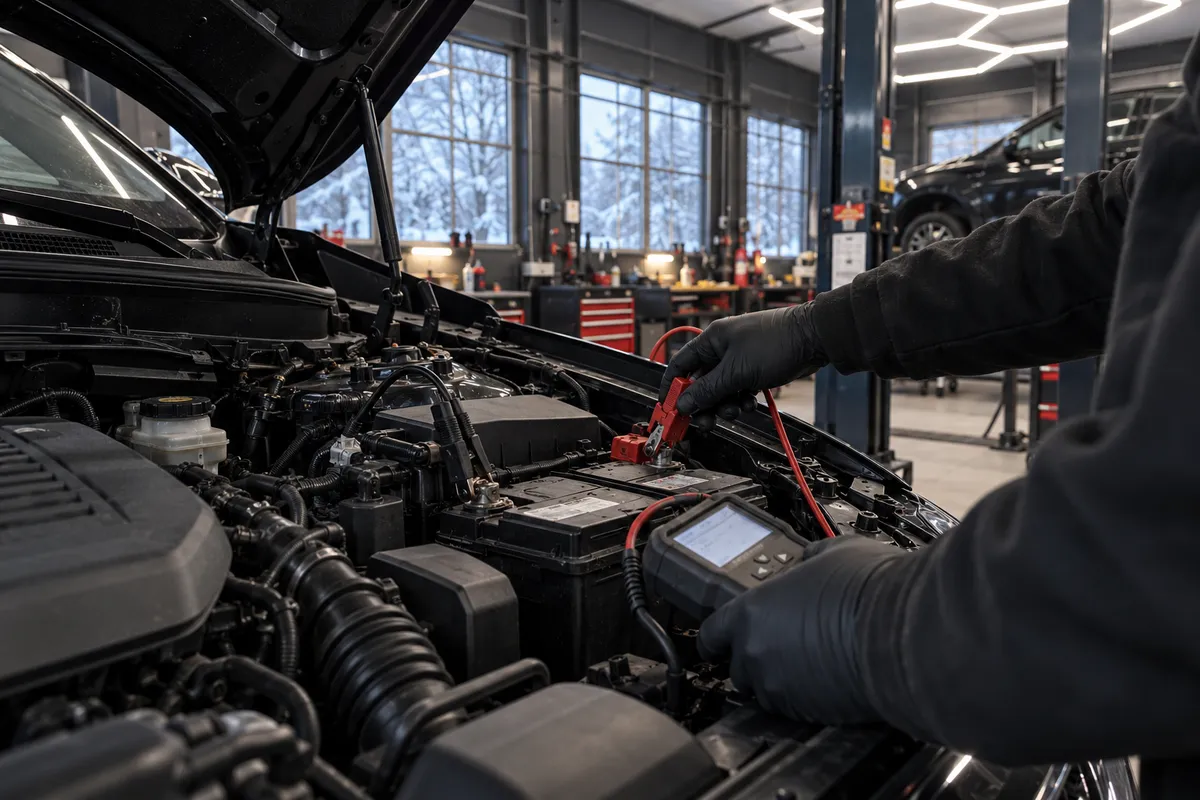
Car battery in winter — weak battery symptoms, voltage check and diagnosis
Frost mercilessly exposes a weak battery: the starter turns slowly, warning lights flicker and start-stop stops working. We explain how to check the battery, when to charge it and when to replace it, and how to tell it apart from an alternator fault.
Read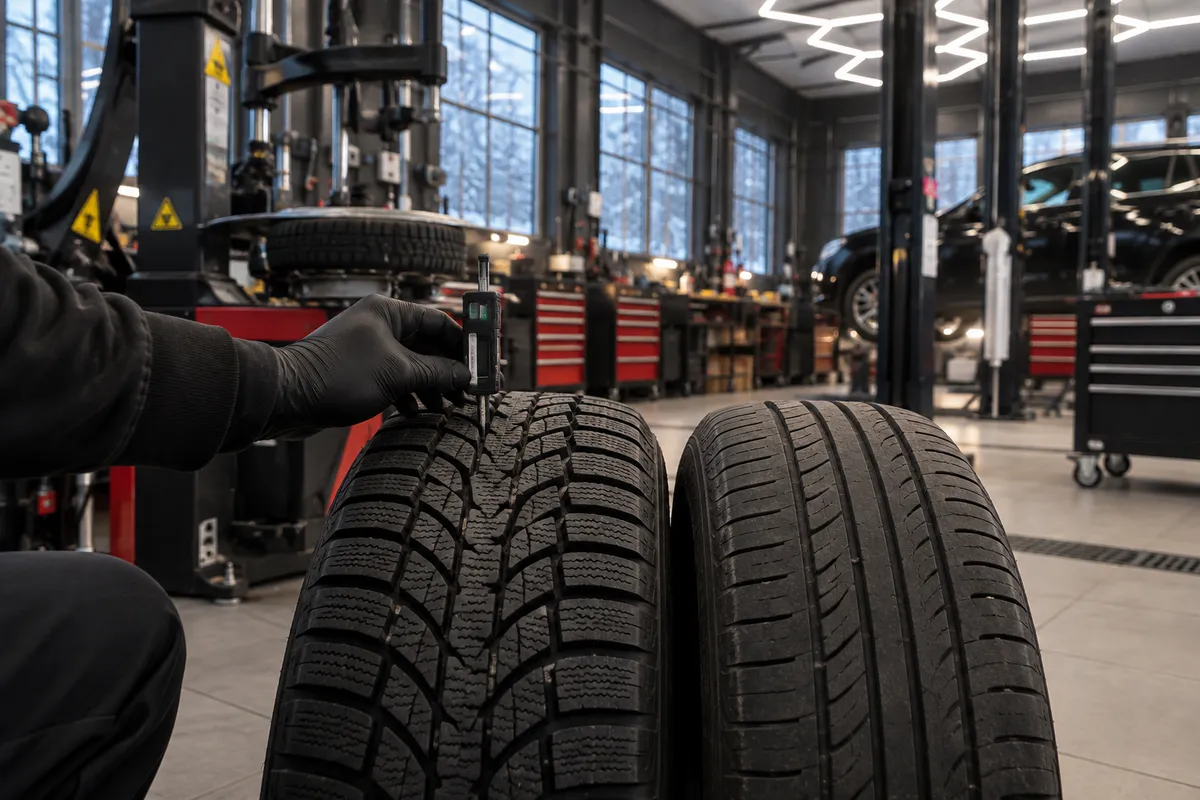
All-season or winter tyres — who all-seasons suit, 3PMSF and M+S markings, the rules
All-season tyres are convenient and in Warsaw conditions are often enough, but they are always a compromise. We explain who they pay off for, how to read the 3PMSF and M+S markings, what the rules say and when the tread is too shallow.
Read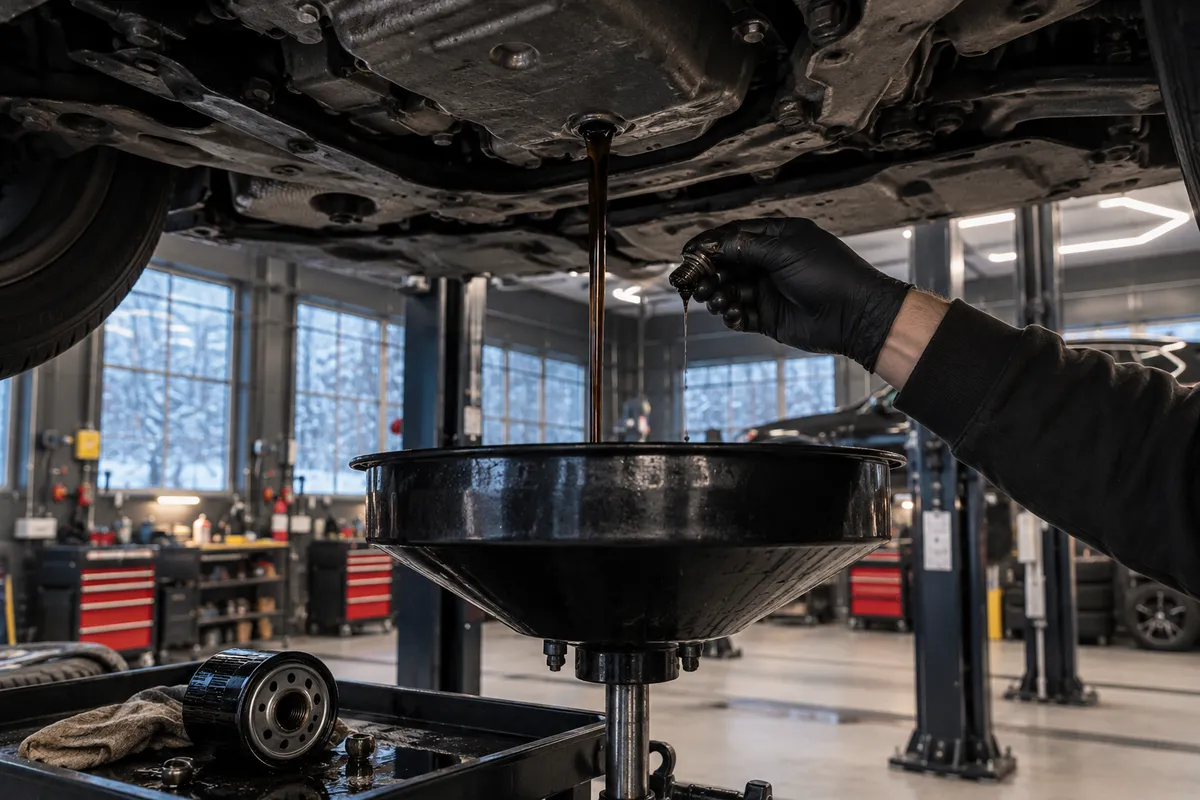
Engine oil change — how many km and months, choosing the oil, signs of worn oil
Oil is your engine’s cheapest protection, and changing it too late can be the most expensive mistake. We explain how often to change it in city driving, turbo and LPG engines, how to choose spec and viscosity, and what to replace too.
Read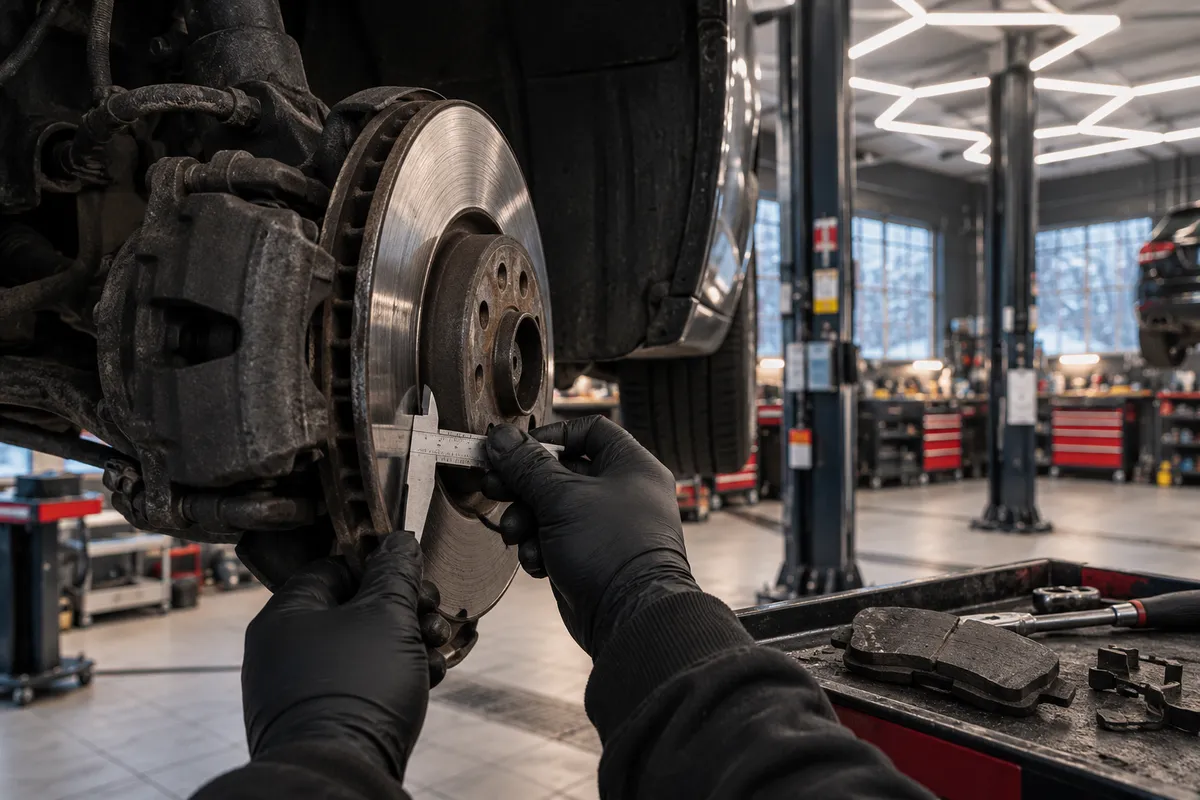
Brake pads and discs — when to replace them, minimum thickness, signs of wear and bedding in
Brake pads and discs wear gradually, so it is easy to miss the moment to replace them. We explain what thickness is still safe, how to read the MIN TH marking, what squealing, judder or metal grinding mean and how to bed in new brakes.
Read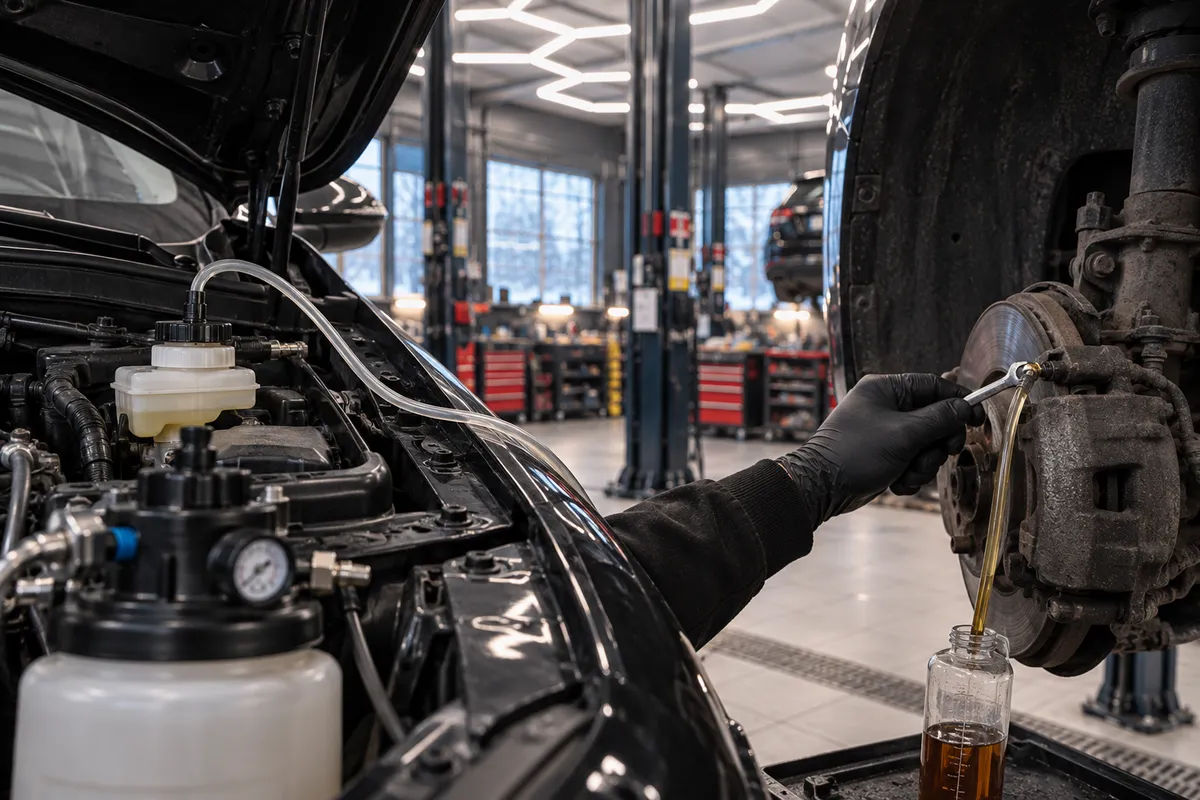
Brake fluid — how often to change it, water test, DOT 3/4/5.1 and cost
Brake fluid absorbs water over time and loses its resistance to high temperature, even though it may look fine for years. We explain how often to change it, how to test the water content, which DOT to choose and what the change costs.
Read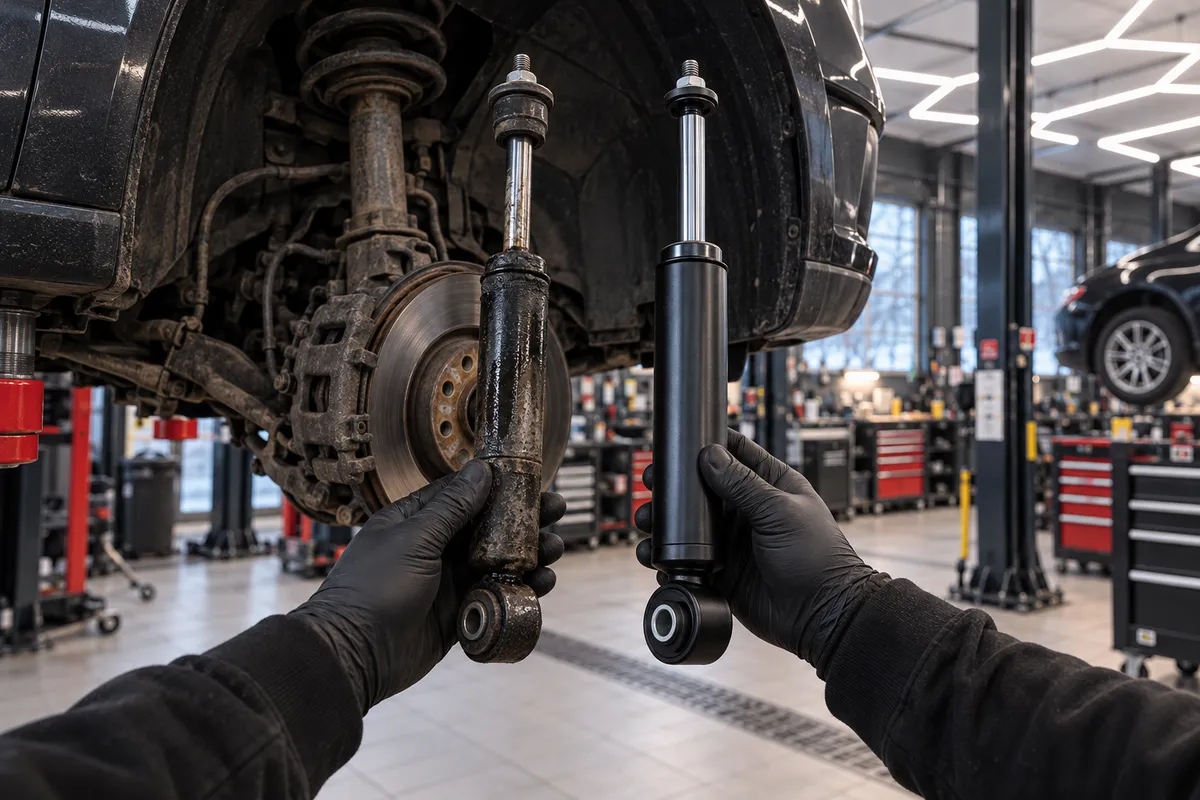
Shock absorbers — signs of wear, testing, replacing in pairs and cost
Worn shock absorbers do not fail overnight — the car gradually bounces more, dives under braking and holds the road less well. We explain how to recognise the symptoms, how to check the dampers and why they are replaced in pairs.
Read
Periodic technical inspection in Poland — what is checked and how to prepare your car
The periodic technical inspection usually takes a quarter of an hour or so, but one blown bulb or play in the suspension can mean a fail. We explain what the inspector checks, what to bring to the station and how to prepare the car.
Read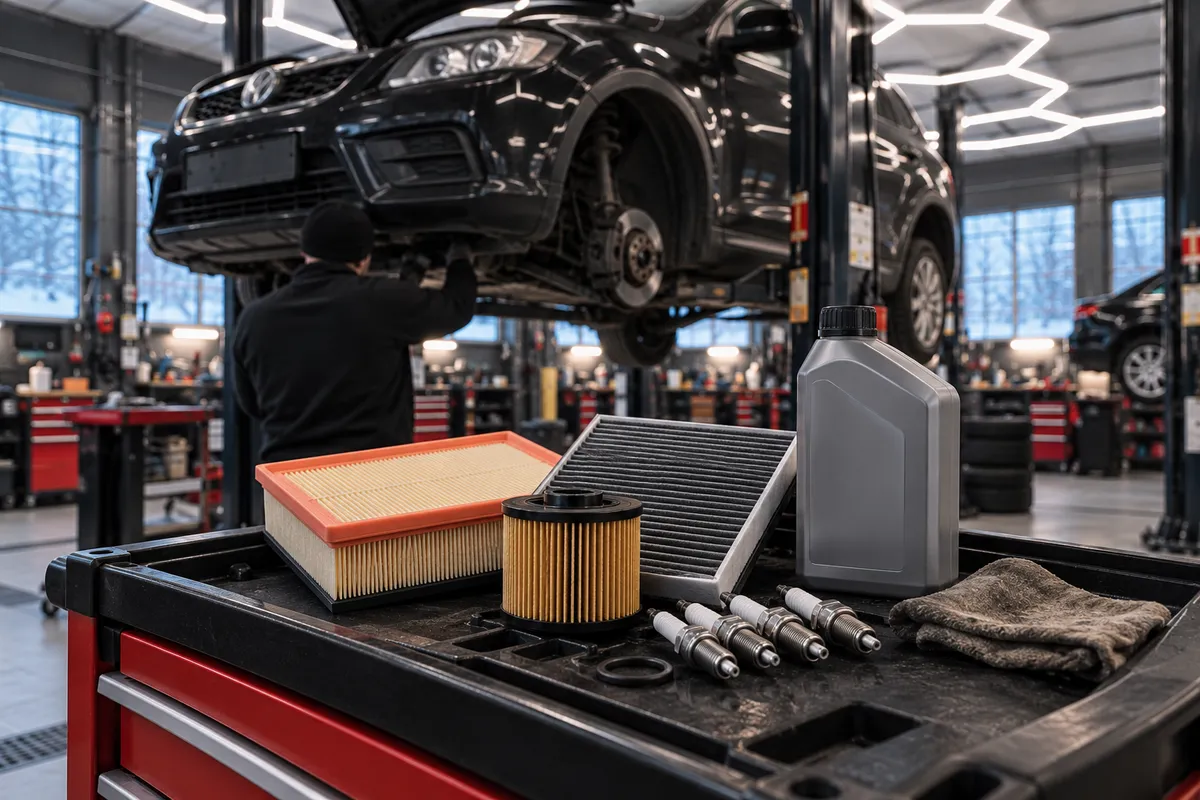
Service after buying a used car — what to replace straight away and what to check
After buying a used car you do not know what has really been replaced. We explain which fluids, filters and parts to change straight away, what to check in the first month and how to plan the budget without overpaying.
Read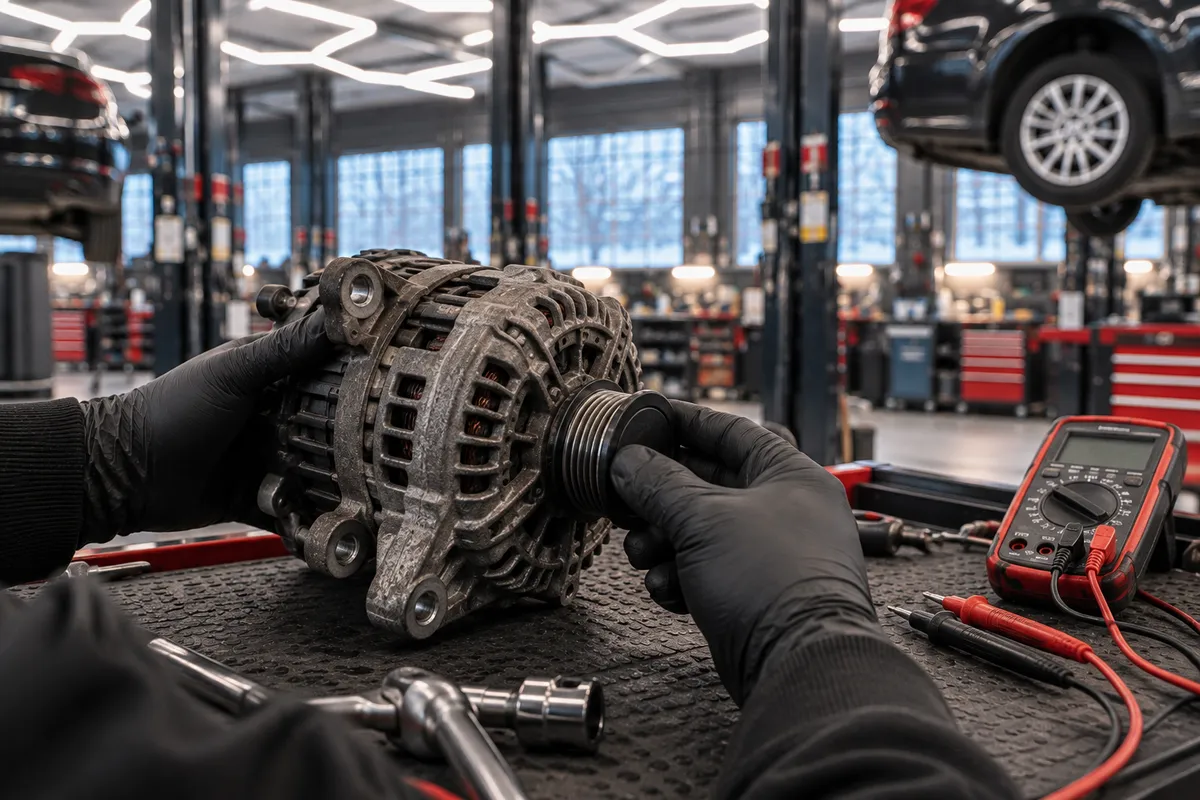
Alternator — failure symptoms, diagnosis and repair
Battery light on, lights dimming and the battery going flat every few days? It is often the alternator. We explain the symptoms, how to check the charging voltage, what fails most often and when a rebuild pays off.
Read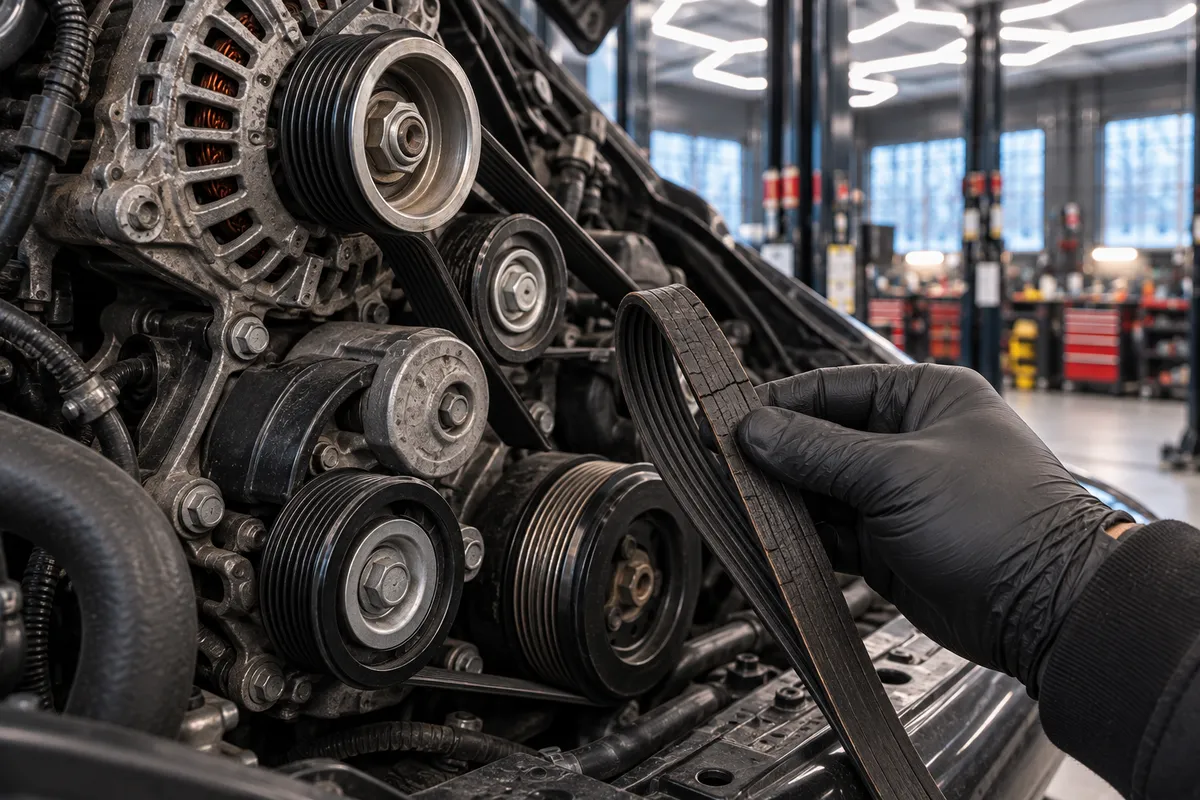
Squealing multi-rib (auxiliary) belt — causes, signs of wear and replacement
A squeal from under the bonnet at start-up, in frost or when turning the wheel is most often the auxiliary belt. We explain where the noise comes from, how to spot a worn belt, what happens if it snaps and when to replace it with the tensioner.
Read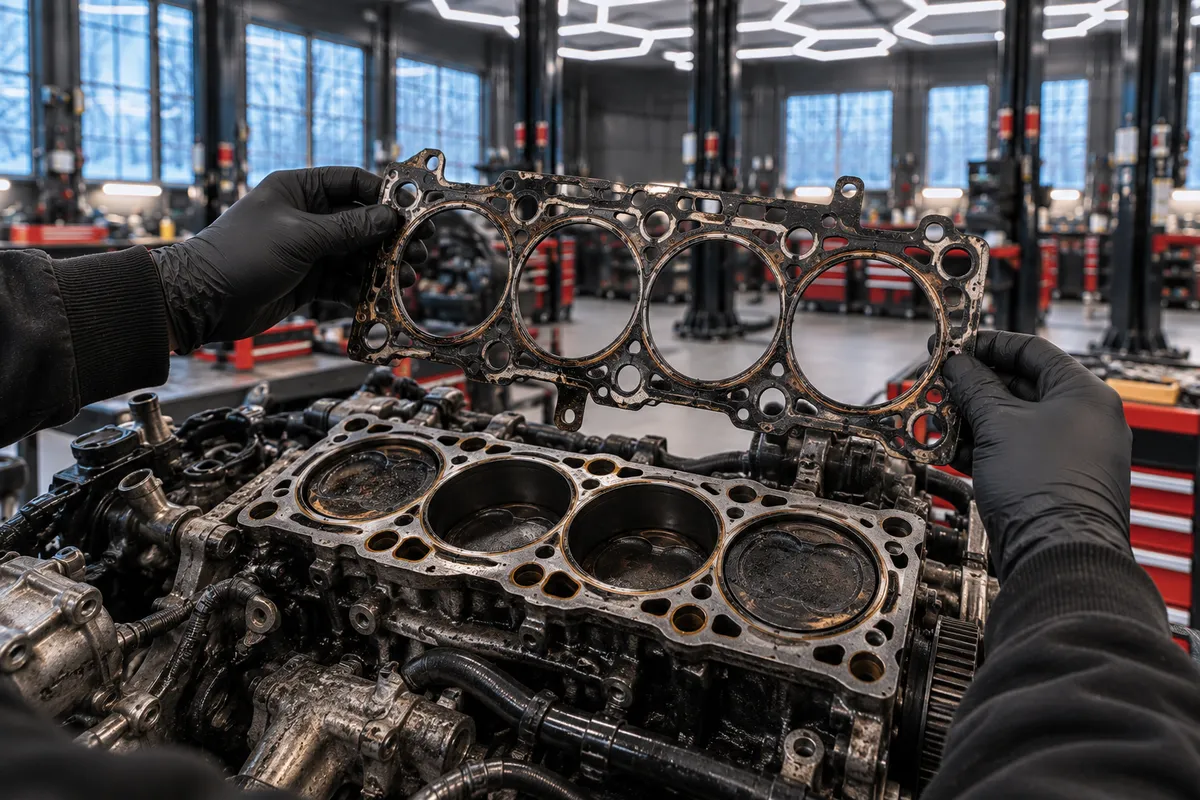
Blown head gasket — symptoms, tests, causes and replacement cost
Coolant disappearing without any visible leak, sweet-smelling white smoke or oil in the expansion tank can all point to a blown head gasket. We explain how to tell it from condensation, how to confirm it with tests and why you should not keep driving.
Read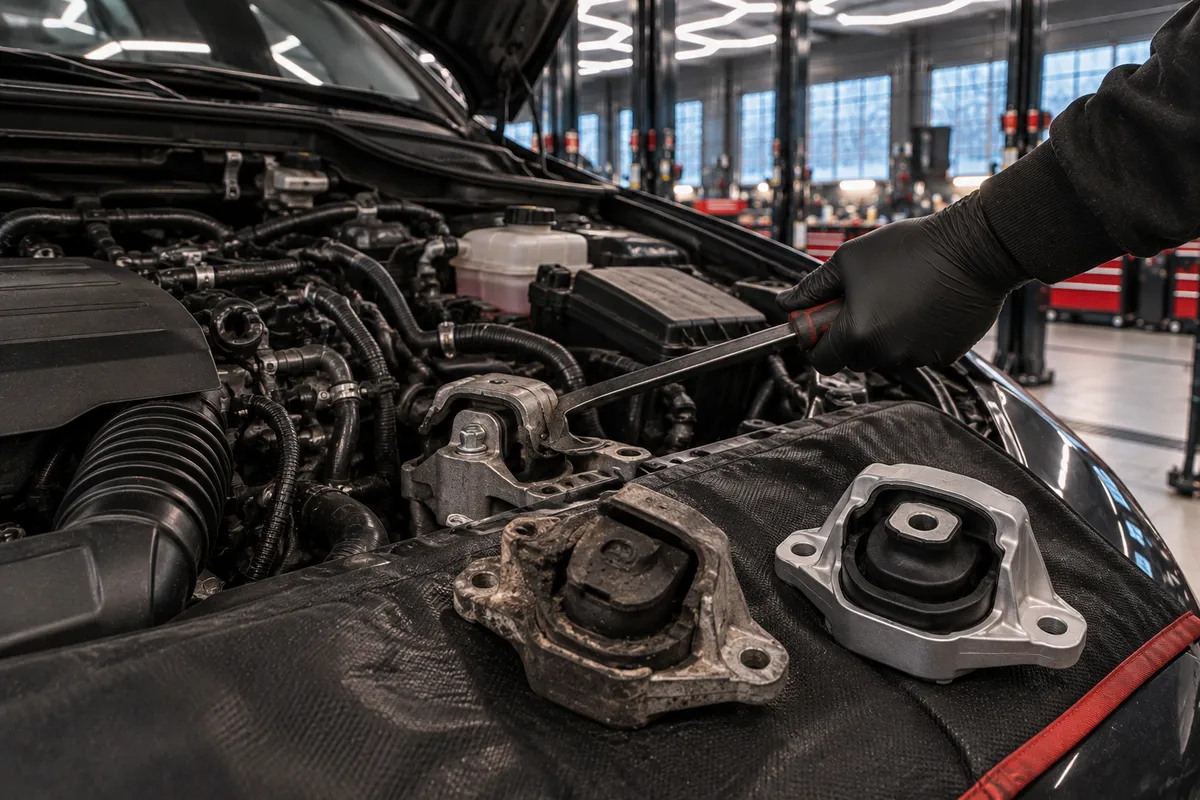
Engine and gearbox mounts — symptoms of wear, diagnosis and replacement
The engine shakes the whole car at the lights, something jolts when you pull away, and you feel a thump when you select reverse? These are typical signs of worn engine or gearbox mounts. We explain how to tell them from other faults and what replacement costs.
Read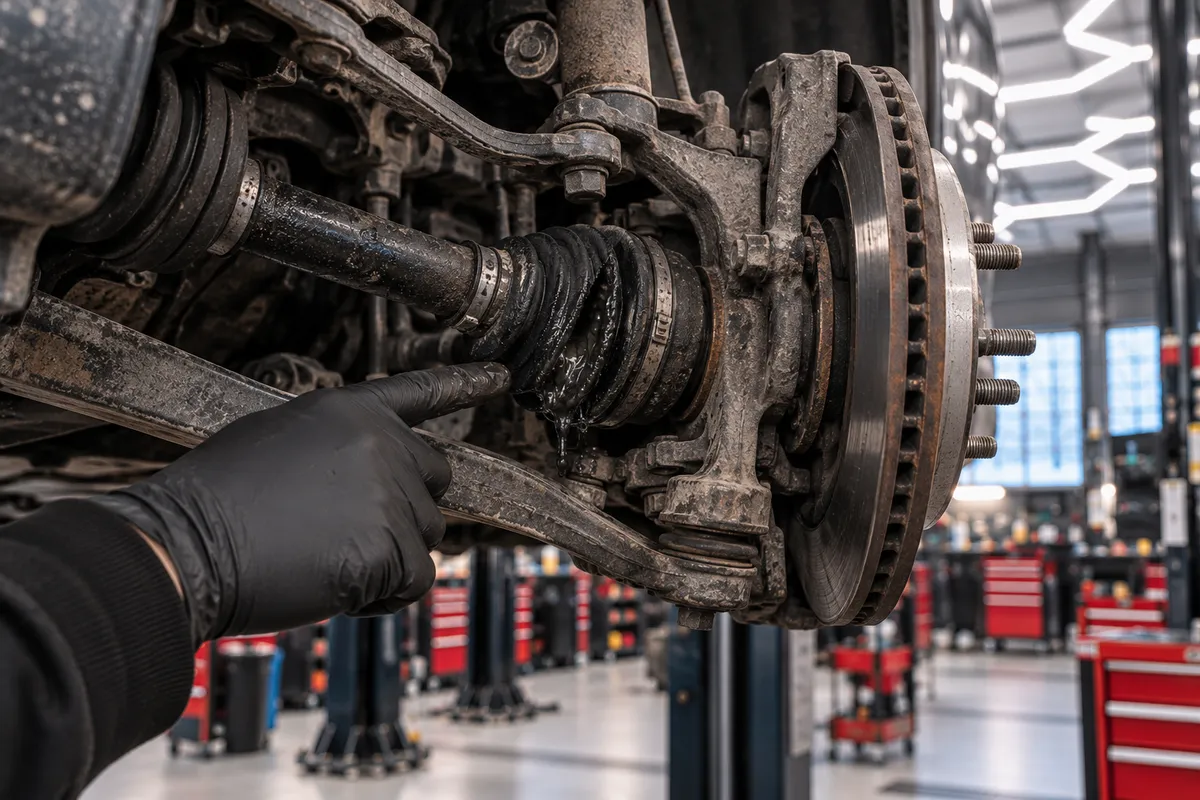
Driveshaft and CV joint — clicking when turning, vibration, split boot and repair
Rhythmic clicking when pulling away with the wheels turned, vibration under acceleration or grease sprayed over the inside of the rim are typical signs of a worn driveshaft or CV joint. We explain what causes them, what to replace and whether you can keep driving.
Read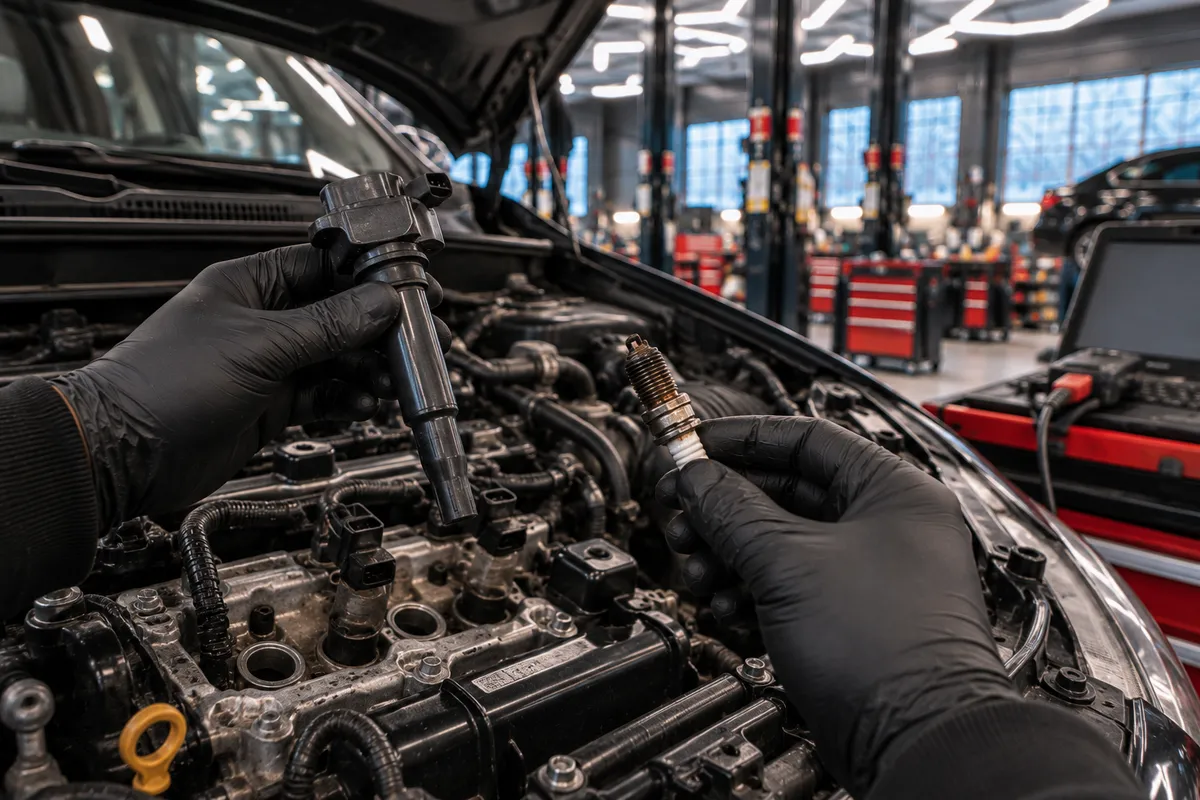
Engine misfire — jerking, shaking and rough running: causes and diagnosis
Is your engine jerking under acceleration, shaking at idle, with the check engine light on or flashing? These are typical signs of a misfire. We explain what causes it, when you should stop driving and how to quickly find the faulty cylinder.
Read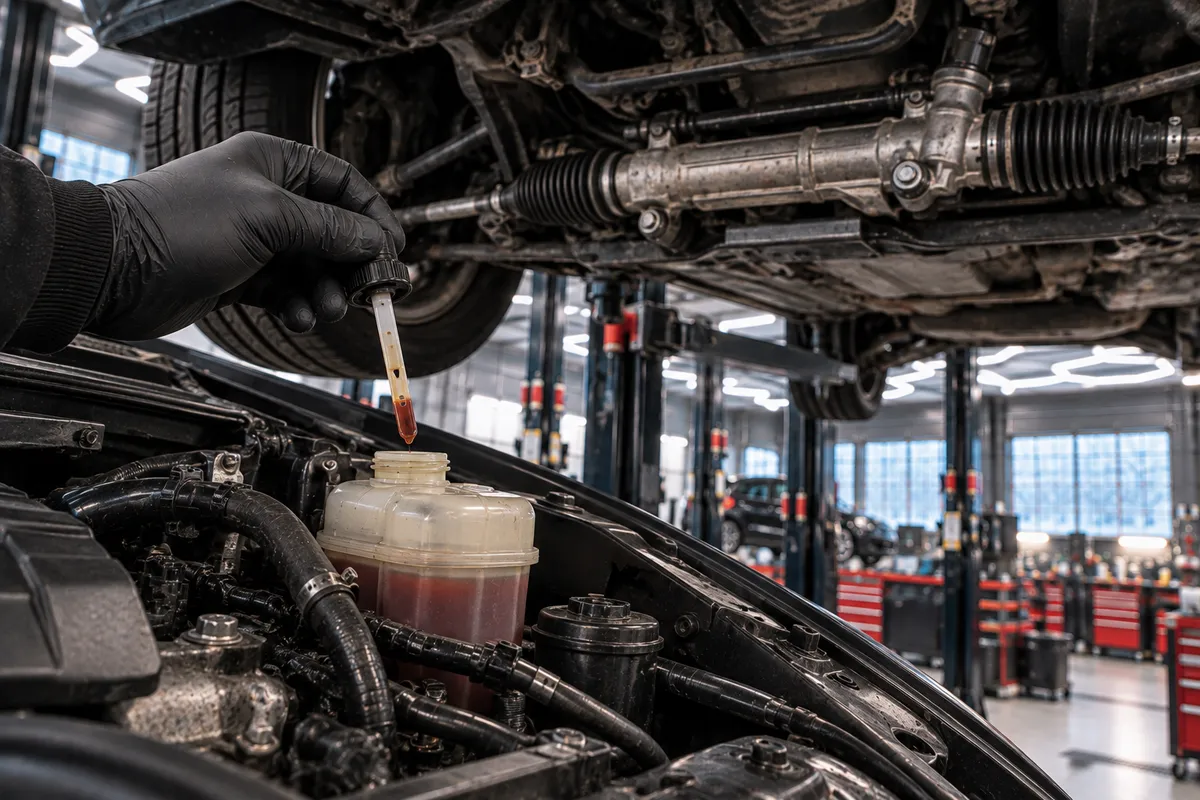
Power steering — fault symptoms, causes and diagnosis
Has the steering suddenly become heavy, does the pump whine when you turn, is there a fluid puddle under the car or has the power steering light come on? We explain how the different systems work, what fails in them and when you should not drive on.
Read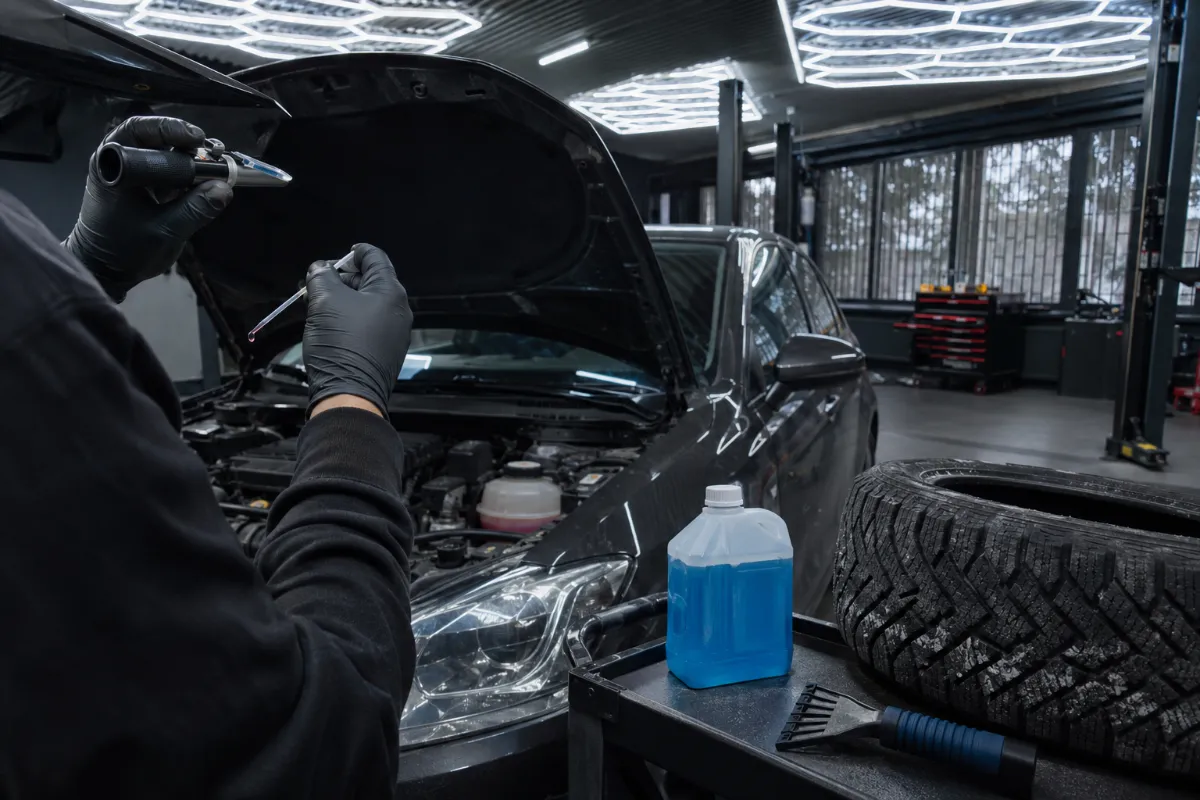
Winterising your car — a mechanic's checklist: what to check before the frost
Most winter breakdowns can be predicted in autumn: a weak battery, coolant with too little frost protection, worn wipers or tyres. Here is a mechanic's checklist — what you can check yourself and what is worth having done in the workshop before the frost.
Read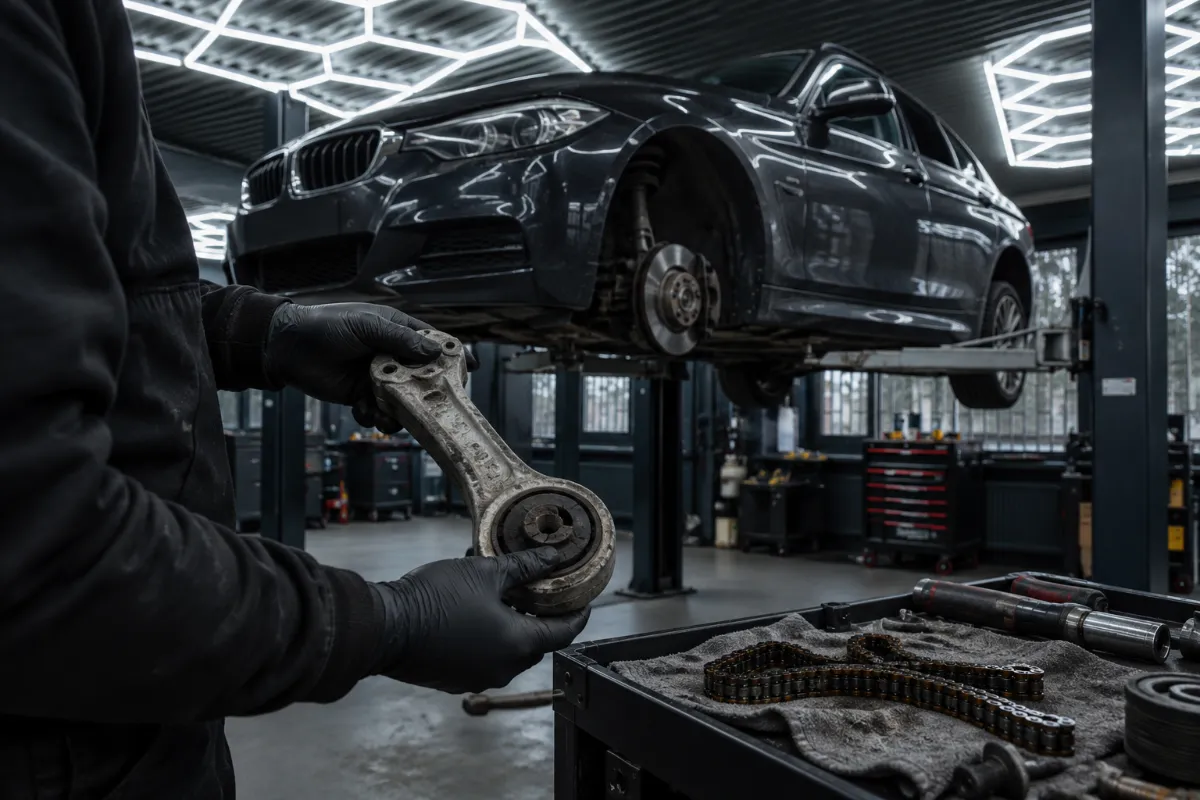
BMW — common faults, symptoms and what to watch out for when servicing
BMWs drive brilliantly but have their typical weak spots: the timing chain on the N47 and N20, oil leaks, the electric water pump, control arm bushes and the xDrive transfer case. We explain the symptoms, causes and repair costs.
Read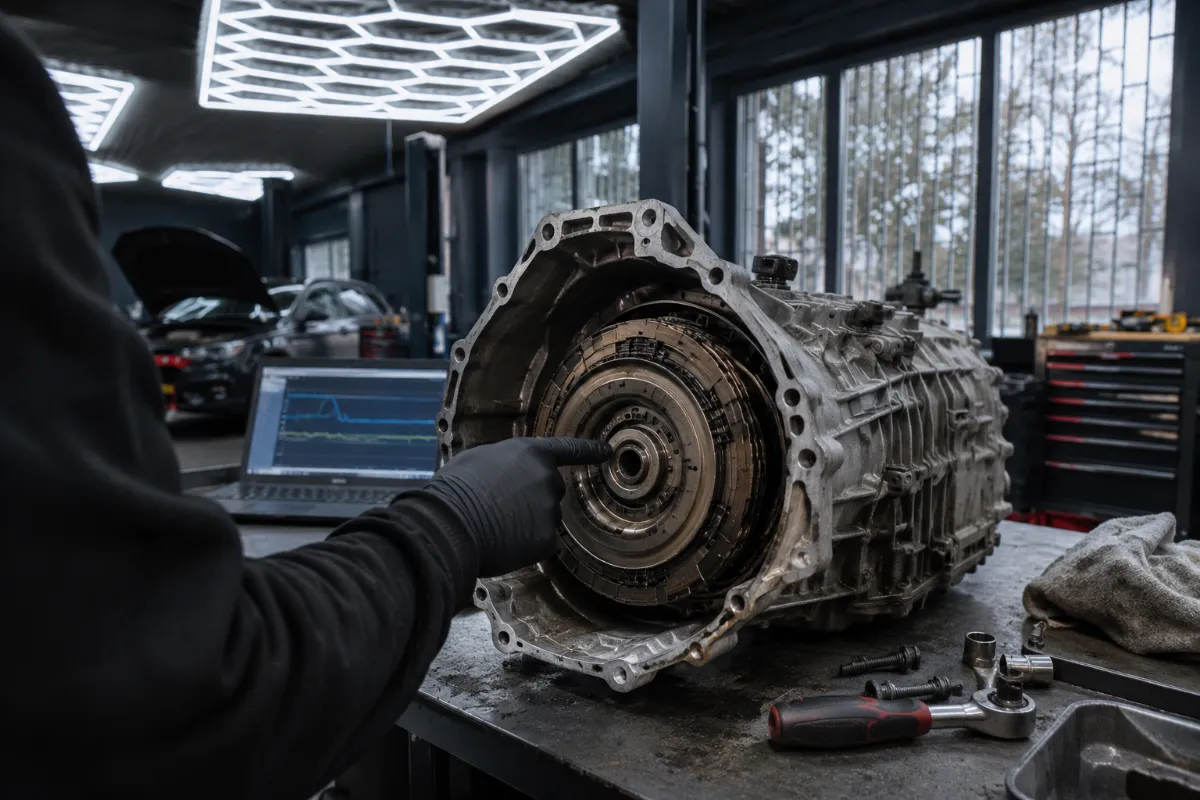
DSG gearbox — fault symptoms, causes and diagnosis
Judder when pulling away, a knock between first and second, PRNDS flashing on the dash? We explain how the dry DQ200 differs from the wet DQ250 and DQ381, what fails most often, when to change the oil and how we diagnose the gearbox.
Read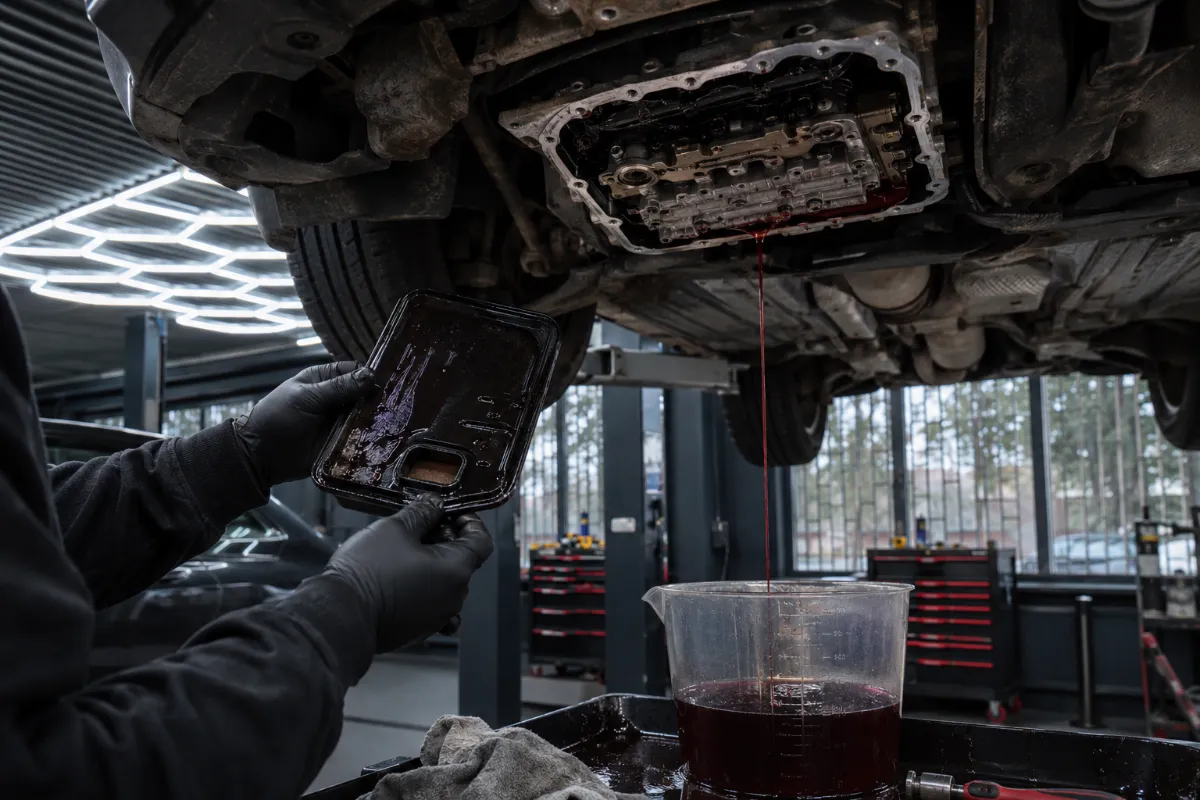
Automatic gearbox jerking — causes, diagnosis and what to do
Is your automatic jerking when pulling away, thumping on downshifts or shuddering at a steady speed? We explain the most common causes in ZF, Aisin and Mercedes 7G-Tronic gearboxes, when an ATF change helps and how we check the gearbox.
Read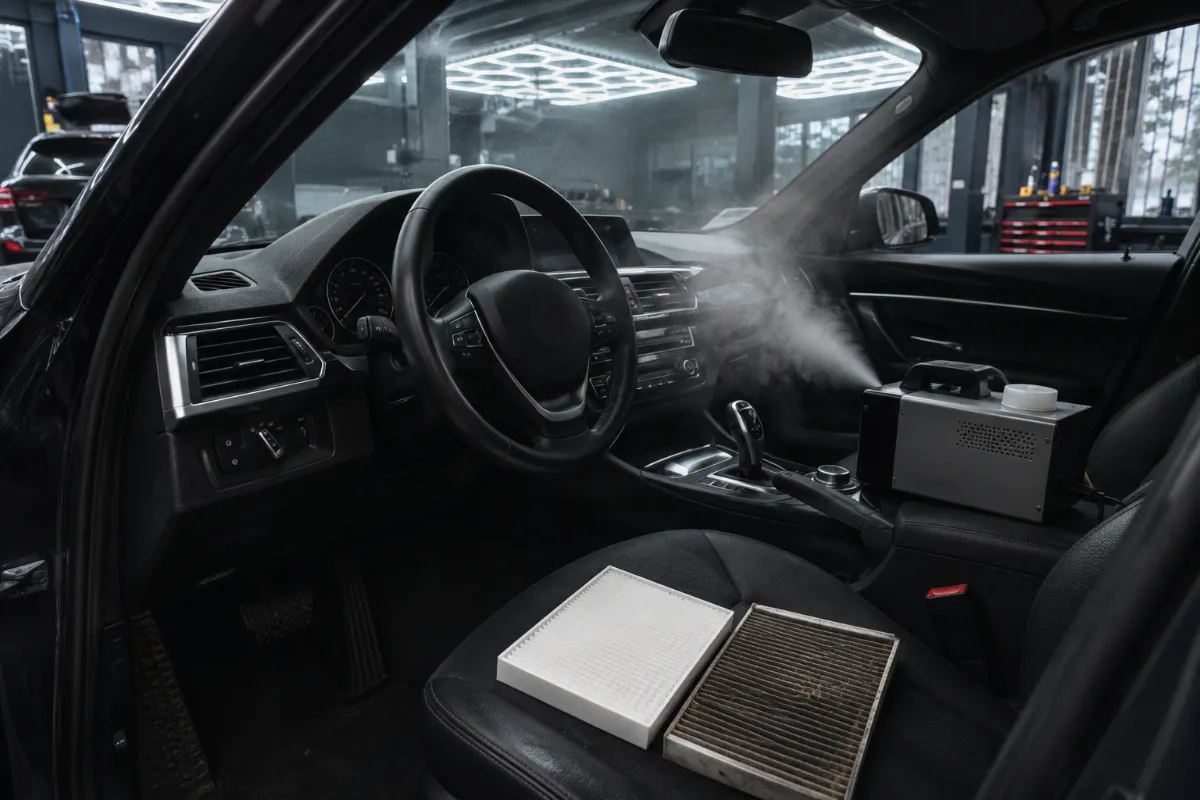
Car air conditioning disinfection — when and how to do it properly
A musty smell from the vents and windows that fog up quickly? It is usually bacteria and mould on the evaporator. We explain where the smell comes from, which disinfection methods work, how often to do it and what you can do yourself to keep it from coming back.
Read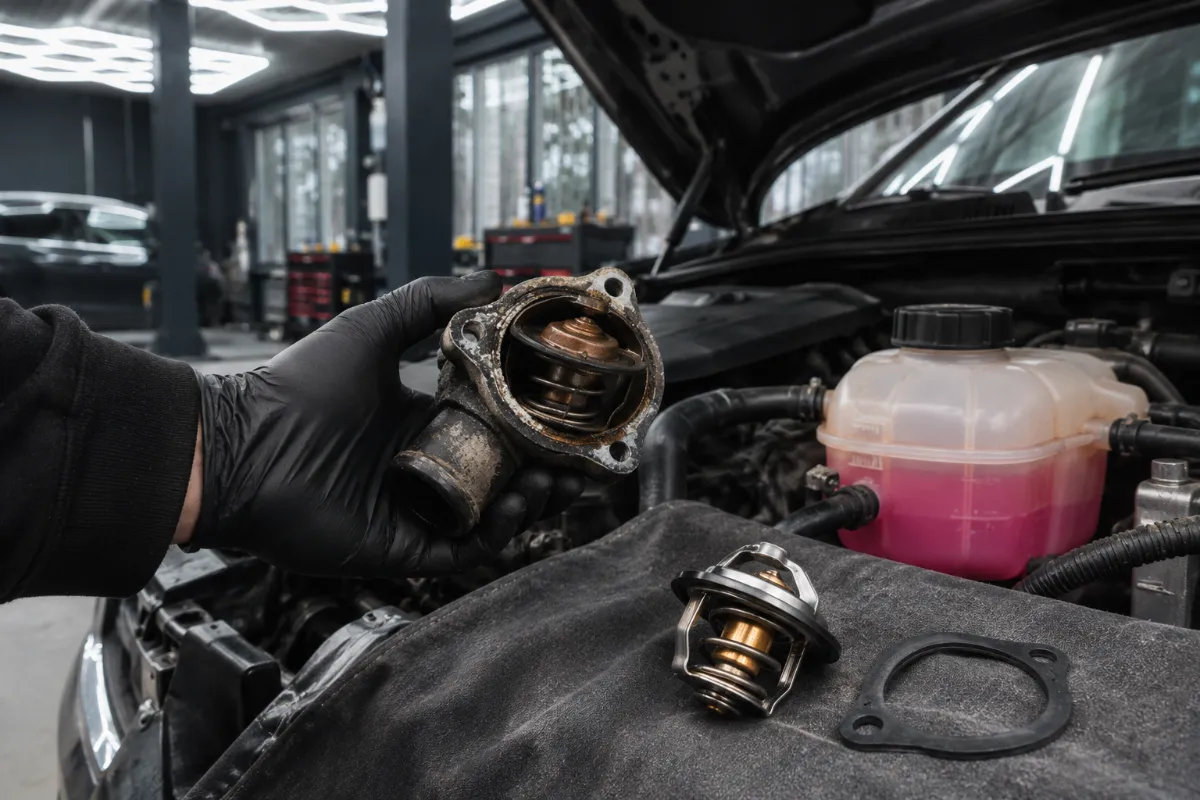
Car thermostat — failure symptoms, checking and replacement
Temperature gauge sitting low, a lukewarm heater and higher fuel use? Or the opposite — the engine overheats? The thermostat is often to blame. We explain the symptoms of both kinds of failure, how to check the thermostat and when you must stop driving.
Read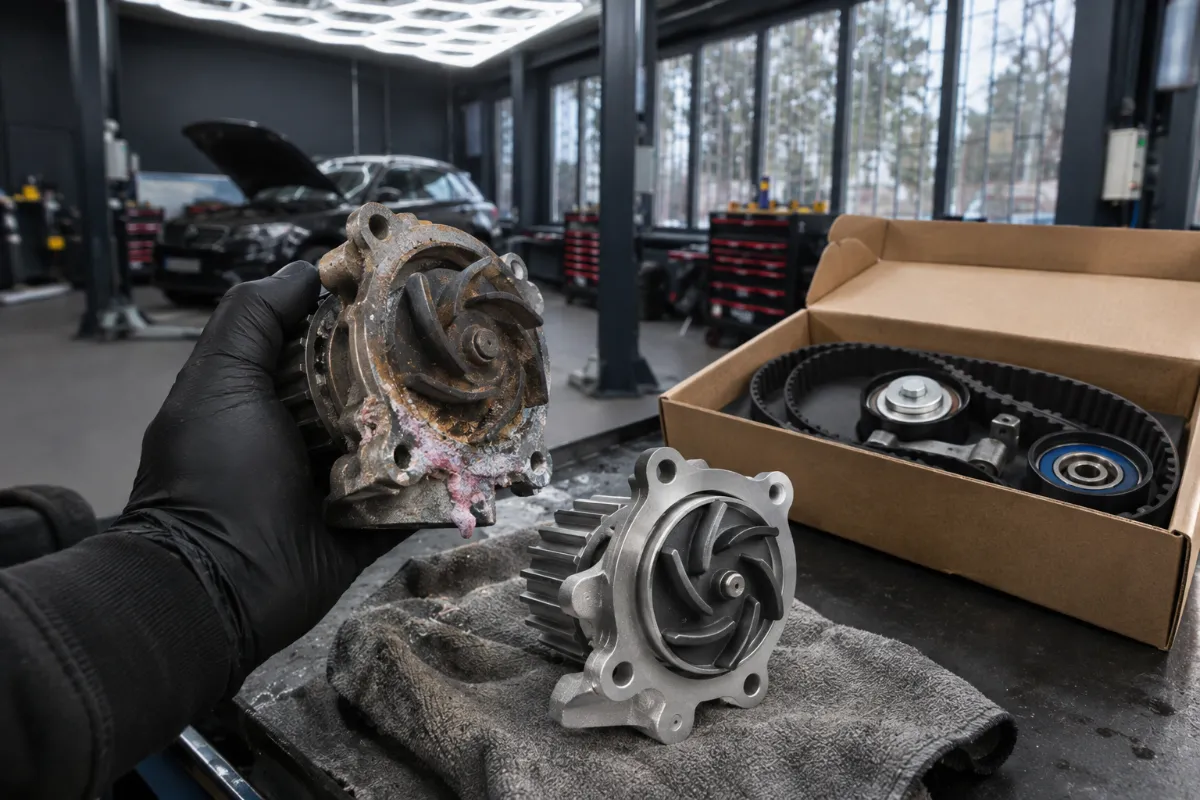
Water pump — failure symptoms, diagnosis and replacement
Losing coolant, hearing a whine from under the bonnet, and the temperature gauge creeping up? It may be the water pump. We explain the symptoms, mechanical vs electric pumps, and when to replace the pump together with the timing belt.
Read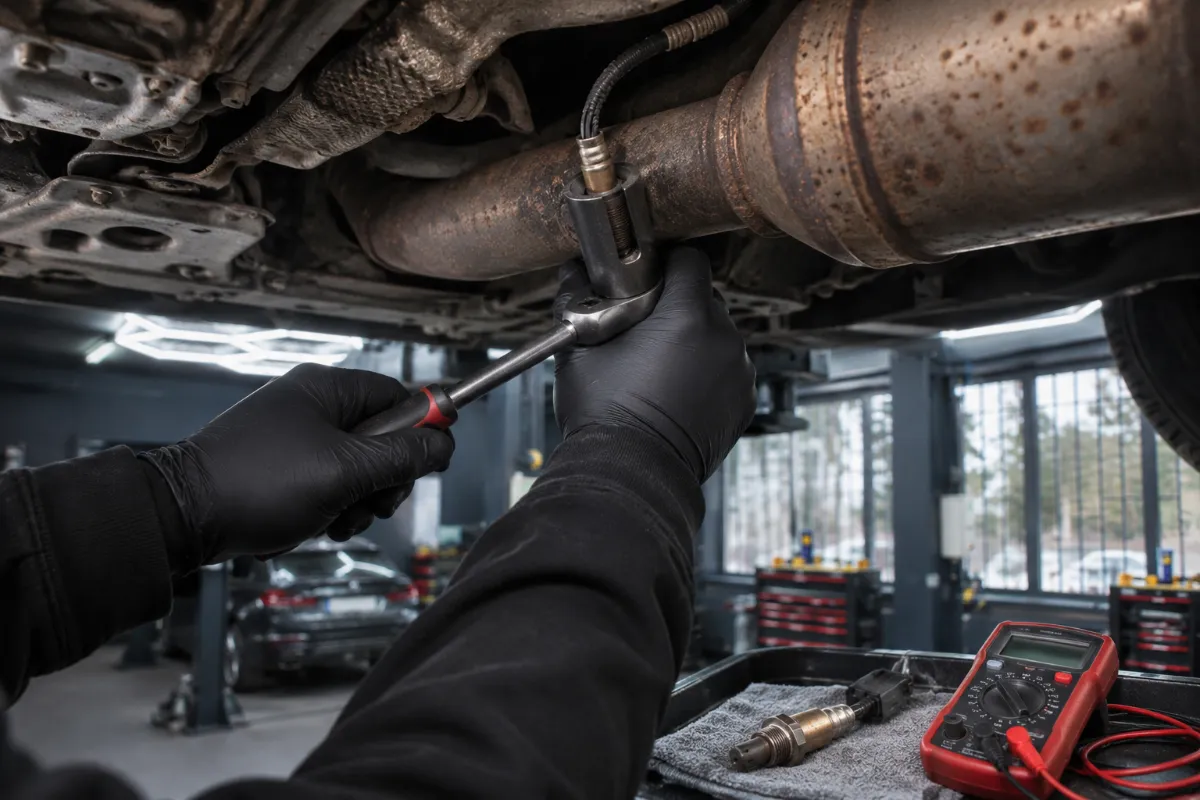
Lambda sensor — failure symptoms, diagnosis and replacement
Check engine light on, the car using more fuel and idling roughly? A common culprit is the lambda sensor. We explain the difference between the sensors before and after the catalytic converter, what the fault codes mean and how to test it before buying a new one.
Read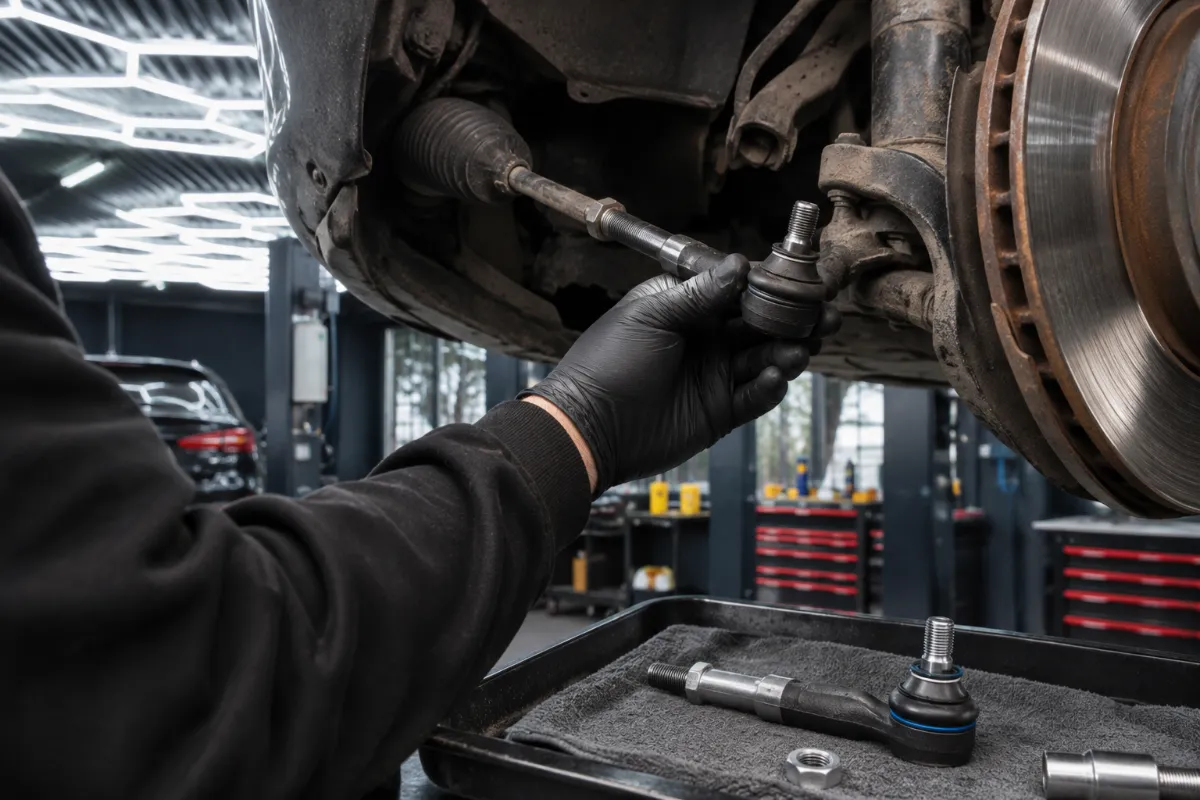
Tie rods and tie-rod ends — symptoms of wear, diagnosis and replacement
Play in the steering, knocking over potholes, uneven tyre wear and a car that pulls? It is often the tie rods or tie-rod ends. We explain the symptoms, inner rod versus outer end, the diagnosis and why wheel alignment is a must afterwards.
Read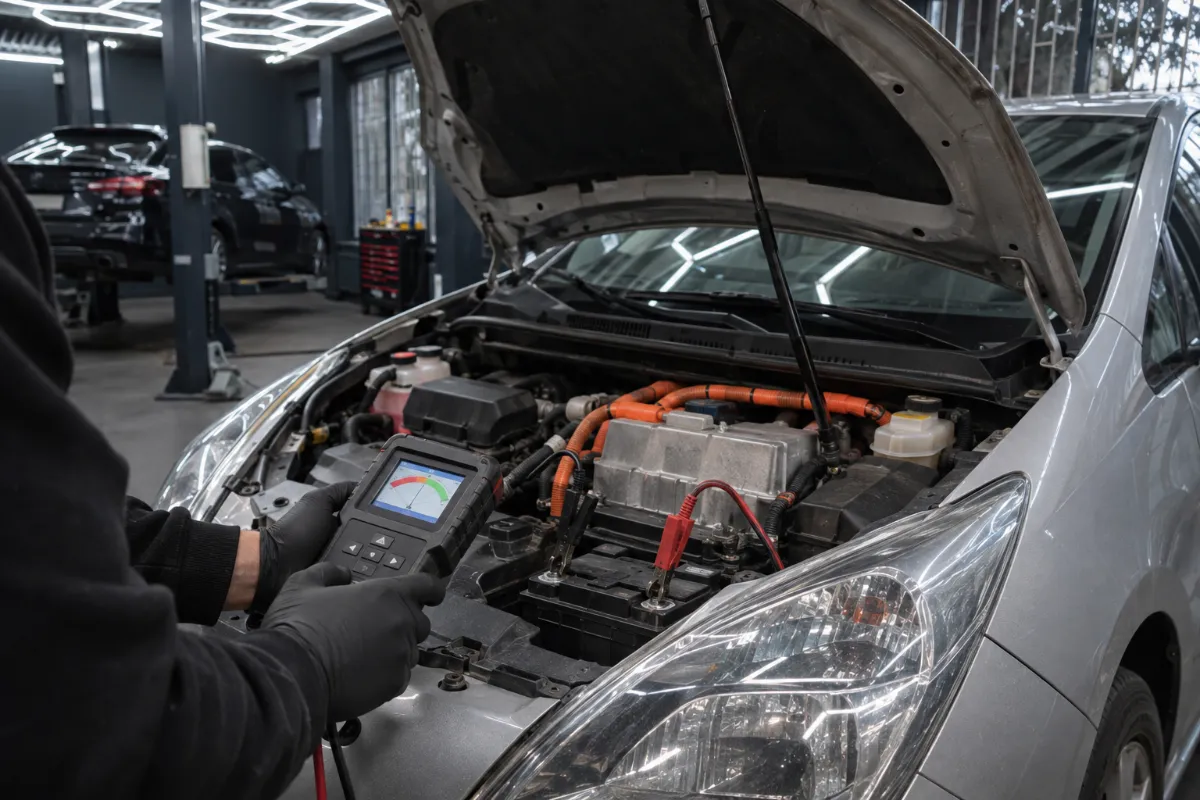
Toyota hybrid service — what to check, how often and what it costs
A Toyota hybrid is durable, but it has its weak spots: seized brakes, a dusty battery cooling fan, a weak 12 V battery and an often forgotten inverter coolant. We explain what to check and how often on the Prius, Corolla, C-HR, RAV4 and Yaris.
Read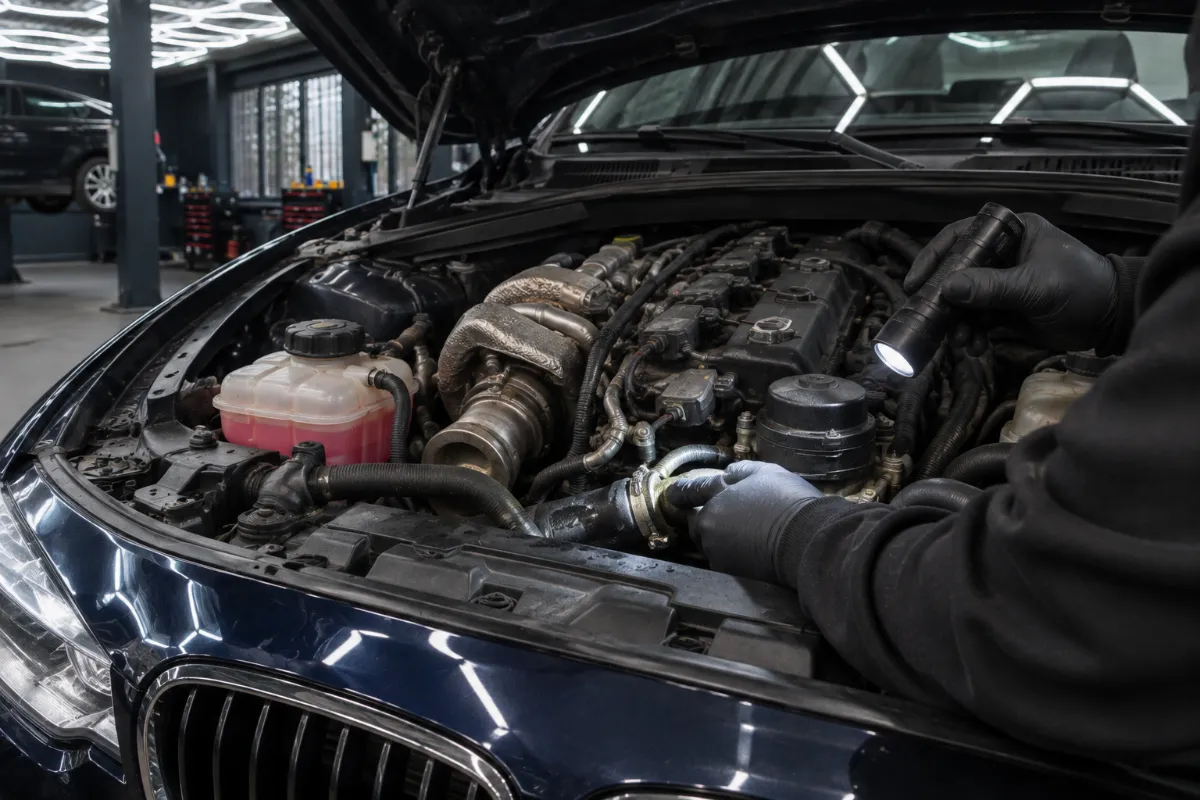
BMW engines — weak points of the B38, B48, B58, N20, N55, N63 and the B47, N57, B57 diesels
Every BMW engine has its typical weak spots: on the B58 it is the cooling system and the plastic oil pump, on the N63 overheating and oil consumption, on the N20 the timing chain guides. We have collected them engine by engine — with symptoms, causes and what to check.
Read
Alfa Romeo — common faults and weak points of engines, gearboxes and electrics
Alfa Romeo has character, but also its well-known weak spots: the MultiAir module, the timing gear on the 1750 TBi and 2.2 JTS, EGR coolers and flaps on the diesels, and electrics on the Giulia and Stelvio. We cover them engine by engine and model by model.
Read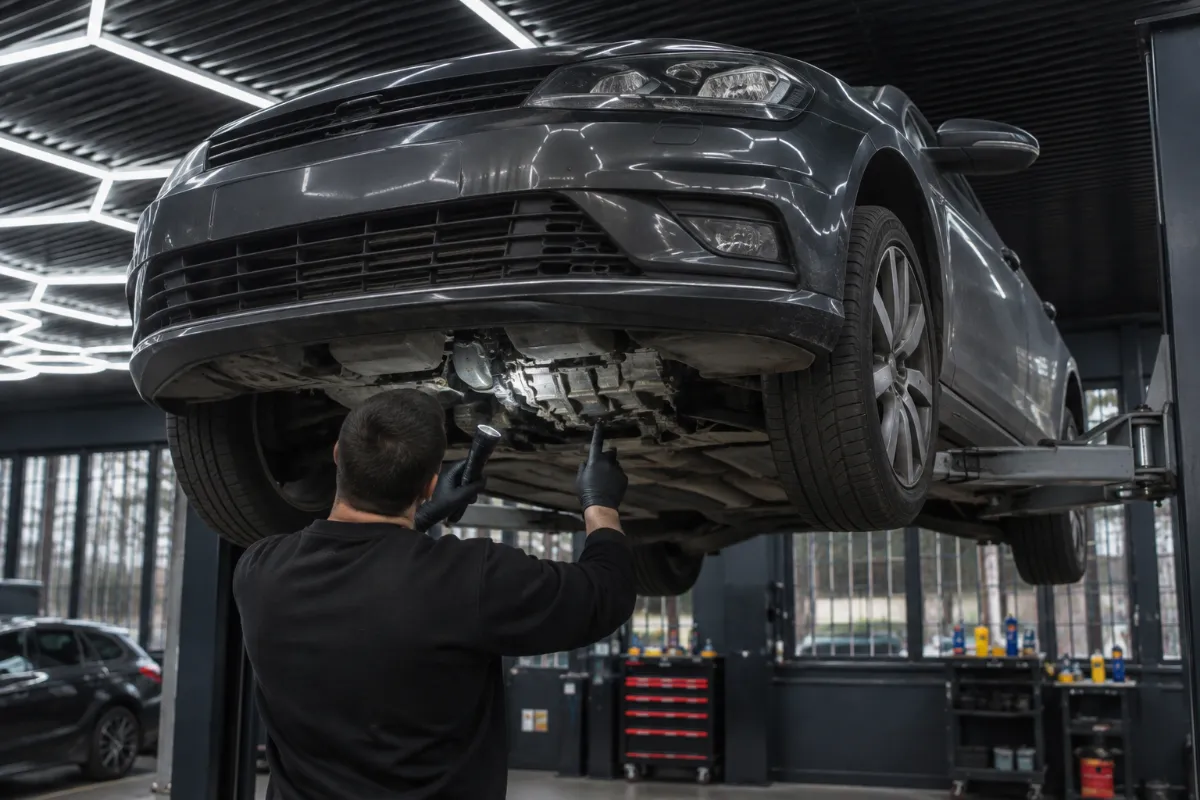
Volkswagen — common faults and weak spots of TSI and TDI engines, DSG gearboxes and models
A Volkswagen is easy to service but has well-known weak spots: the chain on older 1.2 and 1.4 TSI engines, oil consumption on the 1.8 and 2.0 TSI, EGR and DPF on TDI diesels, and the DQ200 DSG gearbox. We go through them engine by engine and model by model.
Read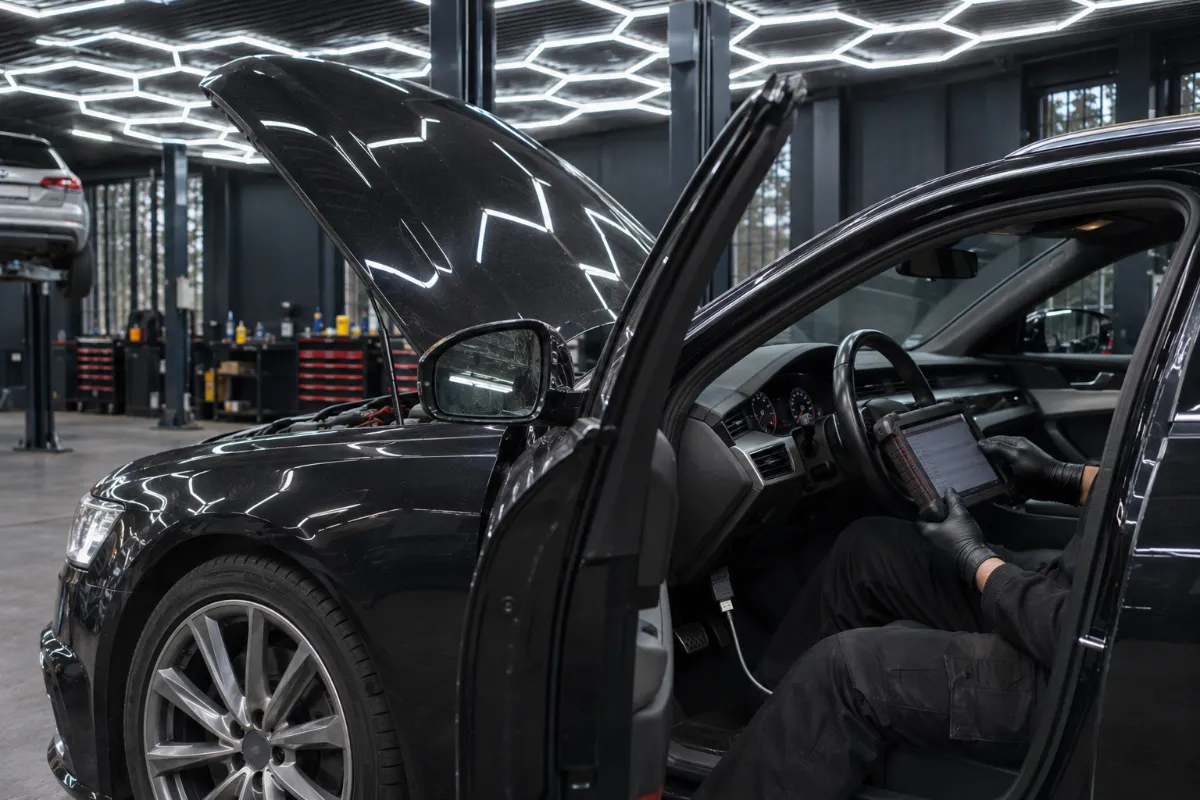
Audi — common faults and weak spots in engines, gearboxes, suspension and electrics
Audis are solid cars, but with well-known weak spots: oil consumption in the 1.8 and 2.0 TFSI, chain tensioners in V6 TDIs, multitronic, S tronic mechatronics, control arms in the A4 and A6. We cover them engine by engine and model by model.
Read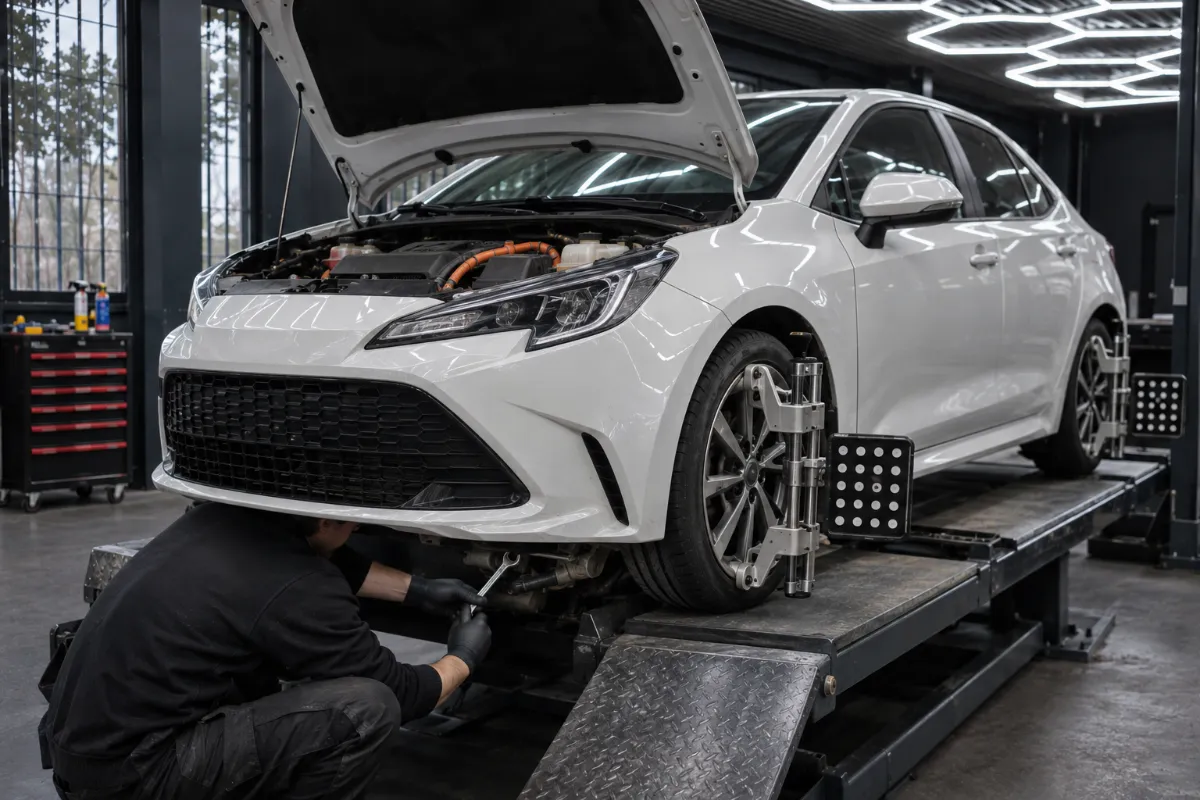
Toyota — common faults and weak spots of engines, gearboxes and chassis
Toyota is rightly seen as a durable make, but it too has known weak spots: oil consumption in older VVT-i engines, the head gasket and oil in the 2.0 and 2.2 D-4D, the MMT gearbox and weak 12 V batteries. We cover them engine by engine and model by model.
Read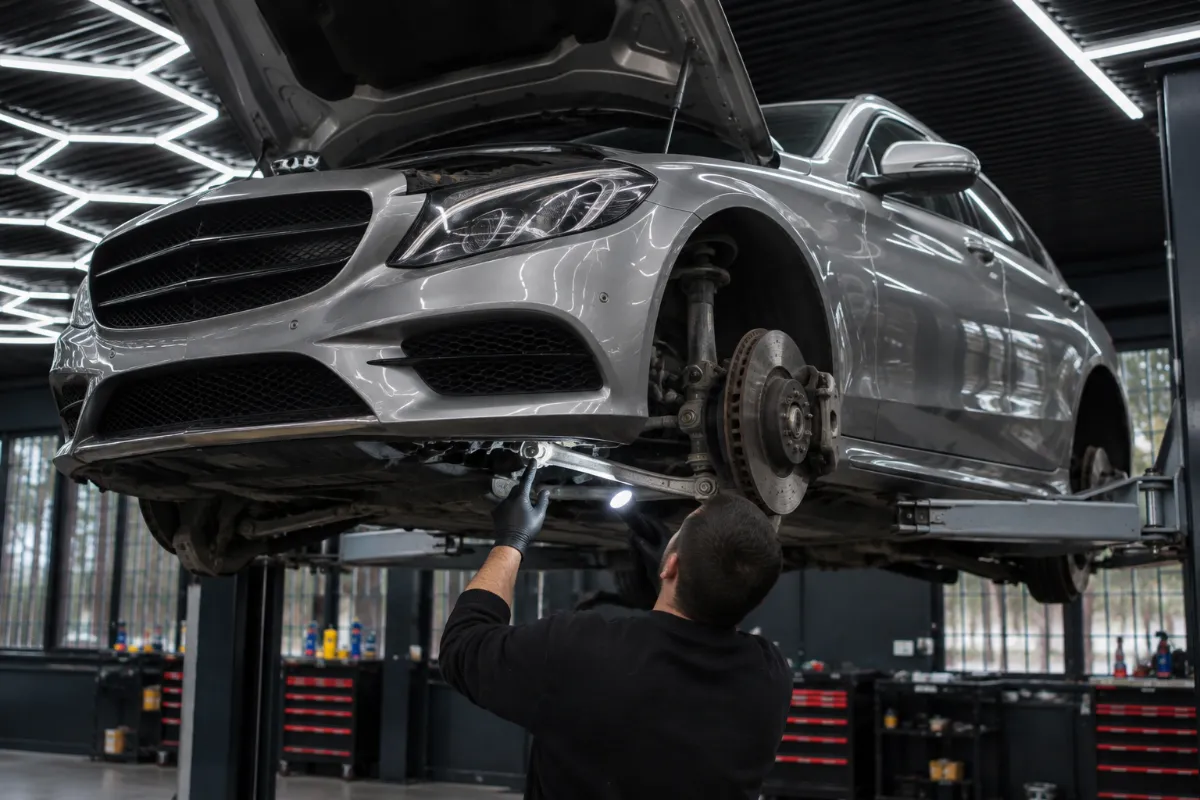
Mercedes-Benz — common faults and weak spots in engines, gearboxes and chassis
Mercedes has solid bodies and a comfortable ride, but known weak spots too: the chain and injectors in the 2.1 CDI, the V6 CDI oil cooler, 1.8 Kompressor timing, the 7G-Tronic control unit and Airmatic. We cover them engine by engine and model by model.
Read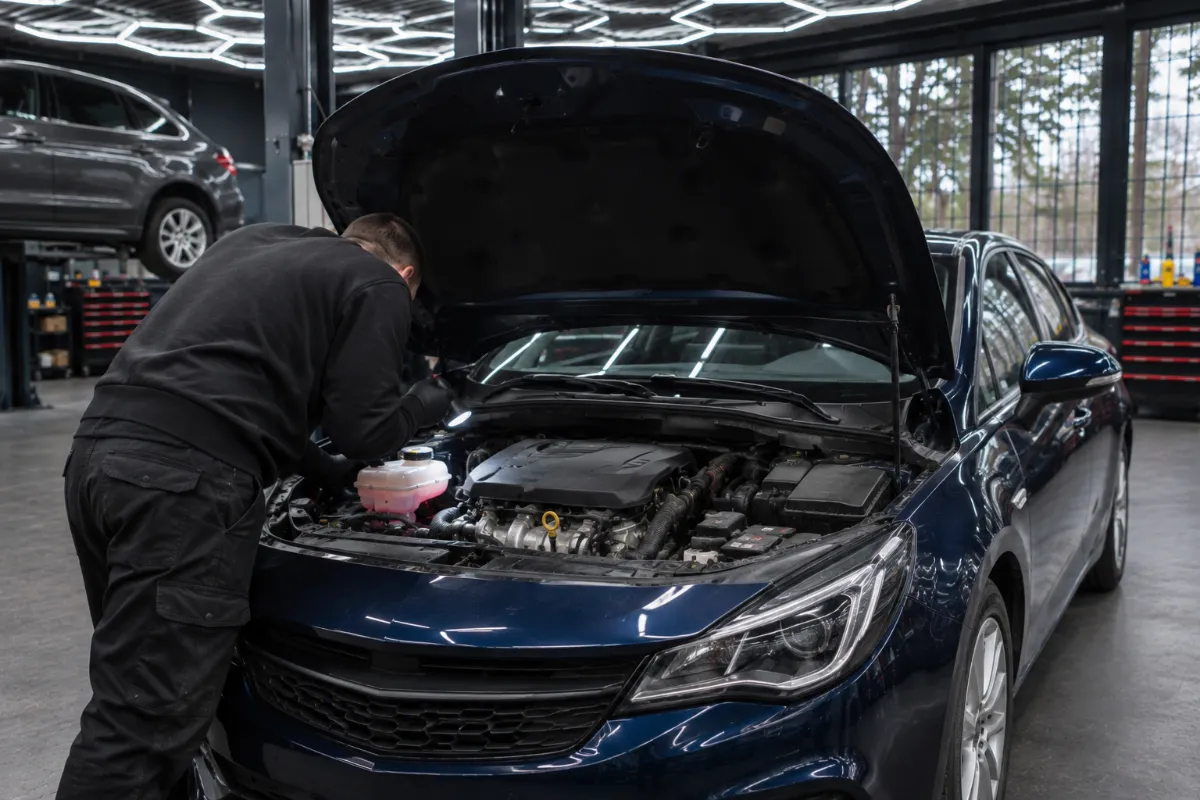
Opel — common faults and weak spots of engines, gearboxes and electrics
Opels are easy to repair, but they have well-known weak spots: the PCV and cooling on the 1.4 Turbo, chains on the 1.3 and 1.6 CDTI, the oil pickup on the 2.0 CDTI, the wet belt on the 1.2 PureTech and M32 gearbox bearings. We go through them engine by engine.
Read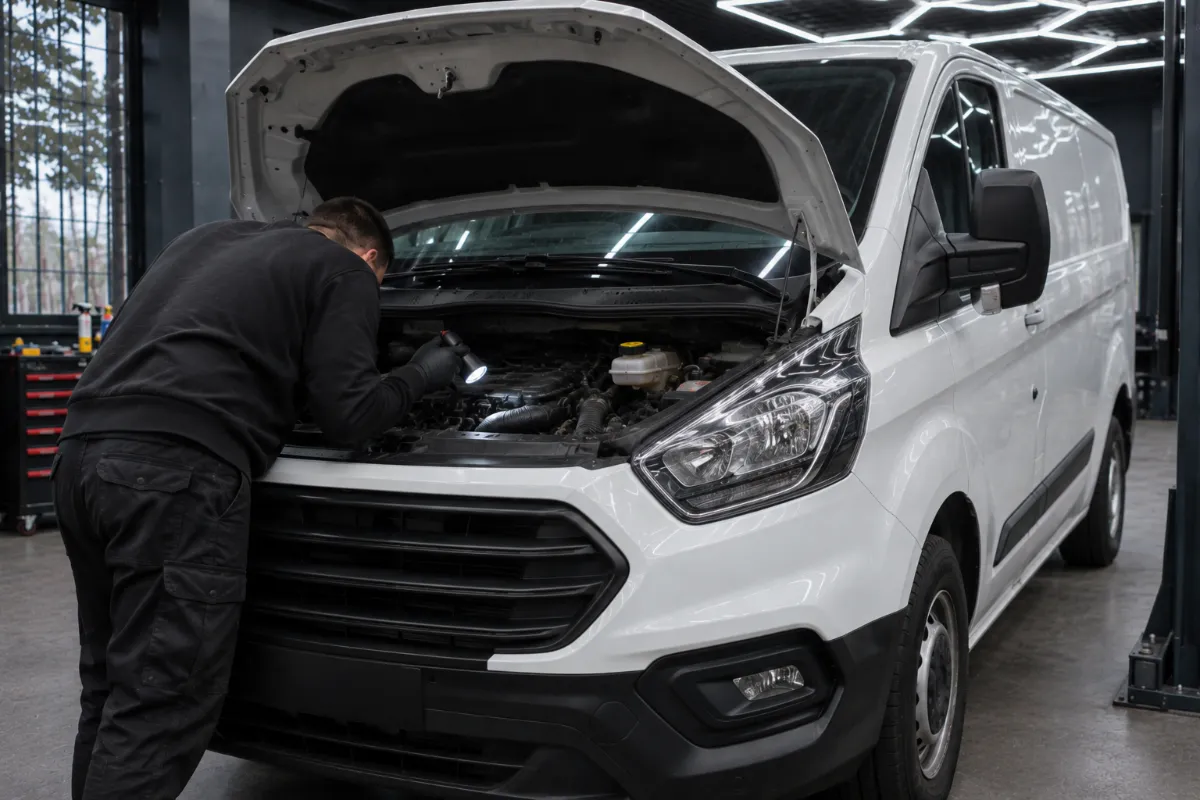
Ford — common faults and weak spots in engines, gearboxes and chassis
Fords handle well and are cheap to run, but have known weak spots: the timing belt running in oil in the 1.0 EcoBoost, overheating in the 1.6 EcoBoost, the turbo in the 1.6 TDCi and the PowerShift gearbox. We cover them engine by engine and model by model.
Read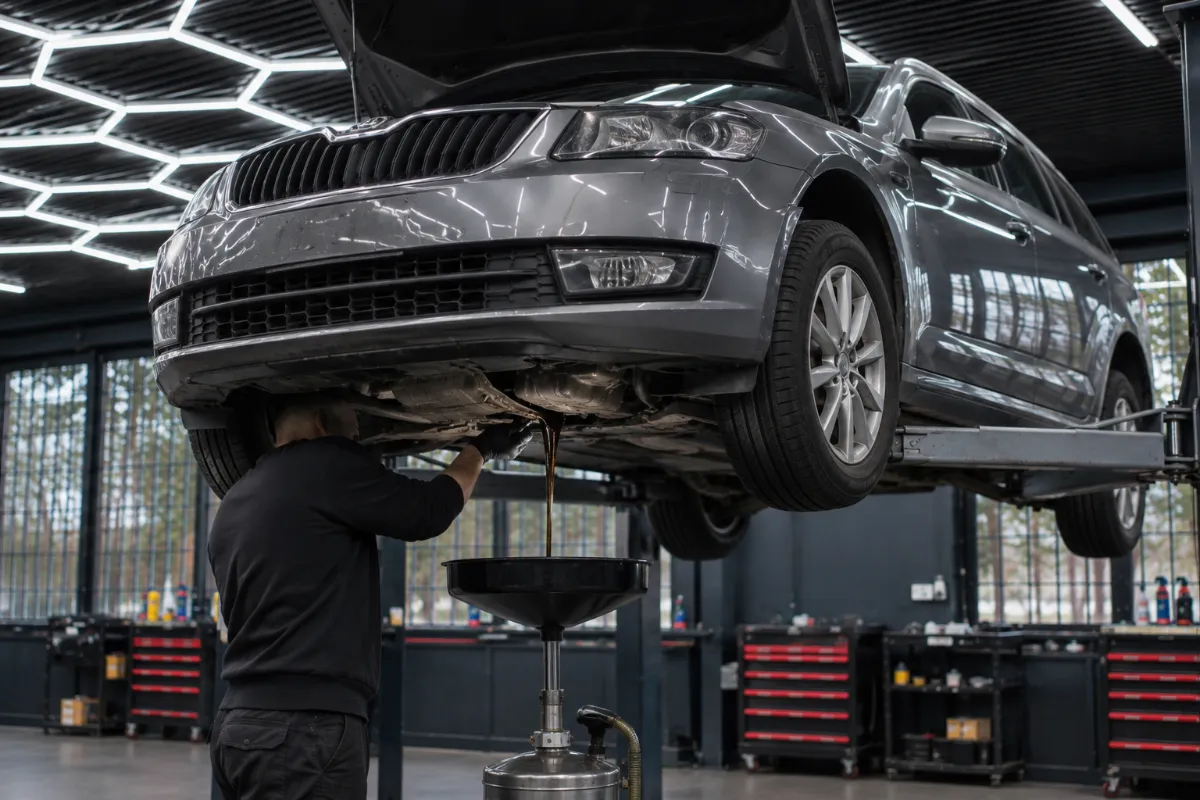
Škoda — common faults and weak points of the Fabia, Octavia, Superb, Yeti, Kodiaq and other models
Škoda has a reputation for sensible, durable cars, but every model has its weak spots: the timing chain in the 1.2 HTP and older TSI engines, oil consumption in the 1.8 TSI, DSG gearboxes, Haldex and water in the cabin. We go through them model by model.
Read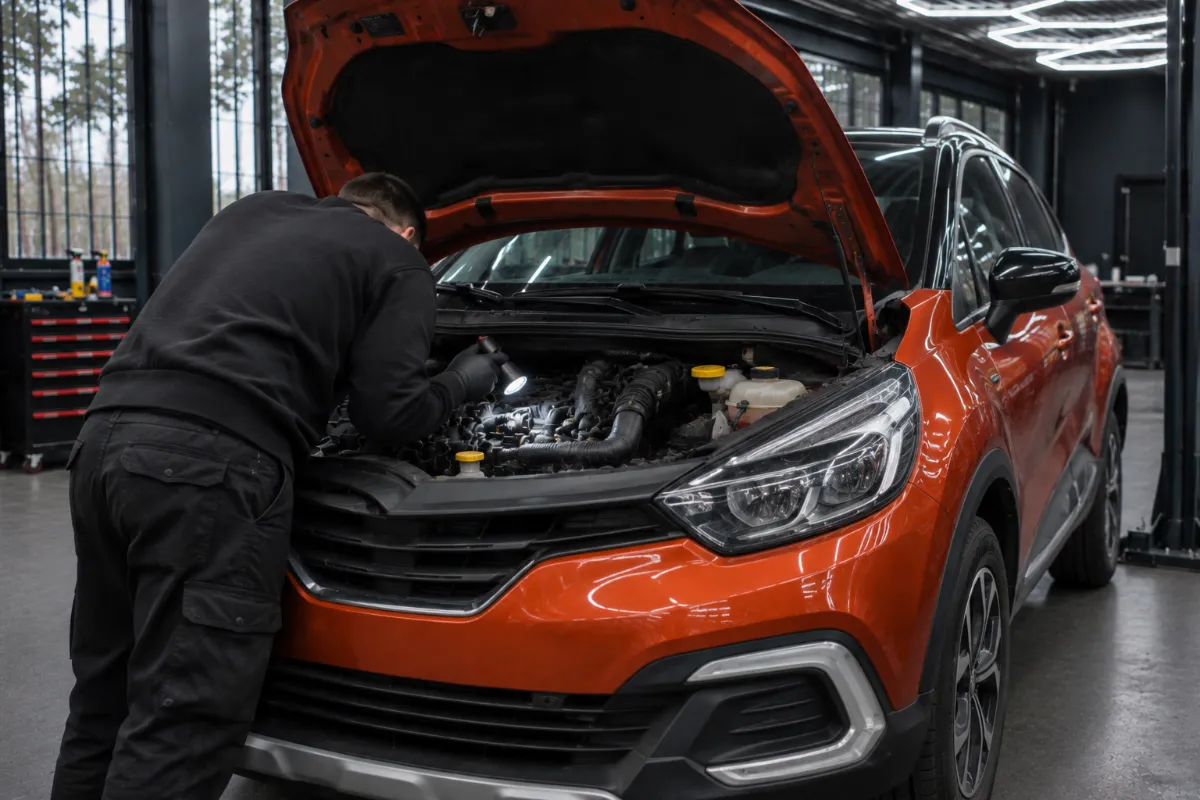
Renault — common faults and weak spots in engines, gearboxes and electrics
Renault is cheap to repair but has a few well-known weak spots: bearing shells and injectors on the 1.5 dCi, oil use and the chain on the 1.2 TCe, the turbo on the 1.9 dCi, the EDC gearbox and the key card. We cover them engine by engine and model by model.
Read
Kia — common faults and weak spots of engines, gearboxes and electrics
Kia is seen as a sensible choice, but it has well-known weak spots: the chain in MPI engines, carbon build-up and bearings in GDI, CRDi diesel ancillaries, the dry 7DCT gearbox and the ICCU module in the EV6. We cover them engine by engine, model by model.
Read