Volkswagen — common faults and weak spots of TSI and TDI engines, DSG gearboxes and models
A Volkswagen is easy to service but has well-known weak spots: the chain on older 1.2 and 1.4 TSI engines, oil consumption on the 1.8 and 2.0 TSI, EGR and DPF on TDI diesels, and the DQ200 DSG gearbox. We go through them engine by engine and model by model.
18 min read · Pulsecar team · updated:
Volkswagen faults — the short answer
Volkswagen is not a particularly unreliable make, but almost every generation of its engines has a well-known weak spot. On the 1.2 and 1.4 TSI of the older EA111 family (approx. 2005–2015) the timing chain and tensioner fail, and on the Twincharger versions the pistons too. The newer EA211 TSI engines have a belt and are noticeably more durable — typical issues there are leaks from the water pump and thermostat. The second-generation 1.8 and 2.0 TSI (EA888) can burn a lot of oil. On the diesels, watch the unit injectors and the oil pump drive on the 2.0 TDI PD, and on the EA189 and EA288 common rails — the EGR, DPF, AdBlue and timing belt.
On top of that come the DQ200 DSG gearbox with dry clutches, the electrics (window regulators, parking brake, infotainment on the Golf VIII), and suspension and corrosion on the vans. Most faults give warning signs early: a rattle after a cold start, loss of oil or coolant, judder when pulling away, the engine warning light. Below you will find an engine table, a description of each family and model, a summary table, a checklist and prices.
Which engine and model you have
| Engine | Type | Models and years, approximate |
|---|---|---|
| 1.2 TSI / 1.4 TSI (EA111) | petrol, turbo, timing chain; the 1.4 also as Twincharger (turbo + supercharger) | Golf V–VI, Polo V, Touran I, Tiguan I, Passat B6–B7, Caddy III (approx. 2005–2015) |
| 1.0 / 1.2 / 1.4 / 1.5 TSI (EA211) | petrol, turbo, timing belt | Polo V–VI, Golf VII–VIII, Passat B8, Tiguan, Touran II (from approx. 2012) |
| 1.8 / 2.0 TSI (EA888) | petrol, turbo, timing chain | Passat B6–B8, Golf VI–VIII GTI, Tiguan, Transporter (from approx. 2007) |
| 1.6 FSI | petrol, direct injection, chain | Golf V, Touran I (approx. 2003–2008) |
| 1.9 TDI PD | diesel, unit injectors, belt | Golf V, Touran I, Passat B6, Caddy III, Transporter T5 (up to approx. 2010) |
| 2.0 TDI PD | diesel, unit injectors, belt | Golf V, Touran I, Passat B6 (approx. 2003–2008) |
| 2.5 TDI R5 | diesel, 5 cylinders, unit injectors | Transporter T5 (approx. 2003–2009) |
| 1.6 / 2.0 TDI CR (EA189) | diesel, common rail, belt | Golf VI, Passat B6–B7, Tiguan I, Caddy III, Transporter T5 (approx. 2008–2015) |
| 1.6 / 2.0 TDI (EA288) | diesel, common rail, belt, often AdBlue | Golf VII, Passat B8, Touran II, Tiguan II, Caddy, Transporter T6 (from approx. 2012) |
The years are approximate — during transition periods the same model was offered with engines from different families; for example, the 1.2 TSI was sold in EA111 and EA211 versions side by side until around 2015. So always establish the engine code: you will find it in the car's data via the VIN (see checking a car by VIN), on the vehicle data sticker, or we will read it during computer diagnostics.
Volkswagen in our workshop — what the data says
Based on jobs completed at Pulsecar from January to October 2026: Volkswagen is the second most common make in our workshop — about 9.3% of the cars we serviced, or roughly one car in eleven. Only BMW comes to us more often (approx. 17.4%).
The jobs that recur most often on Volkswagens are: computer diagnostics (approx. 31% of VW jobs), wheel alignment (approx. 16%), oil and filter changes (approx. 13%), air conditioning (approx. 7%) and bulb replacement (approx. 7%). One job can include several tasks, so the figures do not add up to 100%.
Many Volkswagen faults — from the chain tensioner to the DSG mechatronics — leave a trace in the control units' memory, which is why we start every repair with diagnostics.
1.2 and 1.4 TSI EA111 — timing chain, pistons and Twincharger
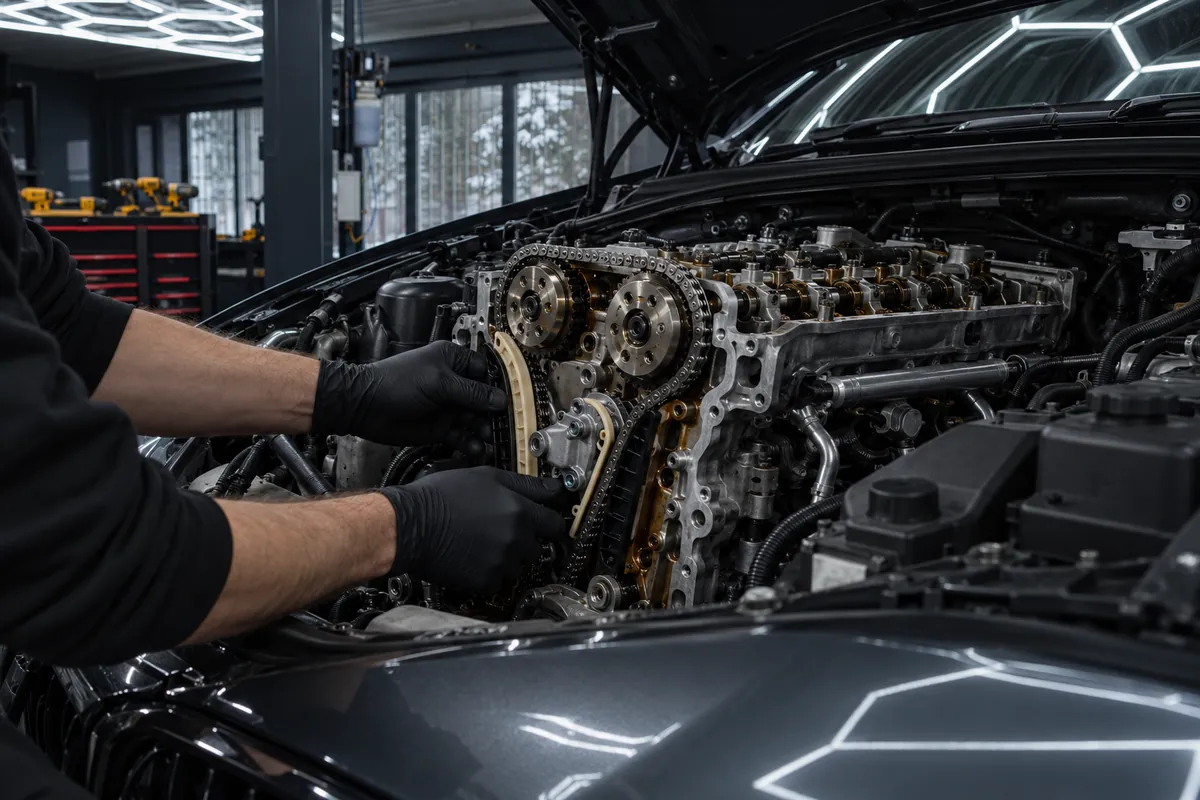
The older family of small TSI engines consists of the 1.4 TSI (from 2005, debuting in the Golf V) and the 1.2 TSI (from 2009, codes including CBZA and CBZB, 8-valve head). Both have a timing chain that was meant to be maintenance-free, but on some early-production units it stretched or the tensioner failed after just a few tens of thousands of kilometres. Volkswagen revised the timing kit several times.
The typical symptom is a rattle for a few seconds after a cold start, followed by camshaft position faults and rough running. If the chain jumps, the valves hit the pistons. Increased oil consumption, carbon build-up in the intake, ignition coils, the crankcase breather and turbocharger control are also reported.
The 1.4 TSI Twincharger (turbo + supercharger, codes including BWK, CAVA, CAVD) is the riskiest version: apart from the chain, cracked pistons and rings occur, and the supercharger clutch in the water pump can get noisy. The least troublesome are the turbo-only versions, e.g. the 1.4 TSI 122 hp (CAXA) — with a documented timing replacement.
On the 1.2 and 1.4 TSI EA111, change the oil every 10–15 thousand km instead of sticking to the Long Life interval. A rattle after a cold start is a signal to check the timing, not to wait.
1.0, 1.2, 1.4 and 1.5 TSI EA211 — belt, water pump and ACT
From 2012 Volkswagen gradually switched to the new EA211 family: the 1.2 TSI got a 16-valve head, and the timing is driven by a belt. These engines are noticeably more durable than their predecessors, and oil consumption is rare. The 1.0 TSI and 1.5 TSI joined later.
The most common EA211 problem is cooling: a slow loss of coolant from hairline cracks in the plastic water pump and thermostat module or from its seals. With coolant loss on a Golf VII or Polo, the water pump is the first thing to check. More on the symptoms in the article water pump — symptoms.
Other known issues: a sticking turbo wastegate actuator (e.g. after a few weeks of standing), carbon on the intake valves, on the 1.2 TSI from 2014 a faulty variable valve timing pulley that could damage the belt, and on the 1.4 and 1.5 TSI with cylinder deactivation (ACT) — jerking when it switches, usually cured with a software update. On the 1.0 TSI from 2018–2020 there was a campaign concerning the injectors. The factory belt interval is long, but many mechanics recommend replacing it together with the water pump at around 150–200 thousand km or after approx. 10 years.
1.8 and 2.0 TSI EA888 — oil consumption, chain tensioner and water pump
EA888 is the 1.8 and 2.0 TSI with a timing chain (Passat B6–B8, Tiguan, Golf GTI, Transporter and others). The generation is key. The first (approx. 2007–2008, e.g. the 1.8 TSI BZB) usually does not burn much oil. The second had oil control rings that were too thin in approx. 2008–2011, and they got stuck — some engines used a great deal of oil; fixes were introduced from approx. 2010–2011. The third generation (in VWs from the Golf VII and Passat B8) does not have this problem.
The first two generations (roughly up to 2012) are also known for an older-type chain tensioner that lost its effectiveness on some units — in the USA Volkswagen issued a bulletin on this for the 2.0 TSI from model years 2008–2013. On cars from those years it is worth checking whether and when the timing was replaced. The symptom is a brief rattle after starting and a camshaft correlation fault (e.g. P0016). On the third generation the plastic water pump and thermostat module typically cracks: coolant disappears without a visible puddle, there is a sweet smell, and white stains appear around the housing. We cover oil in more detail in the article engine oil consumption.
With a 1.8 or 2.0 TSI from 2008–2012, the engine code and an oil consumption measurement are key. If the car clearly uses oil between changes, have it diagnosed before you buy, not after.
1.9 and 2.0 TDI PD — unit injectors, cylinder heads and oil pump drive
The 1.9 TDI with unit injectors (in the Golf V, Touran I, Passat B6 and Caddy III most often 105 hp) is one of Volkswagen's most durable diesels. Typical faults concern the ancillaries: the EGR valve, the air mass meter, the unit injectors (loss of power, hard starting, black smoke), the turbo actuator and the dual-mass flywheel. Some 105 hp engines with the codes BXE and BLS are reported to suffer seized bearing shells, and the BLS has a DPF that copes badly with city driving.
The 2.0 TDI PD (approx. 2003–2008) has a worse reputation. After approx. 100–120 thousand km, cylinder head cracks occur (mainly on the 16-valve versions), along with camshaft and cam follower wear and unit injector failures. The most dangerous issue is the oil pump drive: on versions with balance shafts the hexagonal drive shaft wears, and on versions without them the small chain stretches. The result is a drop in oil pressure and a risk of the engine and turbo seizing — a problem known from the Passat B6 and Touran I, among others.
Own a Volkswagen and something worries you?
We check the engine, gearbox, suspension and the fault memory of all control units. Computer diagnostics costs 100 zł, and you get a written quote to approve before any repair.
An oil pressure warning light on a 2.0 TDI PD means stop immediately and get it towed. Driving on “just a bit further” can end with a seized engine.
EA189 and EA288 common rail diesels — EGR, DPF, AdBlue and cooling
EA189 are the common rail diesels from approx. 2008–2015: the 1.6 and 2.0 TDI in the Golf VI, Passat B6 and B7, Tiguan I, Caddy and Transporter T5. They are quieter and more durable than the PD engines. Most often the EGR valve and its cooler fail — soot clogs the system, especially on short trips (loss of power, limp mode). Add to that the DPF, the intake manifold flaps, the high-pressure pump (sensitive to fuel quality — metal particles from it can destroy the injectors) and the dual-mass flywheel. On some older 2.0 TDI CR engines wear of the oil pump drive was also reported — according to the available information, the design was changed on later production engines.
These engines were covered by a service campaign after the 2015 emissions scandal. The fix was a software update (2.0 TDI), and on the 1.6 TDI also fitting a flow-straightening mesh in front of the air mass meter. Some owners reported more frequent EGR valve failures after the update, although the manufacturer has not confirmed any such link. When buying, check with an authorised dealer by VIN whether the campaign was carried out. We describe the symptoms of a clogged valve in the article EGR valve — symptoms.
You will find the EA288 (from approx. 2012) in the Golf VII, Passat B8, Touran II, Tiguan II, Caddy and Transporter T6. The first recurring issue is cooling: leaks at the thermostat, the liquid-cooled intercooler and the EGR cooler hoses, a sticking shroud on the switchable water pump (the engine takes a long time to warm up or overheats) and the bag of granules in the expansion tank splitting. The second is EGR, DPF and AdBlue — the urea crystallises on the injector and damages the NOx sensors, especially when it sits in the tank for a long time. On the Transporter T6 from 2015–2019 an AdBlue leak at the joint between the line and the injector is known. The third is oil leaks from under the cylinder head cover, which can weaken the timing belt.
On both families the timing is driven by a belt. Many mechanics recommend replacing it on the EA288 every approx. 120–150 thousand km or 5–7 years, always with the water pump, and if the history is uncertain — straight after purchase.
DSG gearboxes — DQ200 versus DQ250 and DQ381
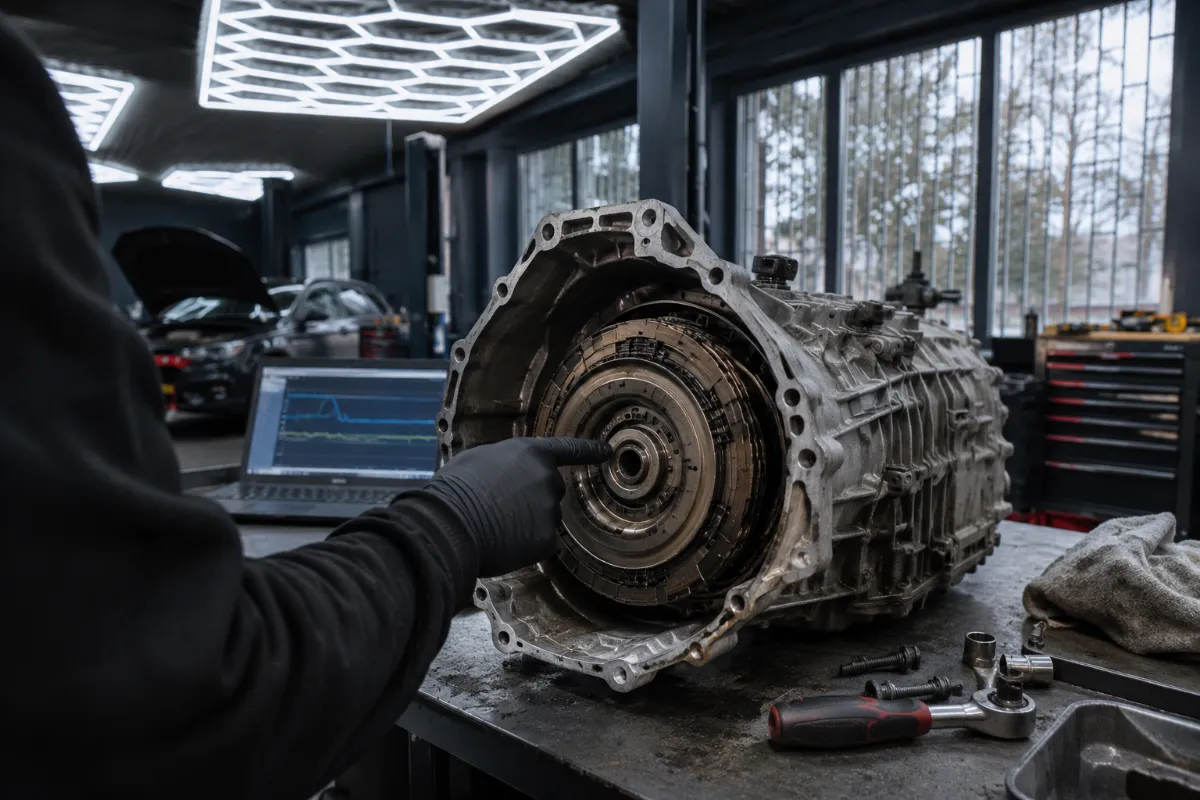
- The DQ200 (7-speed, dry clutches, from 2008, torque up to approx. 250 Nm) works with the 1.0–1.8 TSI and 1.6 TDI. The most common fault is hairline cracks in the pressure accumulator housing in the mechatronic unit — the symptoms are judder, delayed gear changes, a flashing PRNDS display and limp mode. The loss of pressure makes the pump run almost non-stop, so it can fail too.
- The dry clutches in the DQ200 also wear — faster in traffic jams than on the open road (judder when pulling away, vibration). Sometimes the culprit is just a pressure or position sensor rather than the whole mechatronic unit. The manufacturer does not specify an oil change, but independent mechanics recommend one every approx. 60–100 thousand km.
- The DQ250 (6-speed) and DQ381 (7-speed) are wet-clutch gearboxes fitted with the more powerful 2.0 TSI and 2.0 TDI. They are considered more durable but need regular oil changes: on the DQ250 every approx. 60 thousand km, on the DQ381 every approx. 120 thousand km according to the manufacturer.
- On older cars with DSG and the 2.0 TDI diesel, the dual-mass flywheel usually wears faster than on versions with a manual gearbox.
We describe fault symptoms in detail in the article DSG gearbox — symptoms. On cars with 4Motion drive, also remember to service the Haldex coupling — neglected oil clogs the pump strainer.
Golf V–VIII and Polo — what goes wrong in each generation
Golf V (approx. 2003–2008): apart from the engines (1.4 TSI; 1.6 FSI, where chain problems usually appear at approx. 80–120 thousand km; 1.9 and 2.0 TDI PD), typical faults are window regulators and central locking, A/C compressors and condensers, and seized brake caliper pistons. The Golf VI (approx. 2008–2012) is mainly the EA111 TSI and EA189 diesels described above.
Golf VII (approx. 2012–2019): water pump and thermostat, the turbo wastegate on the 1.2 and 1.4 TSI, the DQ200 gearbox, and electrics — freezing infotainment, the reversing camera, misting headlights on cars after 2017 and knocking rear shock absorbers. In its first years the Golf VIII (from approx. 2020) had mainly software problems: a freezing screen (taking the navigation, camera and climate control panel with it) and eCall messages. Volkswagen ran a service campaign with a software update, and for the DQ200 a campaign concerning abrupt gear changes. The problems mainly affected the first two years of production; at the end of 2021 the manufacturer introduced a number of changes, so cars from 2022 onwards are a safer choice — and on any of them it is worth checking with an authorised dealer whether the updates were done.
The Polo V (approx. 2009–2017) shares the Golf's engines and their weak spots. The naturally aspirated 1.2 has a short-lived chain, the 1.2 TSI EA111 — the chain and a software update concerning the turbocharger, and the 1.4 86 hp knocks at higher revs on some units because of worn pistons. On the 1.0, water pump leaks are reported, and otherwise chafed wiring looms in the engine bay and anti-roll bar links.
Passat B6–B8, Tiguan and Touran — family and fleet models
The Passat B6 (approx. 2005–2010) is above all the 2.0 TDI PD with the cylinder head and oil pump drive issues described above — the common rail versions from 2007 have noticeably fewer problems, and the 1.9 TDI is regarded as the most durable. Known faults are the electric parking brake locking up, wiper motors, the ignition switch and the steering lock, which can prevent the car from starting, and in the suspension — the front control arm bushes and rear anti-roll bar links. The Passat B7 (approx. 2010–2014) is mainly EA189 diesels and TSI petrols.
Passat B8 (from approx. 2014): water pump and thermostat leaks on the 2.0 TDI, jerking on the 1.5 TSI with a manual gearbox (cured with software), the pressure sensor in the DQ200, the reversing camera hidden under the badge, clogged panoramic roof drains and corrosion around the badge on the tailgate. The Tiguan I (approx. 2007–2016) is safest to buy with a diesel or the 1.4 TSI EA211 — the 1.4 TSI Twincharger and the 2.0 TSI from 2007–2011 carry the most risk. The Touran I (approx. 2003–2010) is most often the 1.9 TDI (EGR valve) or the 2.0 TDI PD, and among the minor faults: the brake light switch, window regulators, the comfort module, door seals and an expensive A/C compressor.
Caddy and Transporter T5/T6 — vehicles that work hard
The Caddy and Transporter are very popular company vehicles in Warsaw, often with high mileage. The Caddy III (approx. 2004–2015) with the 1.9 and 2.0 TDI is tough if serviced regularly. Typical issues are faster-wearing brakes, oil leaks, rear axle mountings and leaf springs at high mileage, and corrosion at the ends of the sills and above the rear axle. Early 1.2 TSI engines have the same chain problem as other EA111 units — from 2015 belt-driven versions were used.
On the Transporter T5 (approx. 2003–2015) the choice of engine matters enormously. The 1.9 TDI is durable if the oil was changed every 10–15 thousand km. The five-cylinder 2.5 TDI (AXD, AXE, later BNZ, BPC) has known camshaft wear, an unreliable oil pump drive and problems with unit injector seating. The 2.0 TDI common rail (from 2009) had faulty injectors, leaking EGR coolers and clogging DPFs in its first years — units from 2012 are better. The riskiest version is the 2.0 BiTDI: overheating, low oil pressure and EGR faults. Also watch out for clocked odometers. The Transporter T6 (from 2015) has the EA288 diesel with the cooling and AdBlue issues described above.
Electrics, air conditioning and corrosion — what to check
- Window regulators and central locking (especially Golf V, Touran I) — a window that will not go back up, or doors that will not lock with the remote.
- The electric parking brake on the Passat B6 — it can lock up and immobilise the car.
- Infotainment and software on the Golf VII and VIII — check whether the updates were done at an authorised dealer.
- Air conditioning: worn compressors and leaking condensers on older models — before the season it is worth having a refill with a leak test.
- Corrosion: the sills and the area around the rear axle on the Caddy, the tailgate around the badge on the Passat B8, seized brake caliper pistons on older Golfs.
Summary table — engine/model, weak spot, symptom, what to do
| Engine / model | Weak spot | Symptom | What to do |
|---|---|---|---|
| 1.2 / 1.4 TSI EA111 | Timing chain and tensioner | Rattle after a cold start, valve timing faults | Inspect and replace the timing gear |
| 1.4 TSI Twincharger | Pistons, chain, supercharger clutch | Loss of compression, oil consumption, noise | Diagnostics, compression test, endoscopy |
| TSI EA211 | Water pump and thermostat module | Slow coolant loss | Leak test, module replacement |
| 1.8 / 2.0 TSI EA888 gen. 2 | Piston rings | High oil consumption | Consumption measurement, endoscopy, quote |
| 1.8 / 2.0 TSI EA888 gen. 1–2 | Chain tensioner | Rattle after starting, P0016 | Check the tensioner and chain |
| 2.0 TSI EA888 gen. 3 | Water pump and thermostat housing | Coolant loss, sweet smell | Module replacement, bleeding the system |
| 2.0 TDI PD | Oil pump drive, cylinder head | Oil pressure warning light, coolant loss | Immediate diagnostics |
| 1.9 / 2.0 TDI PD | Unit injectors | Loss of power, black smoke, hard starting | Injection diagnostics |
| 1.6 / 2.0 TDI EA189 | EGR, DPF, intake flaps | Limp mode, loss of power | Diagnostics, cleaning or replacement |
| 2.0 TDI EA288 | Thermostat, water pump, AdBlue | Coolant loss, SCR faults | Leak test, SCR diagnostics |
| DSG DQ200 | Mechatronics, dry clutches | Judder, flashing PRNDS | Diagnostics, adaptation, repair as per the quote |
| Transporter T5 2.5 TDI | Camshafts, oil pump drive | Noisy running, oil pressure warning light | Diagnostics, oil pressure check |
| Passat B6 | Electric parking brake | Brake will not release | Diagnostics, caliper or motor repair |
The same symptoms can have different causes, so get diagnostics done before you buy any parts.
Recognise any of these symptoms?
Don't wait until a small fault turns into an expensive repair. Come to our workshop in Bielany — we will tell you what is urgent and what can wait.
How to look after a Volkswagen so it does not let you down
- Change the oil more often than Long Life suggests: with city driving every approx. 10–15 thousand km or once a year, using oil that meets the VW standard specified for the engine. It is the cheapest protection for the chain on TSI engines and the turbo on TDIs.
- Timing belt with water pump — on time, and if the history is uncertain, straight after purchase.
- Check the coolant every few weeks. A slow loss is most often the water pump, the thermostat or the EGR cooler.
- Take a diesel on a longer run now and then — the EGR and DPF cope badly with nothing but short trips.
- Look after the gearbox: oil in the DQ250 and DQ381 at the specified interval, on the DQ200 consider a change every approx. 60–100 thousand km, and if it judders, do not wait for limp mode.
- React to warning lights — most faults can be read quickly from the control units' memory.
Buying a used Volkswagen — checklist
- 1Establish the engine and gearbox code by VIN — it determines what to look for (EA111 or EA211, EA888 gen. 2 or 3, PD or common rail, DQ200 or DQ250).
- 2Check the history: oil change intervals, timing replacement (belt with water pump, or chain), DSG oil.
- 3Listen to a cold start — a rattle for a few seconds is a signal to check the chain and tensioner.
- 4Read the faults from all control units, including stored ones: valve timing, oil pressure, EGR, DPF, AdBlue, gearbox.
- 5Check the coolant and oil: levels, leaks at the water pump and thermostat, no emulsion.
- 6With a DSG — pulling away in traffic, reversing, smooth gear changes, no flashing PRNDS.
- 7On the lift: control arms, anti-roll bar links, leaks, and on the Caddy and Transporter — the sills and the area around the rear axle.
- 8Check service campaigns with an authorised dealer by VIN and verify the mileage — this is especially important for fleet cars and vans.
We carry out this kind of check as part of a pre-purchase inspection. If you are also considering an Audi or a Skoda with the same engines, have a look at the articles Audi — faults and weak spots and Skoda — faults and weak spots.
How we check Volkswagens at Pulsecar
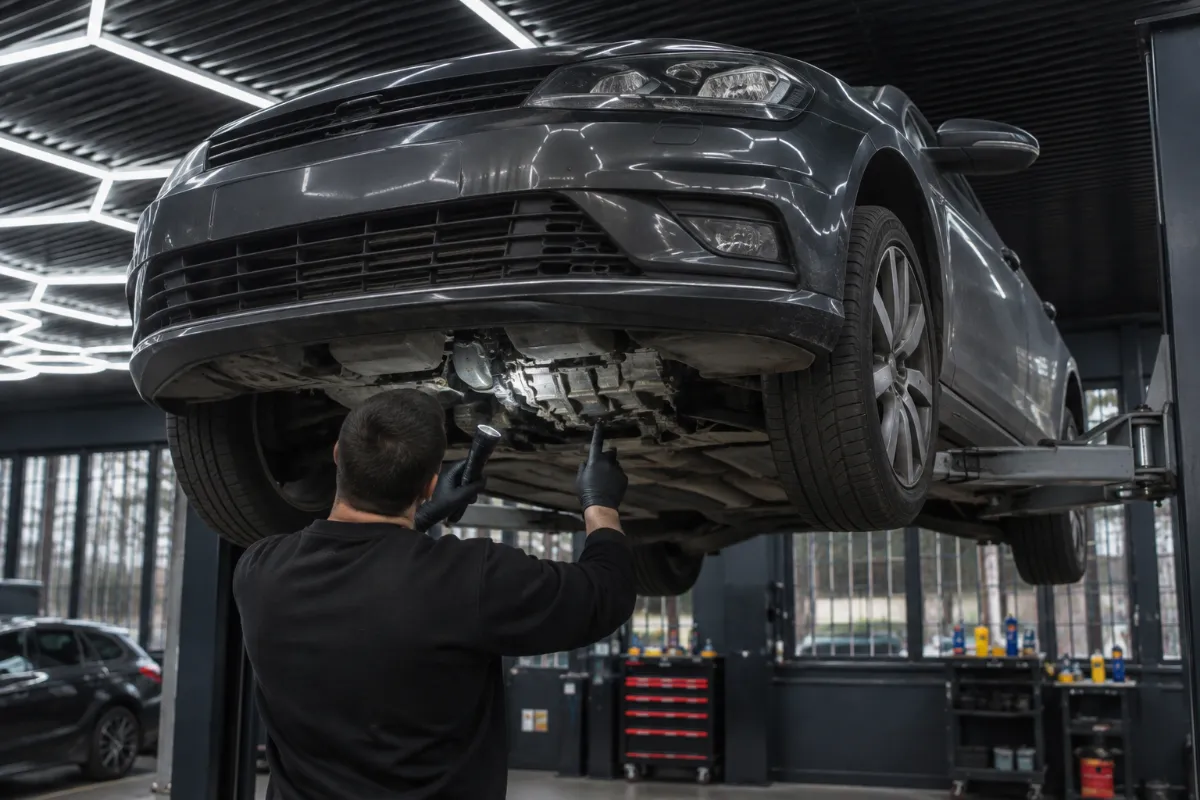
We start with a conversation and computer diagnostics of all control units, not just the engine. We read current and stored faults, and check the valve timing, boost pressure, DPF and AdBlue condition, DSG clutch adaptations and battery voltage. Then we inspect the car on a lift: oil and coolant leaks, the water pump, timing gear, suspension and corrosion. If needed, we carry out a cylinder endoscopy.
After diagnosis you get a written quote, and we start work only once you have approved it. We show you photos of what we found, and during major repairs, e.g. on the timing gear, you may get access to an online camera. Warranty: 6 months on labour, new parts under the manufacturer's terms (usually 12–24 months); we give no workshop warranty on parts supplied by the customer. We serve customers in Polish, Ukrainian, Russian, English and Belarusian. You can book a visit online or call: +48 571 058 591.
How much Volkswagen diagnostics and repairs cost
| Service | Price |
|---|---|
| Computer diagnostics | 100 zł |
| Oil and filter change | 120 zł |
| Wheel alignment (2 axles) | 300 zł |
| A/C refill with leak test | from 199 zł |
| Bulb replacement | from 30 zł |
| Coolant change | from 200 zł |
| Engine endoscopy | from 300 zł |
| Pre-purchase inspection | 300 zł |
| Automatic / DSG gearbox oil change | from 400 zł |
| Timing belt replacement | from 600 zł |
| Clutch replacement | from 600 zł |
| Timing chain replacement | from 1000 zł |
These are starting prices from our price list. The final amount depends on the engine and the parts — e.g. a chain on a 1.4 TSI is a different scope of work from one on a 2.0 TSI, and on a diesel we replace the belt together with the water pump and pulleys. Repairs to DSG mechatronics and clutches, the EGR cooler, the AdBlue system, the oil pump or the unit injectors are priced after diagnosis — the exact amount is always in the quote before work begins. We carry out DSG oil changes and gearbox repairs as part of our gearbox repair service.