Service after buying a used car — what to replace straight away and what to check
After buying a used car you do not know what has really been replaced. We explain which fluids, filters and parts to change straight away, what to check in the first month and how to plan the budget without overpaying.
9 min read · Pulsecar team · updated:
Service after buying a used car — the short answer
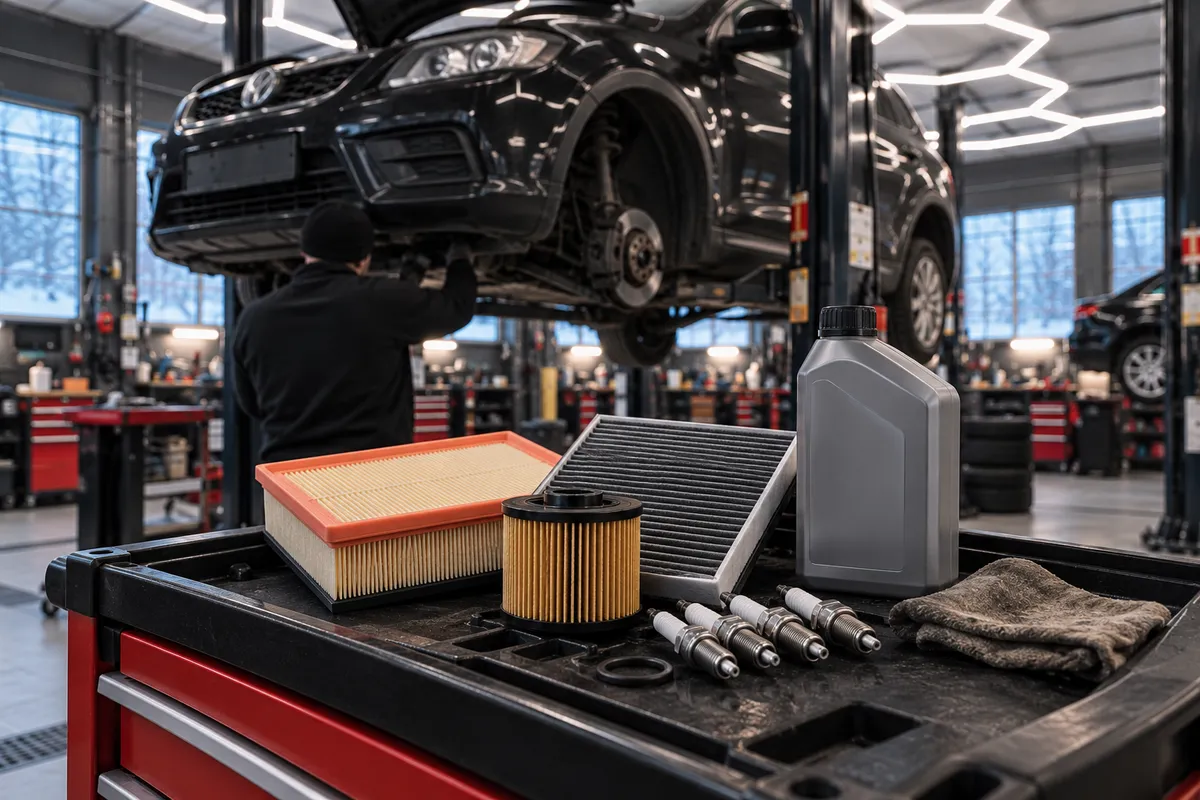
After buying a used car it is worth replacing the engine oil and oil filter straight away, along with the air filter, the cabin filter and — if it is part of routine servicing on your car — the fuel filter. We also check the brake fluid and coolant first, and if the seller has no invoice for a timing belt change, we treat it as not done. The list continues with gearbox oil (especially in an automatic), spark plugs and the auxiliary belt — but these depend on the mileage and history of the car.
The second part is checking: suspension, brakes, battery and air conditioning. Not everything has to be done in the first week. Below you will find a list of things to replace, a priority table (urgent / within a month / when convenient), guide labour prices and a description of how this service works at our workshop.
Car history and documents — where to start
Before you replace anything, gather what you know about the car. We accept as proof of replacement an invoice or receipt from a workshop with the VIN or registration number, a stamped entry in the service book or a printout of the dealer service history. A verbal assurance like “the timing belt was done 20,000 km ago” guarantees nothing.
A lot can also be checked by VIN: mileage history from technical inspections, insurance events and, for some makes, service records. How to do it is described in our guide checking a car by VIN. If you are still choosing a car, it is best to do this together with a pre-purchase inspection — then some faults come out before you pay.
Anything that cannot be documented we treat as not done. It is the simplest rule and it protects you from the most expensive surprises.
Keep all invoices from the post-purchase service and note the mileage at every replacement. When you sell the car, that history is a real argument, and it will help you plan the next services.
What to replace straight after buying
- Engine oil and oil filter — you do not know what oil is in the engine or how many kilometres it has done. It is the cheapest and most important job. How to choose the oil and interval is covered in our guide engine oil change — how often.
- Air filter and cabin filter — cheap, and a clogged cabin filter means weak airflow and misted windows.
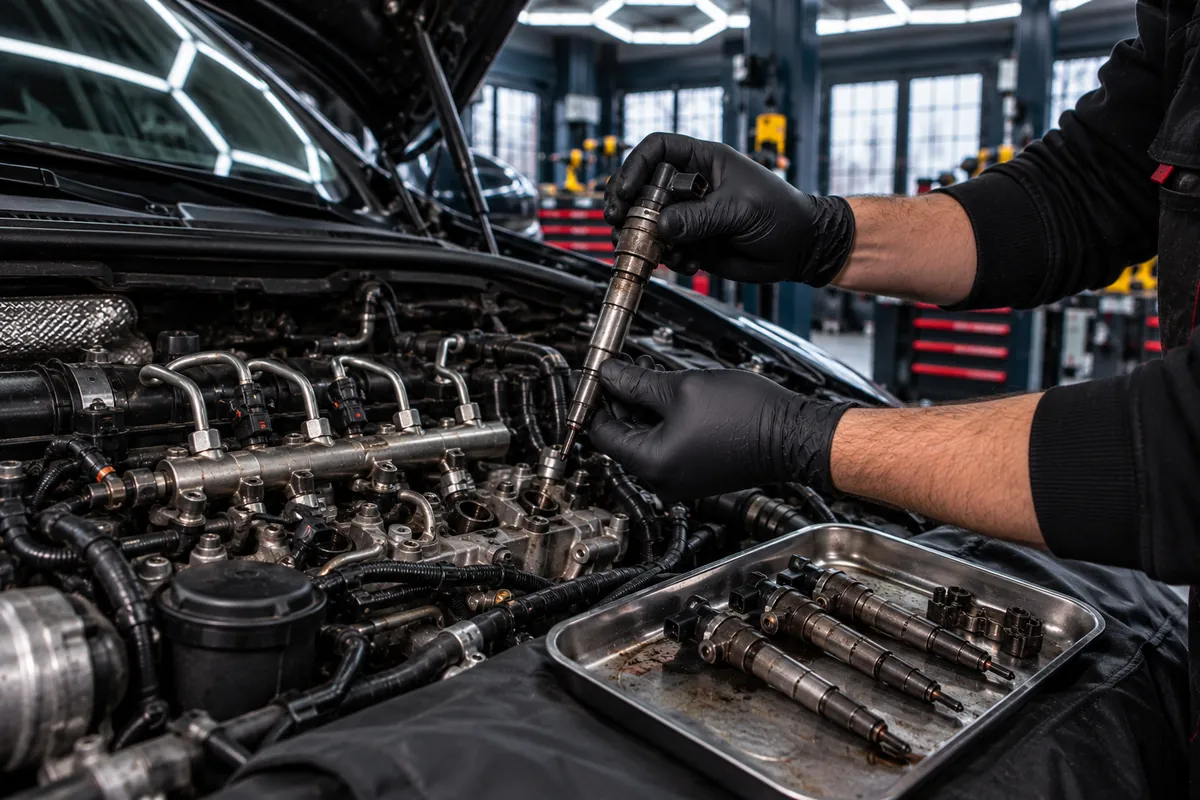
- Fuel filter — especially in a diesel, where dirty fuel and water harm the injectors. In many petrol cars the filter sits in the tank and is not part of routine servicing.
- Brake fluid — it absorbs moisture from the air, which lowers its boiling point. Without proof of a change in the last two years, replace it or at least measure its water content.
- Coolant — we check the freezing point and the condition of the fluid. Dirty, rusty coolant or coolant with sediment gets replaced.
- Timing belt — if the engine has a belt and there is no proof of a change, replacing the kit with the water pump (if it is driven by the timing belt) is the most sensible insurance.
- Gearbox oil — especially important in an automatic; in a manual it depends on mileage and the manufacturer’s recommendations.
- Spark plugs (petrol) — if the mileage is close to the interval or nobody knows when they were last changed.
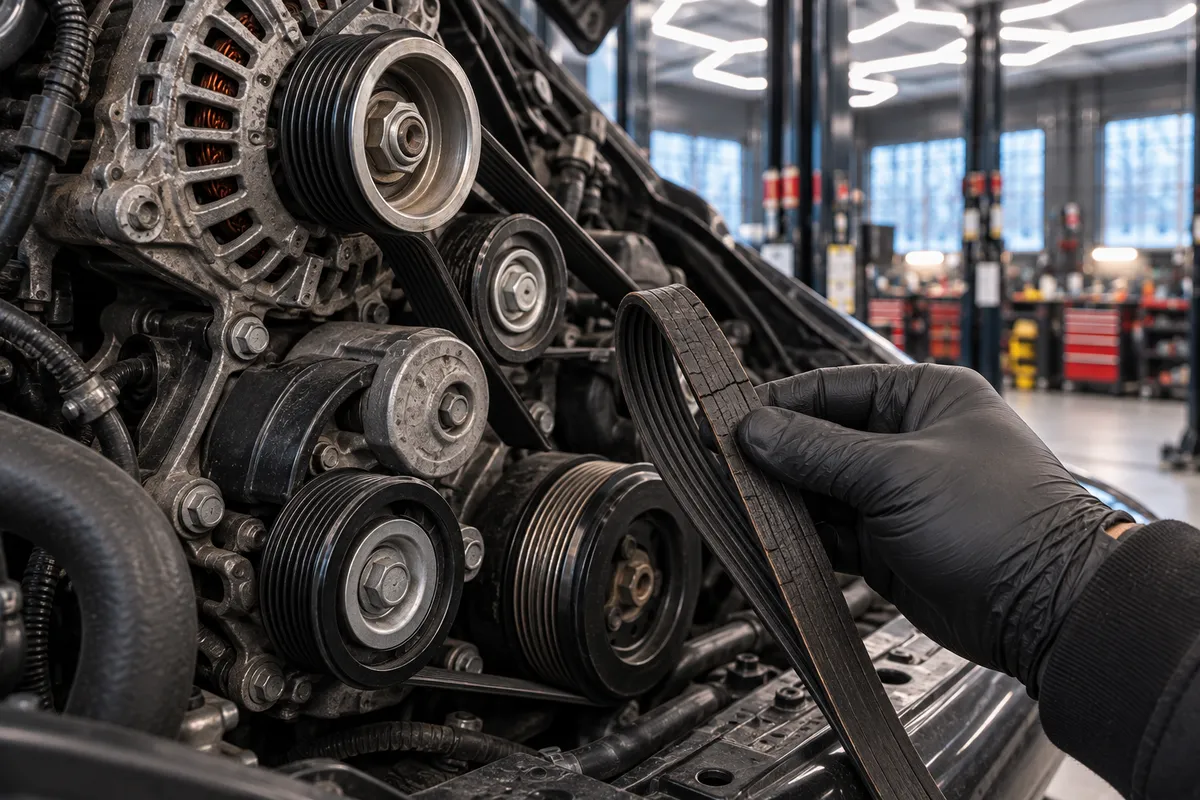
- Auxiliary (multi-rib) belt — if it is cracked, squeals or there is no information about its replacement, ideally together with the tensioner.
Not every item on this list has to be replaced on every car. Spark plugs, gearbox oil and the auxiliary belt are assessed by inspection and mileage — if they are in good condition and were recently replaced, there is no point touching them.
Timing belt without proof of replacement — why it is a priority
A snapped timing belt in most modern engines means the pistons hit the valves. Repairing the cylinder head then costs many times more than the timing belt replacement itself. That is why, without an invoice, we do not wait for symptoms — a timing belt usually gives no warning before it breaks.
The belt replacement interval depends on the engine: manufacturers give a mileage and an age, whichever comes first. A timing chain has no fixed interval, but chains stretch — the signs are rattling after a cold start and camshaft correlation fault codes. In that case we start with diagnostics and decide on replacement based on the result. Details and prices are in our guide timing belt replacement — cost and symptoms.
When the timing belt is replaced, it is worth changing the auxiliary belt and its tensioner at the same time — the mechanic removes them anyway, so the extra labour is small.
Oil in manual and automatic gearboxes
Many cars’ documentation says the gearbox oil is “filled for life”. In practice, in automatics old fluid speeds up wear of the clutches and hydraulic parts, and the symptoms usually appear too late: jerky shifts, delayed engagement, slipping. If you do not know when the fluid was changed and the mileage is high, a change usually pays off. With a badly neglected gearbox we decide more carefully, after assessing the fluid condition and how the gearbox works.
In a manual gearbox an oil change is simpler and cheaper. It is worth doing when gears are hard to engage when cold, at high mileage, or when the manufacturer specifies a change interval. Oil in automatic and dual-clutch gearboxes is covered in more detail in a separate guide on automatic transmission oil changes.
What to check after buying — suspension, brakes, battery, air conditioning
- Suspension: play in the anti-roll bar links, tie-rod ends, control arms and wheel bearings, condition of the shock absorbers. Knocks over bumps and pulling are a reason for a suspension check.
- Brakes: thickness of pads and discs, caliper operation, condition of brake lines and how the parking brake works. A dragging caliper raises fuel consumption and overheats the disc.
- Battery: age (date on the case), resting voltage and a load test. A weak battery usually shows itself with the first frosts.
- Air conditioning: whether it cools, whether there is an unpleasant smell and whether the system is tight. A refill with a vacuum test shows whether the system holds refrigerant.
- Tyres: age (DOT date), tread depth, uneven wear — the latter often points to bad wheel alignment.
- Leaks: oil, coolant, power steering fluid — inspected on the lift, from underneath.
These parts do not need replacing “blindly”. A proper inspection and a decision based on what you can actually see are enough. At Pulsecar we do this as part of the extended inspection or a separate suspension check.
Priorities and budget — what is urgent and what can wait
| Priority | What to do | Why |
|---|---|---|
| Urgent (straight away) | Oil and filter, timing belt without proof of change, brake fluid with high water content, fluid leaks | Protect the engine from serious failure and affect safety |
| Urgent (straight away) | Brakes below the minimum, play in the steering, damaged tyres | Direct impact on driving safety |
| Within a month | Air, cabin and fuel filters, coolant, automatic gearbox fluid, cracked auxiliary belt | Reduce the risk of failure and accelerated wear |
| Within a month | Battery before winter, suspension parts with clear play | You avoid starting problems and further wear of other parts |
| When convenient | Spark plugs close to interval, manual gearbox oil, A/C recharge, wheel alignment | Improve comfort and economy but do not threaten sudden failure |
This split lets you spread the costs. When buying a car it is worth keeping a reserve in the budget for servicing — in practice it ranges from a few hundred złoty for a car with a good history to a few thousand if the timing belt and overdue repairs need doing. We give the exact amount in the quote after the inspection.
If the budget is tight, start with the oil and filter and a timing belt with no proof of replacement. These are the two items whose postponement can cost the most.
How we do it at Pulsecar
- 1Conversation and documents: we check what you know about the car’s history and look through invoices and service records.
- 2Computer diagnostics: reading fault codes from the control units and basic engine live data.
- 3Extended inspection on the lift: suspension, brakes, exhaust, leaks, tyres, fluids and belts.
- 4Measuring water content in the brake fluid, the coolant freezing point and the battery condition.
- 5A list of findings with priorities, photos and explanations — what is urgent, what within a month, what when convenient.
- 6A written quote for approval. We start work only once you approve it — you can also choose just some of the items.
During major repairs, such as a timing belt replacement, you may get access to an online camera and watch the work live. We speak Polish, Ukrainian, Russian, English and Belarusian. More about the scope of work is on the general repair page.
How much does a service after buying a used car cost
| Service | Price (labour) |
|---|---|
| Extended inspection | 250 zł |
| Computer diagnostics | 100 zł |
| Oil and oil filter change | 120 zł |
| Air / cabin / fuel filter | 40 zł each |
| Brake fluid change | from 200 zł |
| Coolant change | from 200 zł |
| Timing replacement — belt / chain | from 600 zł / from 1000 zł |
| Manual / automatic gearbox oil | from 200 zł / from 400 zł |
| Spark plugs, auxiliary belt with tensioner | priced in the quote |
Prices are for labour; parts are priced separately depending on the model and engine. The final cost of the service depends on what the inspection shows — you receive it in a quote before work starts. We give a 6-month warranty on labour, and new parts carry the manufacturer’s warranty (usually 12–24 months). The workshop gives no warranty on parts supplied by the customer. The full list is in our price list.
You will find Pulsecar at ul. Arkuszowa 176 in Warsaw’s Bielany district. We are open Monday to Friday 09:00–18:00 and Saturdays 09:00–15:00. The easiest way is to book online or call +48 571 058 591 — bring the documents and invoices you got from the seller.