Car windows misting up — causes, quick demisting and prevention
Windows mist up on the inside when there is too much moisture in the cabin and the air is not being dried. We explain where water in the car comes from, how to clear the glass in a few minutes and when misting points to a fault such as a leaking heater core.
8 min read · Pulsecar team · updated:
Misting windows — the short answer
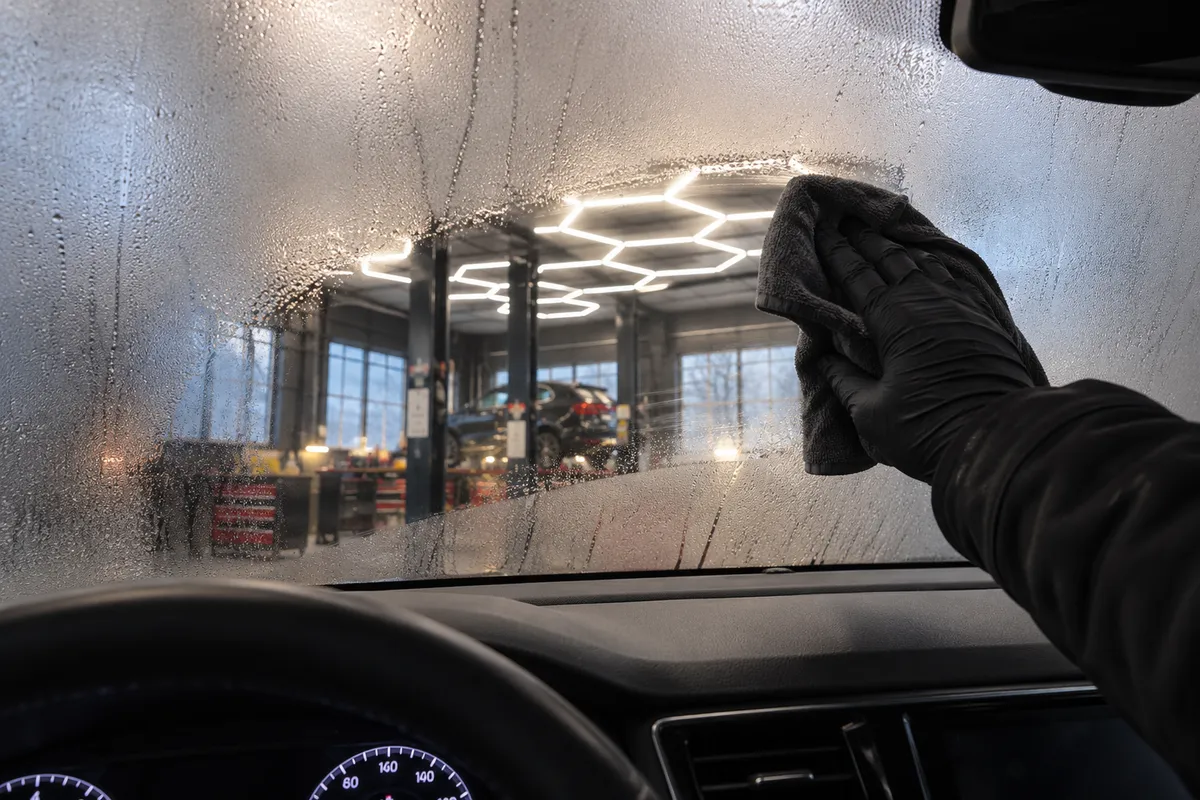
Windows mist up on the inside when there is too much moisture in the cabin and the air is not being dried. The most common causes are wet shoes, clothes and mats, driving on recirculation, a clogged cabin filter and air conditioning that the driver never switches on in winter. Then there are faults: leaking door seals, blocked scuttle drains that let water into the car, and a leaking heater core, given away by a sweet smell and a greasy film on the glass.
Misting is not just a comfort issue — a fogged windscreen limits visibility and is a real danger on the road. Below we explain where the moisture comes from, how to clear the windows in a few minutes, how to prevent the problem and when it is worth coming to the workshop.
Where the mist on the windows comes from
Warm air can hold more water vapour than cold air. When humid cabin air touches a cold window, it cools below the so-called dew point and water condenses on the glass. That is why the problem gets worse in autumn and winter: it is cold outside, while inside the passengers breathe, snow evaporates from shoes and wet jackets dry out.
To stop the windows misting, you either need to bring dry air into the cabin or warm the glass. A combination of both works best: the air conditioning dries the air and the heater warms it. If one of them does not work — for example the heater is weak or the A/C is empty — the windows mist up much more often. If the problem is a lack of heat, see our guide car heater not working.
Most common causes of misting — table
| Symptom | Likely cause | What to do |
|---|---|---|
| Windows mist up after every rain or snowfall, damp mats | Water carried in on shoes, wet mats and carpet | Dry the mats indoors, use rubber mats, knock snow off shoes |
| Weak airflow even with the blower on high, musty smell | Clogged or damp cabin filter | Replace the cabin filter |
| Windows mist up quickly after switching on recirculation | The same humid air keeps circulating | Switch to fresh air |
| A/C does not cool in summer, windows are hard to clear | Low refrigerant or an A/C fault | Leak test and A/C refill |
| Water on the front floor, wet carpet after rain | Blocked scuttle drains or A/C condensate drain, leaking seals | Clear the drains, check the seals |
| Sweet smell, greasy film on the glass, coolant level dropping | Leaking heater core | Cooling system diagnosis, heater core replacement |
In practice the causes often add up: wet mats plus recirculation and an old filter are enough to make the windows mist up every time you set off. Start with the simplest things, and if the car stays damp even with dry mats, look for where the water gets in.
Cabin filter, recirculation and unused air conditioning
A clogged cabin filter restricts airflow, so the vents sweep the glass less effectively and exchange the cabin air more slowly. If the filter also soaks up water, it becomes a source of damp and an unpleasant smell. Replace the filter at least once a year or according to the car’s service schedule — more often if you drive in the city or on dusty roads. A good moment is autumn, before the misting season.
Recirculation closes the air circuit in the cabin: it is useful in a traffic jam or with an unpleasant smell outside, but in winter it quickly raises humidity, because moisture from breath and clothes has nowhere to go. Air conditioning, on the other hand, dries the air, because water vapour condenses on the cold evaporator and drains out under the car. That is why it is worth using it in autumn and winter too. In frost the compressor in many cars does not switch on — that is normal protection — but above freezing the drying works very effectively. If the A/C cools poorly in summer, it is usually low on refrigerant — more in the article A/C recharge.
In many cars the windscreen demist button automatically switches on the A/C and turns off recirculation. It is the fastest way to clear a misted windscreen — do not switch the compressor off manually at that moment.
Water in the cabin — seals, mats and scuttle drains
- Wet mats and carpet: textile mats can hold water for weeks, and the carpet underneath even longer. The water evaporates in the heated cabin and settles on the windows.
- Scuttle drains: leaves and needles collect under the grille at the base of the windscreen. When the drains block, water can overflow into the air intake, soak the cabin filter or get into the cabin.
- A/C condensate drain: water from the evaporator should drain out under the car. When the drain blocks, it can drip inside — usually onto the passenger-side floor.
- Door, boot and window seals: when cracked or deformed, they let water in during rain and car washes.
- Sunroof drains: blocked channels can soak the headlining and pillars.
If the carpet is always wet after rain, new mats will not help — you need to find the path the water takes. Drains can often be cleared without taking the interior apart. When the cause is corroded bodywork or a badly bonded windscreen, you need a body shop — Pulsecar does not do bodywork, but we will help you find out where the water is coming from.
A leaking heater core — sweet smell and greasy film
The heater core is a small radiator behind the dashboard with coolant flowing through it. When it starts to leak, coolant evaporates into the cabin. Typical signs are a sweetish smell with the heating on, a greasy, smearing film on the windscreen that is hard to clean off, wet carpet under the dashboard — usually on the passenger side — and coolant disappearing from the expansion tank.
This fault does not go away by itself and should not be ignored. Coolant vapour should not get into the cabin, the greasy film worsens visibility, and coolant loss can eventually lead to the engine overheating. In many cars replacing the heater core requires taking apart part of the dashboard, so we give its cost in the quote after checking the specific model.
If the glass stays greasy and smeary after wiping and you can smell something sweet in the car, check the coolant level on a cold engine. Dropping coolant together with these symptoms is a strong hint that the heater core is leaking.
How to clear misted windows quickly
- 1Switch on windscreen demist (the button with the windscreen symbol) and set the blower to high.
- 2Switch on the A/C and turn off recirculation — fresh air should come into the cabin and be dried.
- 3Set a high temperature: warm, dry air clears the glass fastest.
- 4Switch on the heated rear window and, if the car has them, the heated windscreen and mirrors.
- 5Open the windows slightly for a moment to let the most humid air out of the cabin.
- 6Drive off only when the windscreen and the side windows by the mirrors are clear.
Do not wipe the glass with your hand or a glove — you leave greasy smears on which mist settles even faster, and at night oncoming headlights scatter on them and dazzle you. If you have to wipe the glass, use a clean microfibre cloth kept only for that purpose.
In winter clear the snow off the car first and only then get in — snow from clothes and shoes is another load of water for the cabin.
Prevention — how to stop windows misting up
- For autumn and winter fit rubber mats with a raised edge and empty the water from them regularly; dry textile mats indoors.
- Knock snow and mud off your shoes before getting into the car.
- Use the air conditioning all year round — it dries the air, and regular use helps keep the system in good condition.
- Replace the cabin filter at least once a year, ideally in autumn.
- Clean the windows on the inside: dust, residue from plastics and cigarette smoke form a film on which mist settles faster.
- In autumn check and clear leaves from the scuttle and sunroof drains.
- On short trips, moisture-absorbing bags and anti-fog products for glass can help.
- Do not leave wet clothes, umbrellas or sports gear in the car.
If the windows still mist up every day despite all this, and the car smells damp or musty, the cause usually lies in the car itself: water is getting into the cabin, or the drying or heating is not working.
How we check it at Pulsecar
- 1A talk with the driver: when the windows mist up, whether the car is wet inside, whether there is a smell, whether coolant is disappearing.
- 2Checking the cabin filter and its housing — whether the filter is clogged, damp or full of leaves.
- 3Checking the air conditioning: compressor operation, vent temperature, and if needed a vacuum leak test and refrigerant refill.
- 4Checking the scuttle and A/C condensate drains and how damp the carpet is.
- 5Checking the cooling system: coolant level, signs of a heater core leak, and if needed a pressure test.
- 6Inspecting the door and boot seals and other places where water can get in.
- 7Presenting the result and a quote for approval — we start work only after you agree.
This way you do not replace parts blindly: a new filter will not help if the heater core is leaking, and an A/C refill will not dry a cabin that takes in water every time it rains. More about A/C service is on the air conditioning page.
How much it costs in Warsaw
| Service | Price |
|---|---|
| Cabin filter replacement (labour) | 40 zł |
| A/C refill with leak test (vacuum) | from 199 zł |
| Refrigerant R134a or R1234yf — 100 g | 40 zł |
| Computer diagnostics | 100 zł |
| Clearing drains, replacing the heater core or seals | quoted after inspection |
Parts such as the cabin filter are priced separately depending on the model. The cost of work on drains, the heater core or seals depends on the car’s design, so we give it in the quote after inspection. We give a 6-month warranty on labour. The full list is in our price list.
Pulsecar is at ul. Arkuszowa 176 in Warsaw’s Bielany district. We are open Monday to Friday 09:00–18:00 and Saturdays 09:00–15:00. Book a visit online or call +48 571 058 591.