BMW — common faults, symptoms and what to watch out for when servicing
BMWs drive brilliantly but have their typical weak spots: the timing chain on the N47 and N20, oil leaks, the electric water pump, control arm bushes and the xDrive transfer case. We explain the symptoms, causes and repair costs.
8 min read · Pulsecar team · updated:
BMW faults — the short answer
The most common BMW faults of the last fifteen or so years of production are: a stretching timing chain on the N47 diesel and the N20 petrol engine, oil leaks from the valve cover gasket and the oil filter housing gasket, failures of the electric water pump and thermostat on petrol engines, VANOS problems, worn front control arm bushes (steering wheel shake under braking) and transfer case faults on xDrive cars. On top of that come brand-specific issues: run-flat tyres, sensitivity to wheel alignment and the need to register a new battery.
That does not mean a BMW is an "unreliable" car — most of these faults can be caught early and fixed before they become expensive. At Pulsecar, BMW is every sixth car in the workshop, so we know these issues from daily work. Below we describe the symptoms, causes, how we diagnose them and when you can keep driving versus when you need to act straight away.
Most common BMW faults — table
| Fault | Typical symptoms | What to do |
|---|---|---|
| Stretched timing chain (N47, N20) | Rattle from the engine, especially when cold or at idle; camshaft timing fault codes | Urgent diagnosis, do not put off the repair |
| Valve cover gasket leak | Smell of burning oil, smoke from under the bonnet, oily cylinder head | Replace the gasket at the next opportunity |
| Oil filter housing gasket leak | Oil on the auxiliary belt and under the engine, oil level dropping | Fix quickly — the auxiliary belt is at risk |
| Electric water pump / thermostat | Overheating warning, reduced power, radiator fan at full speed | Stop the car, do not drive with an overheating engine |
| VANOS | Rough idle, weaker pull at low revs, camshaft fault codes | Diagnose — also rule out the timing chain |
| Front control arm bushes | Steering wheel shake under braking or at 80–120 km/h, knocking | Suspension check, then wheel alignment |
| xDrive transfer case | Juddering in tight turns, vibration when pulling away, 4x4 warning | Check tyres, oil and the actuator motor |
| Inner-edge tyre wear | Inner shoulder worn while the centre of the tread is still good | Suspension check and wheel alignment |
The table shows only the most common cases. The same symptoms can have other causes, so it is worth running diagnostics before buying parts — on a BMW many faults leave a trace in the control units' memory.
Timing chain on the N47 and N20
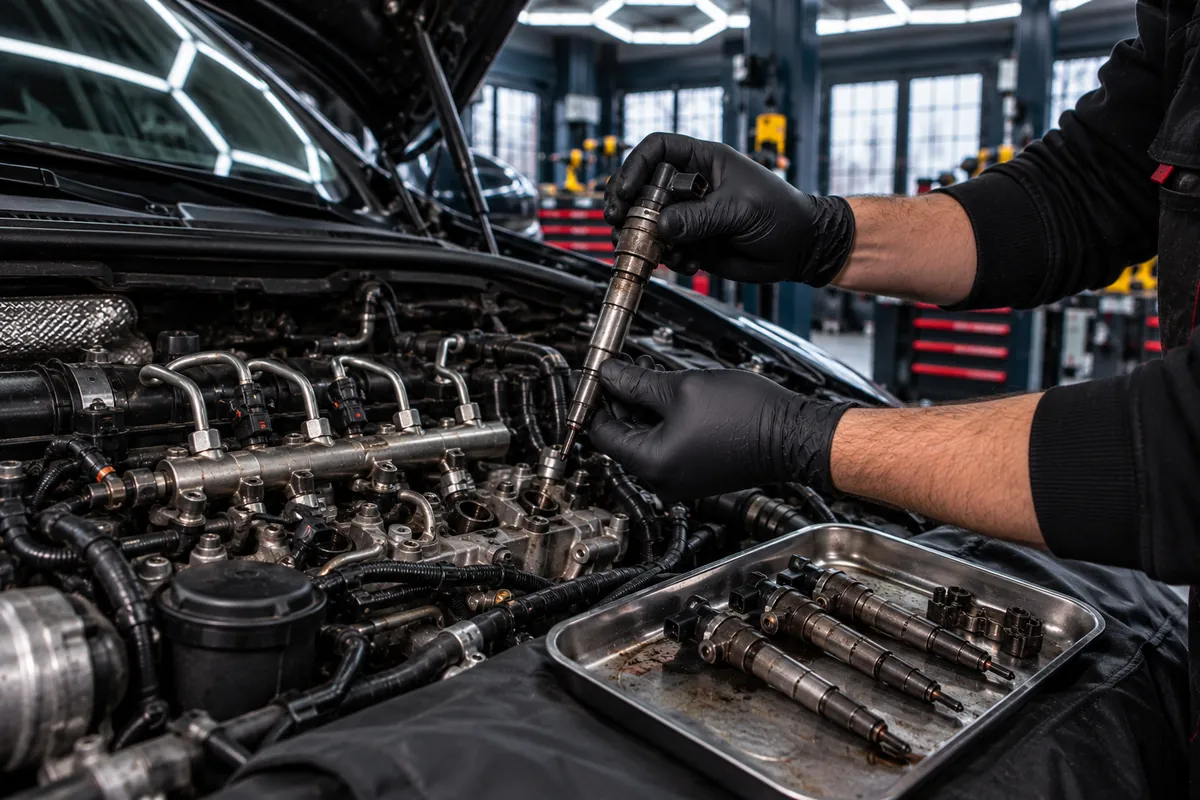
The N47 is a 2-litre diesel fitted to BMWs from 2007, including the 1, 3 and 5 Series as well as the X1 and X3. Its known weakness is a stretching timing chain and wear of the guides and tensioner. On the N47 the chain sits at the gearbox end of the engine, so replacing it usually means taking the engine out of the car — one of the more expensive repairs on these models. Revised parts were used in later production years, but the risk depends on the individual car, its mileage and its oil-change history.
The N20 is a 2-litre turbocharged petrol engine (around 2011–2017), found in the 320i, 328i, 520i, X1 and X3, among others. Here it is mainly the plastic chain guides that wear, and the chain itself can stretch. The symptom is a metallic rattle or whine from the engine, often most audible on a cold start or at certain revs. If neglected, the chain can jump or snap and seriously damage the engine.
Shared symptoms are a rattle on start-up or at idle, camshaft/crankshaft correlation fault codes and the engine warning light. The noise is not always loud, so when buying a used BMW with these engines it is worth listening to the engine from cold and running diagnostics. Read more about timing drives in our guide timing replacement — cost and symptoms.
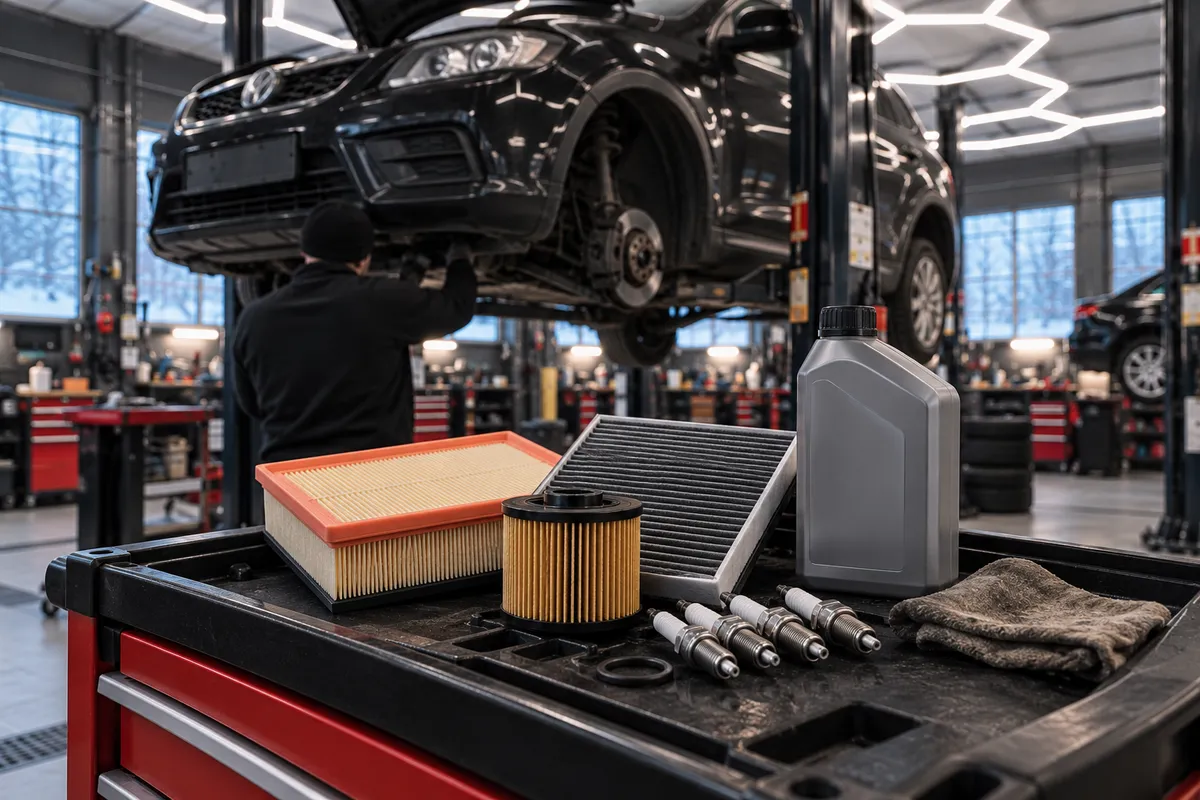
The best way to protect the chain is regular oil changes with oil that meets the BMW Longlife specification for your engine. Rather than the maximum interval shown by the car, it is worth changing the oil about every 15,000 km or once a year.
Oil — leaks, oil quality and VANOS
Oil leaks are a very common topic on BMWs, especially on the N-series petrol engines (e.g. N52, N53, N54, N55, N20). The typical spots are the valve cover gasket and the oil filter housing gasket, which also joins the oil cooler. With age and heat the rubber hardens and stops sealing. Symptoms include a smell of burning oil after driving (oil dripping onto the hot exhaust), smoke from under the bonnet, an oily engine, spots under the car and a falling oil level.
A leak from the oil filter housing can be more serious than it looks. Oil runs onto the auxiliary drive belt, which can delaminate and come off, and on some engines it can get behind the crankshaft pulley and damage the front crankshaft seal. That is why this leak should not be put off.
VANOS is BMW's variable valve timing system, and it is very sensitive to oil quality and condition. Dirty VANOS solenoid valves, worn seals or problems with the camshaft position sensors cause rough idle, weaker acceleration from low revs, higher fuel consumption and camshaft timing fault codes. Cleaning or replacing a solenoid is often enough, but a stretched chain gives similar symptoms — so diagnosis first, parts second.
Cooling system — electric water pump and thermostat
On many petrol BMWs (including the N52, N54, N55 and N20) the water pump is electric and the thermostat is electronically controlled. An electric pump can stop working with practically no warning. Typical symptoms are an engine overheating message, reduced power and the radiator fan running at full speed; sometimes pump fault codes appear in the control unit beforehand.
If you get a high-temperature warning, stop somewhere safe and switch the engine off — driving with an overheating engine risks a blown head gasket. A thermostat that does not close properly shows up instead as slow warm-up and weak heating in winter. The plastic parts of the system also become brittle with age: the expansion tank, connectors and hoses. You can read more about the symptoms in our guide water pump — symptoms.
After replacing the pump or the coolant, a BMW cooling system has to be bled according to the manufacturer's procedure — on many models it is started from the car itself or from a diagnostic tool. Skipping this step can lead to overheating.
Front suspension — control arms and bushes
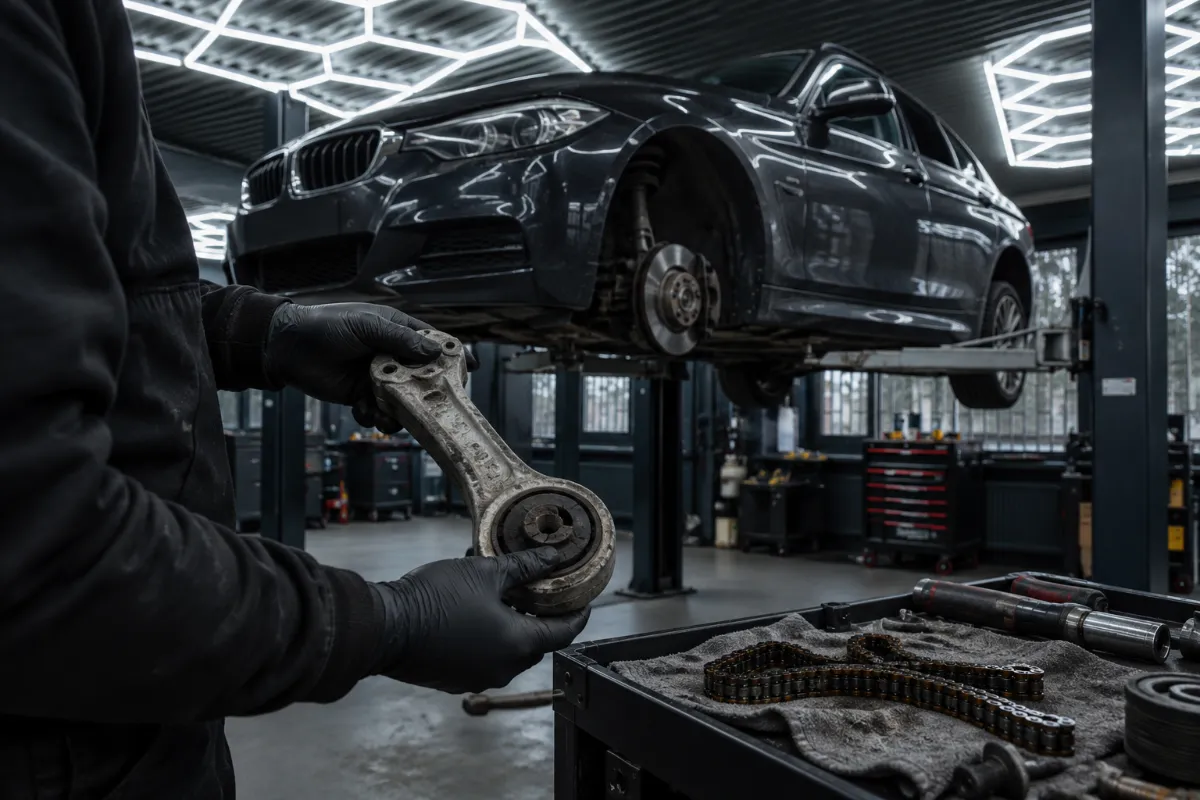
The front suspension of many BMW models (e.g. the 3 Series E90/F30 and the 5 Series E60) uses two lower arms per side. The bush of the thrust arm (tension strut) wears particularly quickly; on many versions it is hydraulic, i.e. fluid-filled. When it cracks or loses its fluid, you get steering wheel shake under braking or at around 80–120 km/h, knocking over bumps and unsettled behaviour when braking.
Steering wheel shake is often mistaken for unbalanced wheels or warped brake discs — so it is worth checking the suspension on a lift before you start replacing parts. After replacing control arms or bushes, a wheel alignment is essential. More in our guide control arms and bushes — replacement.
xDrive and the transfer case
The xDrive system splits torque between the axles using a transfer case with a multi-plate clutch operated by an electric actuator motor. Typical faults include a failed actuator motor or its gear, worn oil in the transfer case and an overloaded clutch. Symptoms are juddering or "hopping" in tight turns, e.g. when parking, vibration when pulling away, a hum from the transfer case area and 4x4 or traction-control warning messages.
The transfer case really does not like tyres with different rolling circumferences — for example new tyres on one axle and heavily worn ones on the other, or sizes other than those specified by the manufacturer. On an xDrive BMW, keep tyre wear even and do not mix tyre models. The service schedule often does not include a transfer case oil change, but at higher mileages it can be sensible prevention — more in our guide 4x4 drive oil — Haldex, xDrive, quattro.
Run-flat tyres, alignment and the battery
- Run-flat tyres have reinforced sidewalls and, after a puncture, let you reach a workshop at limited speed (usually up to 80 km/h) and over a limited distance — according to the car's and the tyre maker's instructions. Cars on run-flats often have no spare wheel.
- Run-flats are harder and noisier, so some drivers fit conventional tyres. In that case carry a repair kit or a space-saver — the pressure sensors will warn you of a loss of pressure, but they will not let you keep driving on a flat tyre.
- Many rear-wheel-drive BMWs have different tyre sizes front and rear — in that case wheels cannot be swapped between axles.
- BMWs have negative camber from the factory. With worn bushes or incorrect toe, tyres wear quickly on the inner edge, which is not visible at first glance. Check the inner shoulder of your tyres and have the alignment set after every suspension part replacement.
- Battery: on most newer BMWs a new battery has to be registered with the car so the energy management system charges it correctly. Skipping the registration can shorten the life of the new battery.
We register batteries and read energy management data as part of computer diagnostics, and we do wheel alignment on site.
How we diagnose BMWs at Pulsecar
- 1Interview: symptoms, mileage, service history and the actual oil-change intervals.
- 2Computer diagnostics of all control units — not just the engine, but also the gearbox, xDrive, DSC and energy management.
- 3Listening to the engine from cold and analysing live data, including camshaft deviation values and VANOS operation.
- 4Inspection on the lift: oil and coolant leaks, control arm bushes, the transfer case, tyre condition and wear.
- 5Test drive: steering wheel shake, drivetrain behaviour in turns, braking.
- 6Written quote with photos: what is urgent and what can be planned. We start work only after you approve it.
For major repairs, such as a timing chain, you can get access to an online camera and follow the progress. Warranty: 6 months on labour, and new parts according to the manufacturer's terms (usually 12–24 months); we do not give a workshop warranty on parts supplied by the customer. If you are only just buying a BMW, book a pre-purchase check.
How much do typical BMW repairs cost
| Service | Price |
|---|---|
| Computer diagnostics | 100 zł |
| Suspension diagnostics | 100 zł |
| Pre-purchase check | 300 zł |
| Engine endoscopy | from 300 zł |
| Oil and oil filter change | 120 zł |
| Coolant change | from 200 zł |
| Control arm replacement | from 200 zł |
| Wheel alignment — 2 axles | 300 zł |
| Automatic gearbox oil change | from 400 zł |
| Timing chain replacement | from 1000 zł |
These are starting prices from our price list. The final amount depends on the model, engine and parts — we give it in the quote after diagnosis. Replacing the chain on an N47, where the engine has to come out, is clearly more expensive than on engines with the chain at the front. Prices for fixing leaks, the water pump or the transfer case depend on the car's version and are also given after diagnosis. You can book a slot via book a visit.