Automatic gearbox jerking — causes, diagnosis and what to do
Is your automatic jerking when pulling away, thumping on downshifts or shuddering at a steady speed? We explain the most common causes in ZF, Aisin and Mercedes 7G-Tronic gearboxes, when an ATF change helps and how we check the gearbox.
8 min read · Pulsecar team · updated:
Automatic gearbox jerking — the short answer
If a conventional torque-converter automatic has started jerking, the usual culprits are old or low ATF, worn solenoids or a worn valve body, adaptation values that no longer fit, or the torque converter lock-up clutch. Very often worn engine and gearbox mounts are also behind “gearbox jerking” — the gearbox itself shifts correctly, but the knocks are passed into the body.
The good news is that many cases start with inexpensive things: checking the oil level and condition, changing the ATF with the filter and running the adaptations. Below we explain how to narrow down the cause from the symptoms, how a static oil change differs from a dynamic one, when it is still OK to drive and what it costs.
Conventional automatics — the gearboxes we see most often
| Gearbox | Where it is fitted | What we look out for |
|---|---|---|
| ZF 6HP | BMW, Audi, Jaguar, Land Rover and others, mainly 2000–2010 cars | Thumps on downshifts, shudder when the converter locks up, leaks from the sump and the mechatronics connector sleeve |
| ZF 8HP | BMW, Audi, Jeep, Alfa Romeo, Land Rover and others, from around 2009 | Harsher shifts and jerking with old oil, leaks from the plastic sump with integrated filter |
| Aisin 6- and 8-speed | Volvo, Toyota, Lexus, Peugeot, Citroën, Mini and others | Jerky up- and downshifts with worn oil, valve body wear |
| Mercedes 7G-Tronic (722.9) | Mercedes from around 2003 | Speed sensor and control plate faults, limp mode, leaks at the connector |
In a conventional automatic, engine torque passes through the torque converter — a fluid coupling filled with oil — while gears are changed by clutch and brake packs operated by oil pressure. That pressure is regulated by solenoids in the valve body on the control unit’s command. So ATF is lubricant, coolant and working fluid at the same time, and its condition directly affects how smoothly the gearbox shifts. At Pulsecar BMW makes up about one in six cars in the workshop, so ZF gearboxes are an everyday job for us. Dual-clutch gearboxes work differently — we cover them in the article on DSG gearbox fault symptoms.
What automatic gearbox jerking feels like
- A thump when moving from P or N into D or R — especially when cold.
- A jerk when pulling away or on the 1→2 and 2→3 shifts.
- Hard, delayed shifts or a brief “neutral” moment — the revs flare before the next gear engages.
- A thump on the downshift when braking just before stopping.
- Shudder like driving over rumble strips at a steady 50–90 km/h on light throttle.
- A gearbox fault message, limp mode, driving in one gear only.
- A smell of overheated oil, spots under the car.
Write down exactly when it jerks: cold or warm, in which gear, accelerating or braking. This information shortens diagnosis more than anything else.
ATF — the most common and cheapest cause
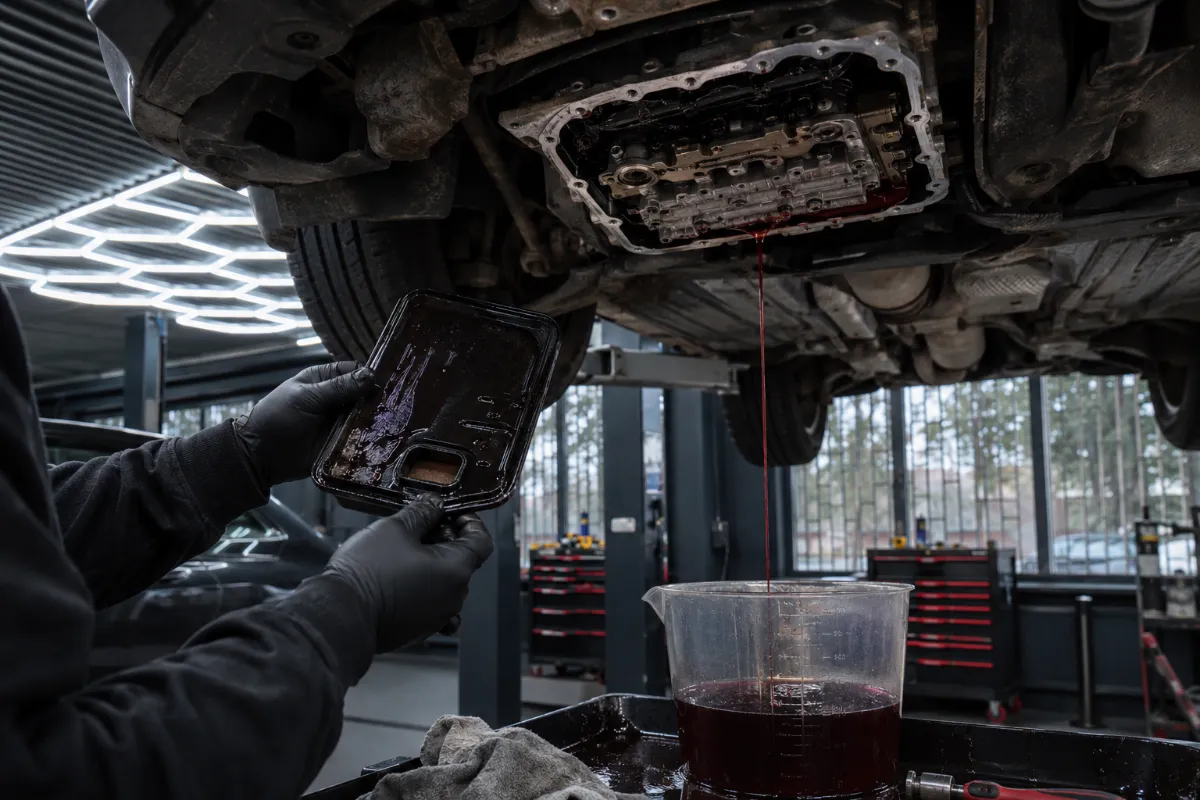
Oil in an automatic works at high temperatures and gradually loses its properties: its viscosity and friction characteristics change, and more and more clutch wear particles circulate inside. The result is less precise pressure control — shifts become hard, delayed or come with a thump. A low oil level, for example due to a sump leak, gives similar symptoms plus aeration and overheating.
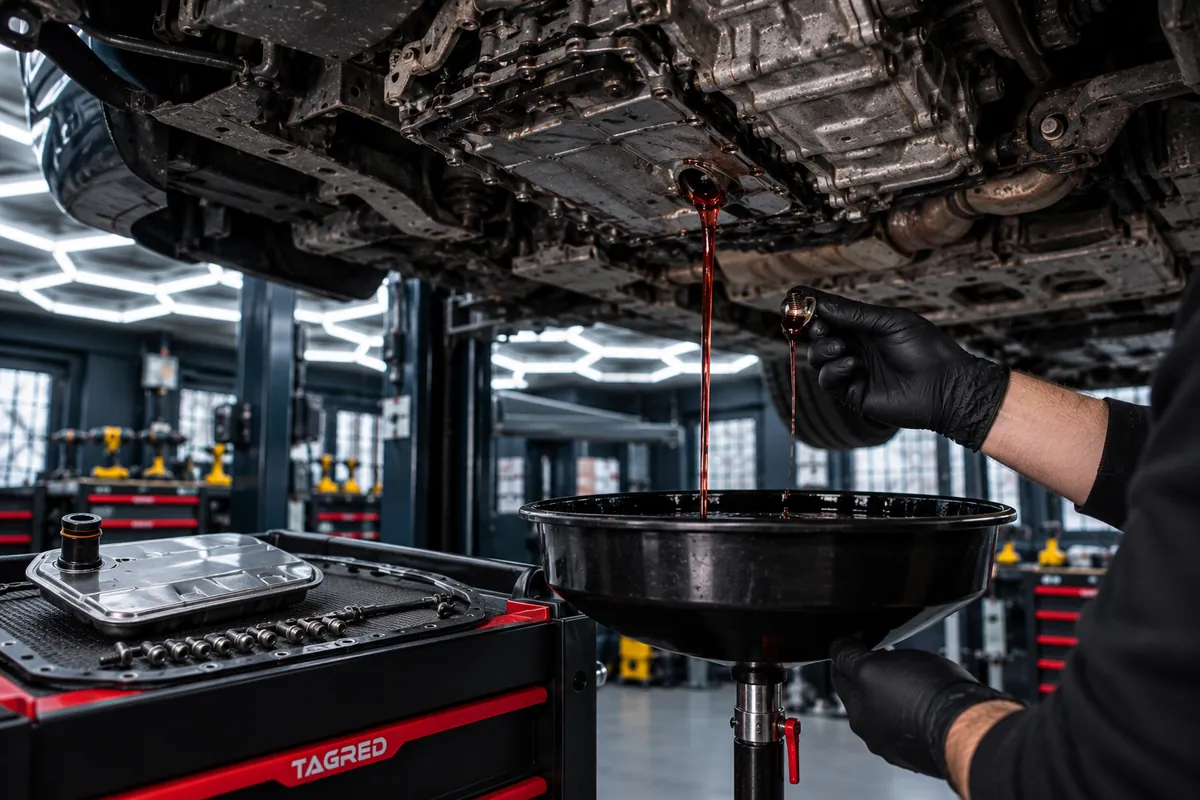
Many cars have “lifetime” oil according to the handbook, but in practice we recommend changing the ATF with the filter roughly every 60,000–100,000 km, and under heavy use — towing, city driving, a powerful engine — closer to the lower figure. The oil level is checked at a specified temperature read with a diagnostic tool; many newer gearboxes have no dipstick. The procedure is described in our guide to automatic gearbox oil changes.
To be honest: an oil change will not fix mechanically worn clutches or a damaged torque converter. But if the gearbox is in good condition and the symptoms come from old oil, the improvement after the change and adaptations can be significant.
Solenoids, valve body and adaptations
The solenoids in the valve body regulate pressure in the individual clutches. When they wear or get contaminated, pressure builds too fast or too slowly — hence the thumps and “neutral” moments during shifts. The channels and spool valves in the valve body itself also wear, which is a known issue in some gearboxes at high mileage. In the Mercedes 7G-Tronic a common cause of fault codes and limp mode is the speed sensors on the control plate.
The gearbox control unit keeps learning: it corrects pressures so shifts stay smooth despite wear. These values are the adaptations. After an oil change, a repair, disconnecting the battery or major changes in the gearbox, the adaptations may no longer match its real condition. Resetting them with a diagnostic tool and completing the learning procedure then helps. But if the control unit has already used up its whole correction range, the adaptation will only confirm that the problem is mechanical or hydraulic.
Torque converter lock-up clutch — shudder at a steady speed
To cut losses and fuel consumption, the torque converter has a lock-up clutch that mechanically connects the engine to the gearbox when cruising. When its lining wears or the oil is old, the clutch starts to slip and grab unevenly. The typical symptom is a shudder like driving over rumble strips or cobbles at about 50–90 km/h on light throttle, which disappears when you press harder or lift off.
At an early stage, an oil change and adaptations often ease the symptoms. If the lining is worn, the converter needs repairing or replacing, which means taking the gearbox out of the car. Driving for a long time with a badly slipping lock-up clutch contaminates the oil and can speed up wear in the rest of the gearbox.
When it is not the gearbox at all — mounts and other causes
- Worn engine and gearbox mounts: when pulling away and selecting D or R the engine rocks noticeably and the thump is passed into the body. Often you hear a knock too.
- Misfires: jerking under acceleration, usually with rough running and an engine fault code.
- Play in the drive shafts, CV joints or propshaft: a clunk when pulling away and when changing direction.
- A weak battery or power supply problems: odd behaviour of control units and random gearbox fault codes.
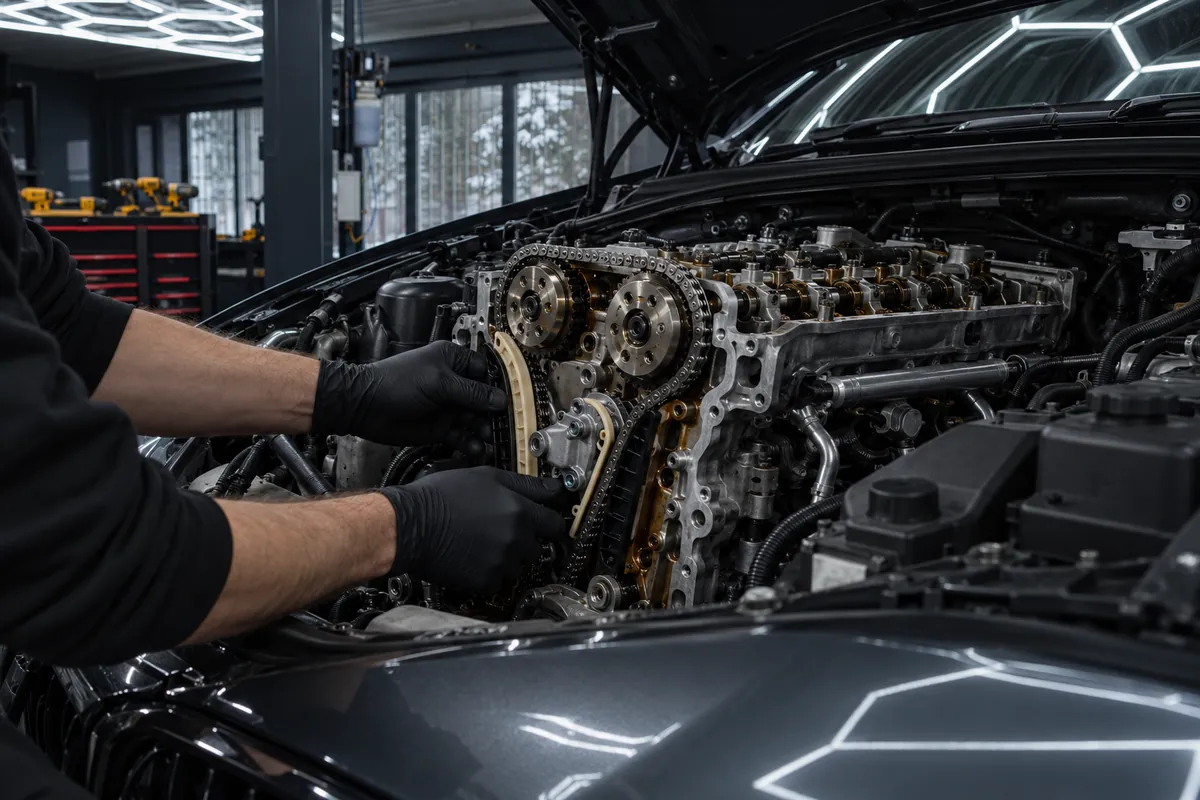
Mounts are the most common “false alarm”. When the rubber cracks or a hydraulic mount loses its fluid, even a correct gear change feels like a thump. How to recognise them is covered in the article on engine mount symptoms. That is why we inspect the powertrain mounts before making any decision about the gearbox.
Symptom → likely cause → what to do
| Symptom | Likely cause | What to do |
|---|---|---|
| Thump when selecting D or R | Mounts, old oil, adaptations, valve body pressure | Check the mounts, read fault codes, assess the oil |
| Hard or delayed shifts | Old or low ATF, solenoids, adaptations | Check the level at temperature, oil change, adaptations |
| Thump on the downshift before stopping | Adaptations, solenoids, valve body wear | Live data and a test drive with the diagnostic tool |
| Shudder at 50–90 km/h on light throttle | Torque converter lock-up clutch, old oil | Oil change, adaptations, check converter slip |
| Revs flare during shifts | Clutch slip, low oil level | Limit driving, level check and diagnosis |
| Limp mode, one gear only | Sensors, control plate, solenoids, power supply | Read fault codes, check connectors and voltage |
| Oil spots under the car | Leak from the sump, seals or mechatronics connector | Locate the leak, top up or change the oil |
If the revs flare during shifts, you can smell overheated oil or the gearbox goes into limp mode, keep driving to a minimum — carrying on can turn a cheap repair into an expensive rebuild.
ATF change — static or dynamic
| Static change | Dynamic change | |
|---|---|---|
| What it involves | Draining oil from the sump, replacing the filter, refilling with new oil | A machine connected to the cooler circuit exchanges the oil while the gearbox runs |
| How much oil is replaced | Usually only part — the rest stays in the converter, cooler and lines | The vast majority of the oil in the system |
| Amount of new oil | Less | More, as some is used for flushing |
| When it makes sense | Regular servicing, very neglected gearboxes (sometimes in several stages) | When you want to replace as much oil as possible in one go |
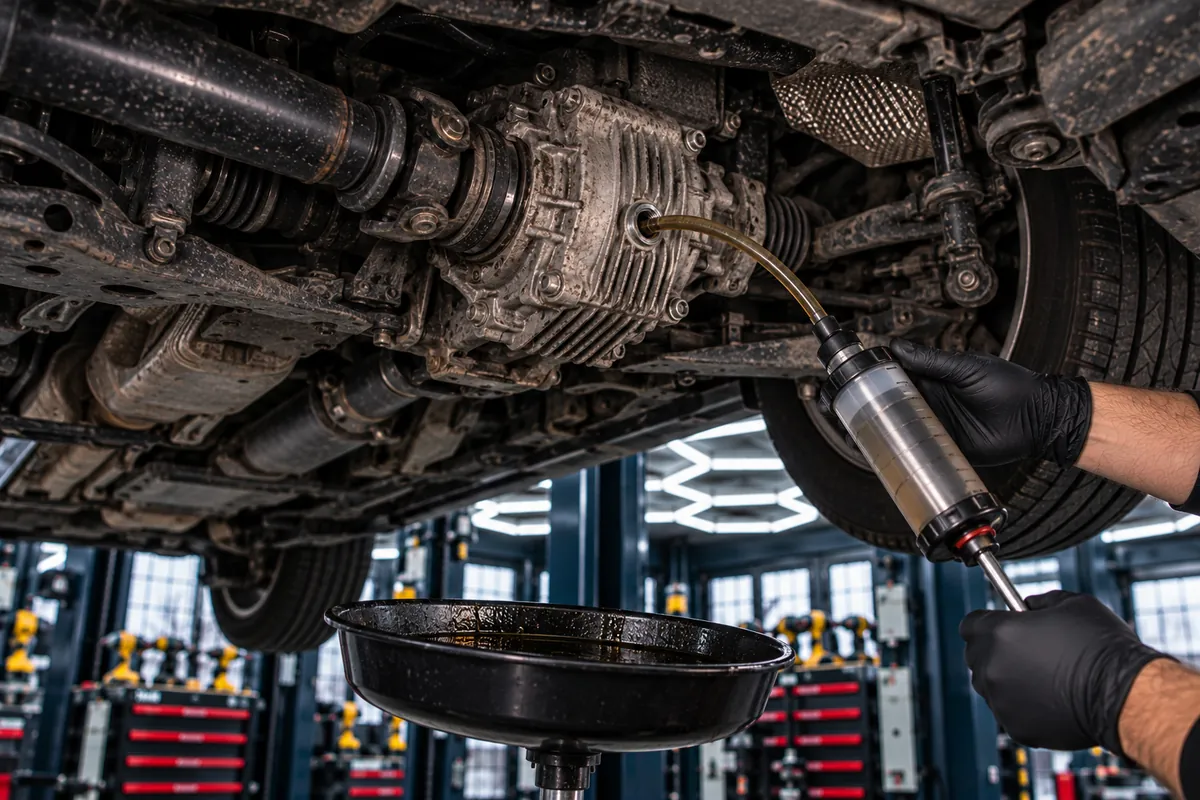
Both methods make sense — the choice depends on the gearbox, mileage and oil condition. Either way, what matters is the right oil to the manufacturer’s specification, a new filter or sump with filter and gasket, checking the level at the correct temperature and running the adaptations afterwards. With very old, heavily contaminated oil and high mileage, changing the oil in stages is sometimes the safer option. The service is described on the ATF oil change page.
A “universal automatic transmission fluid” is a bad idea. Different gearboxes need different ATF specifications, and the wrong oil can cause jerking on its own.
How we check it at Pulsecar
- 1A conversation about the symptoms: when it jerks, cold or warm, in which gear, since when, and when the oil was last changed.
- 2Battery test and reading gearbox and engine fault codes.
- 3Live data: oil temperature, converter slip, adaptation values, pressures and shaft speeds.
- 4A test drive with the diagnostic tool — we recreate the situation in which the jerking occurs.
- 5On the lift: checking the engine and gearbox mounts, drive shafts, leaks and the oil level and condition.
- 6A written quote explaining the cause and repair options — work starts only after you approve it.
We show you photos and readings, and during major repairs you may get access to an online camera. We speak Polish, Ukrainian, Russian, English and Belarusian. More serious repairs are described on the gearbox repair page.
What it costs
Computer diagnostics at Pulsecar costs 100 zł. An automatic gearbox oil change costs from 400 zł — the final price depends on the gearbox, the amount of oil, the method and whether a filter or a sump with integrated filter is replaced. An engine mount replacement costs from 150 zł.
We give the price for valve body, solenoid, mechatronics or torque converter repairs in the written quote after diagnosis, as it depends heavily on the gearbox and the extent of the damage. We give a 6-month warranty on labour; new parts carry the manufacturer’s warranty, usually 12–24 months. You will find us at ul. Arkuszowa 176 in Bielany, Mon–Fri 09:00–18:00, Sat 09:00–15:00, phone +48 571 058 591.