Pre-Purchase Car Inspection — What We Check
A few hundred zloty spent on a pre-purchase inspection can save you thousands. We describe what is worth checking and what the inspection looks like at our workshop.
9 min read · Pulsecar team · updated:
Pre-purchase inspection of a used car — is it worth it?
Yes. A pre-purchase inspection at an independent workshop costs a fraction of the car’s price and shows what you cannot see in the seller’s parking lot: fault codes in the control units, leaks, suspension play, underbody corrosion and signs of accident repairs. Afterwards you know what needs fixing and roughly what it costs — so you can buy with confidence, negotiate the price or walk away.
A pre-purchase inspection does not replace the periodic roadworthiness test (badanie techniczne) at a vehicle inspection station. It is a technical assessment from the buyer’s point of view: we do not ask “will the car pass the test”, but “how much will it cost to keep running over the coming months”.
Before you view the car: the VIN and a talk with the seller
- Ask for the VIN, the registration number and the date of first registration — with these you can check the history at historiapojazdu.gov.pl. We explain it step by step in our guide on checking a car by VIN.
- Ask how long the seller has owned the car, whether they are the first owner in Poland and whether the car was imported.
- Ask for the service history and invoices — especially for the timing system, clutch, automatic transmission oil and brakes.
- Ask directly whether the car has had any damage and whether any warning lights are on.
- Say up front that you want the car checked at a workshop. The seller’s reaction is the first test.
How to arrange a pre-purchase inspection with the seller — step by step
- 1Agree with the seller that the car will go to a workshop for an inspection before you decide. The buyer usually pays for it — a fair arrangement.
- 2Settle on a day and time when the seller can come, then book a slot online or by phone at +48 571 058 591.
- 3Ask for the car not to be started for a few hours before the meeting — a cold start reveals the most.
- 4Come together. The seller can be present during the inspection, and you see exactly what we see.
- 5After the inspection we go over the faults and approximate repair costs. You decide on the spot or after thinking it over calmly.
If the car is far from Warsaw, check its history by VIN first and ask for photos of the underbody and documents. There is no point driving 300 km to a car whose history already fails to add up in the CEPiK database.
What we check during a pre-purchase inspection — checklist
| What we check | Why |
|---|---|
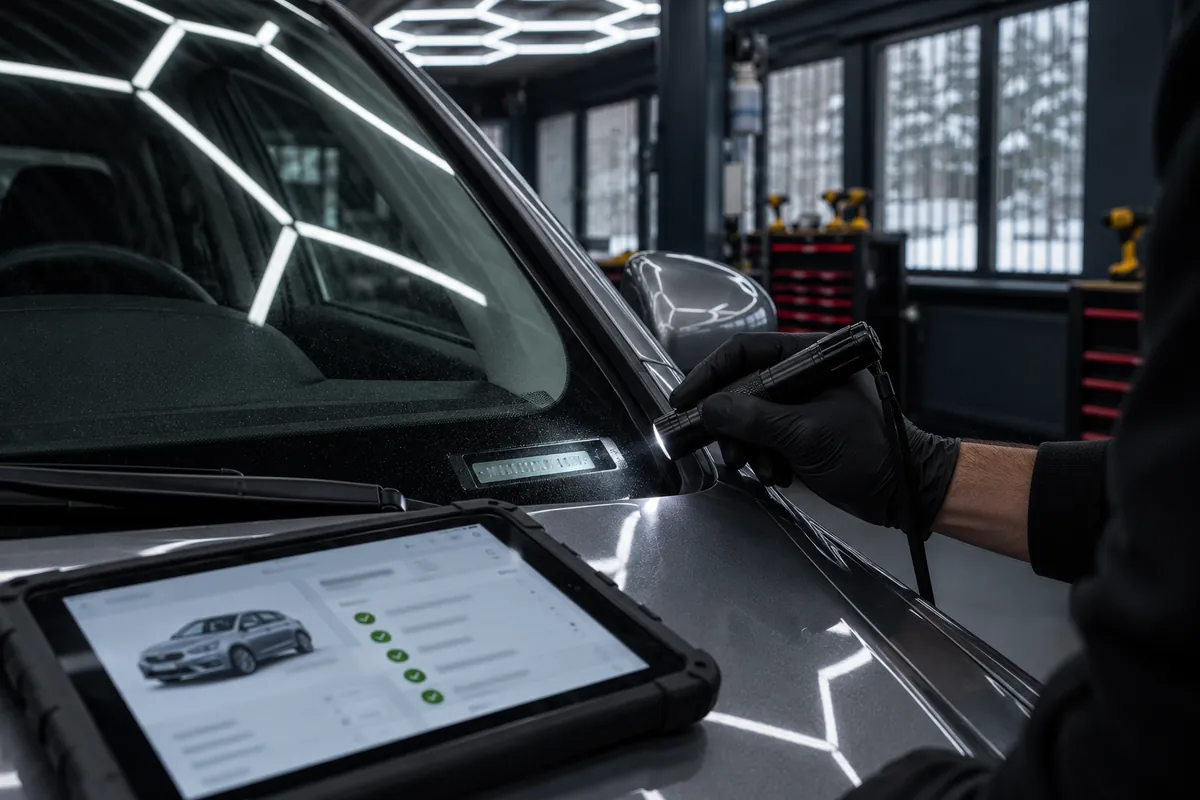
| Computer diagnostics of all available control units | Engine, transmission, ABS and airbag fault codes. Incomplete readiness monitors may indicate recently cleared codes. |
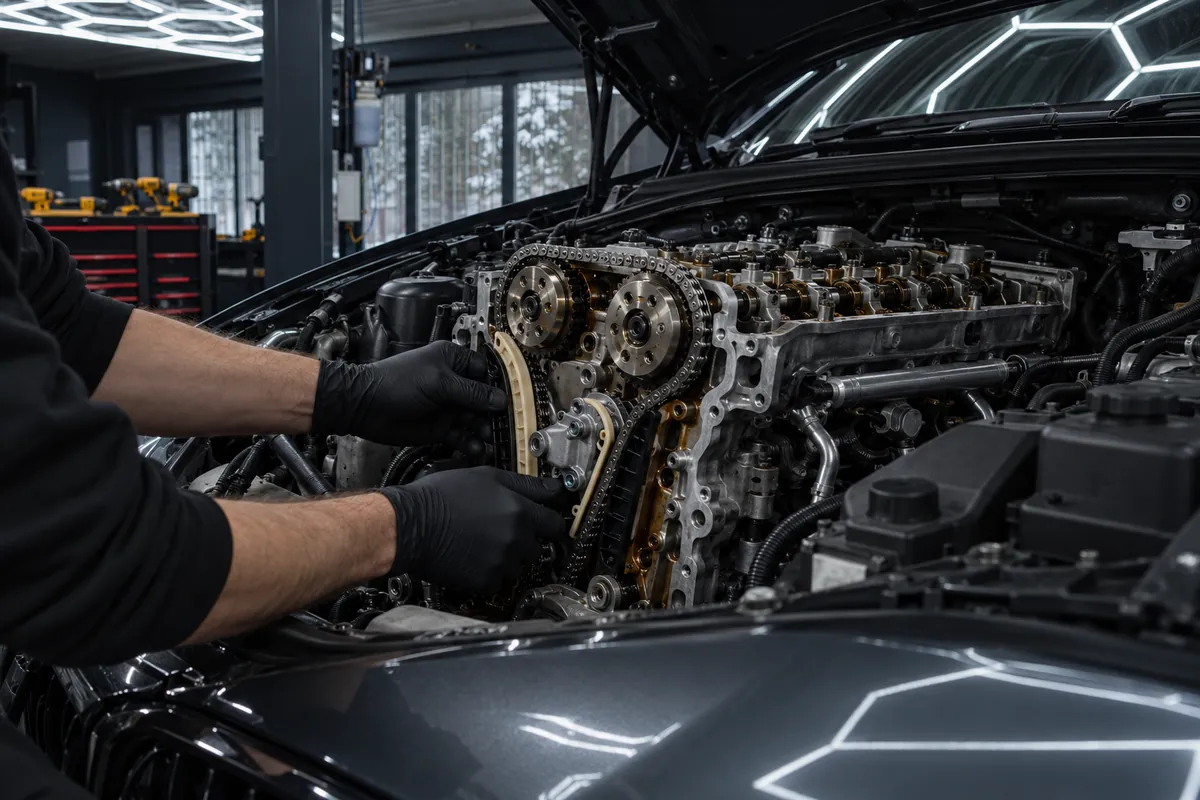
| Cold engine start | Timing chain rattle, rough running, smoke — many symptoms disappear once the engine is warm. |
| Warm engine running | Idle stability, noises, exhaust smoke, cooling system operation. |
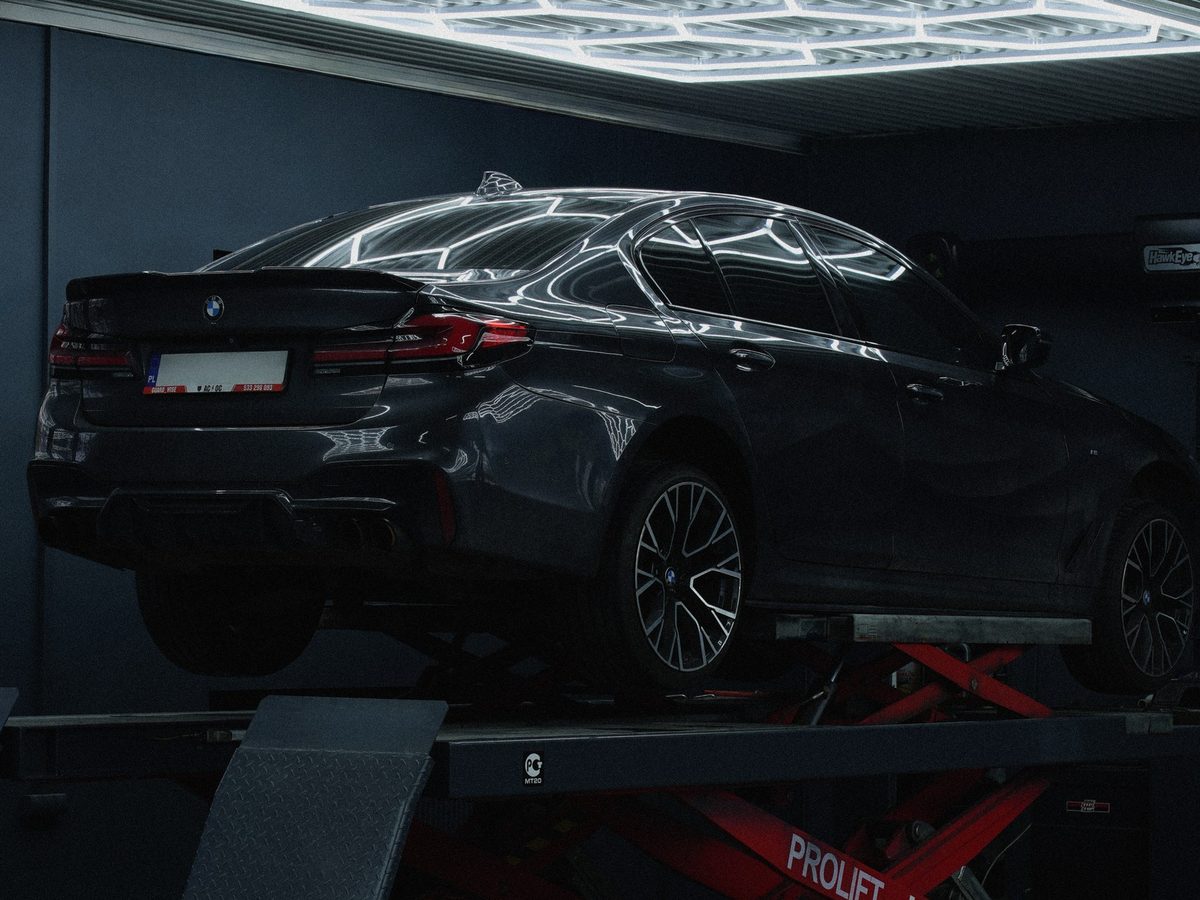
| Leaks and fluids | Oil, coolant, brake fluid — leaks only become visible on a lift. |
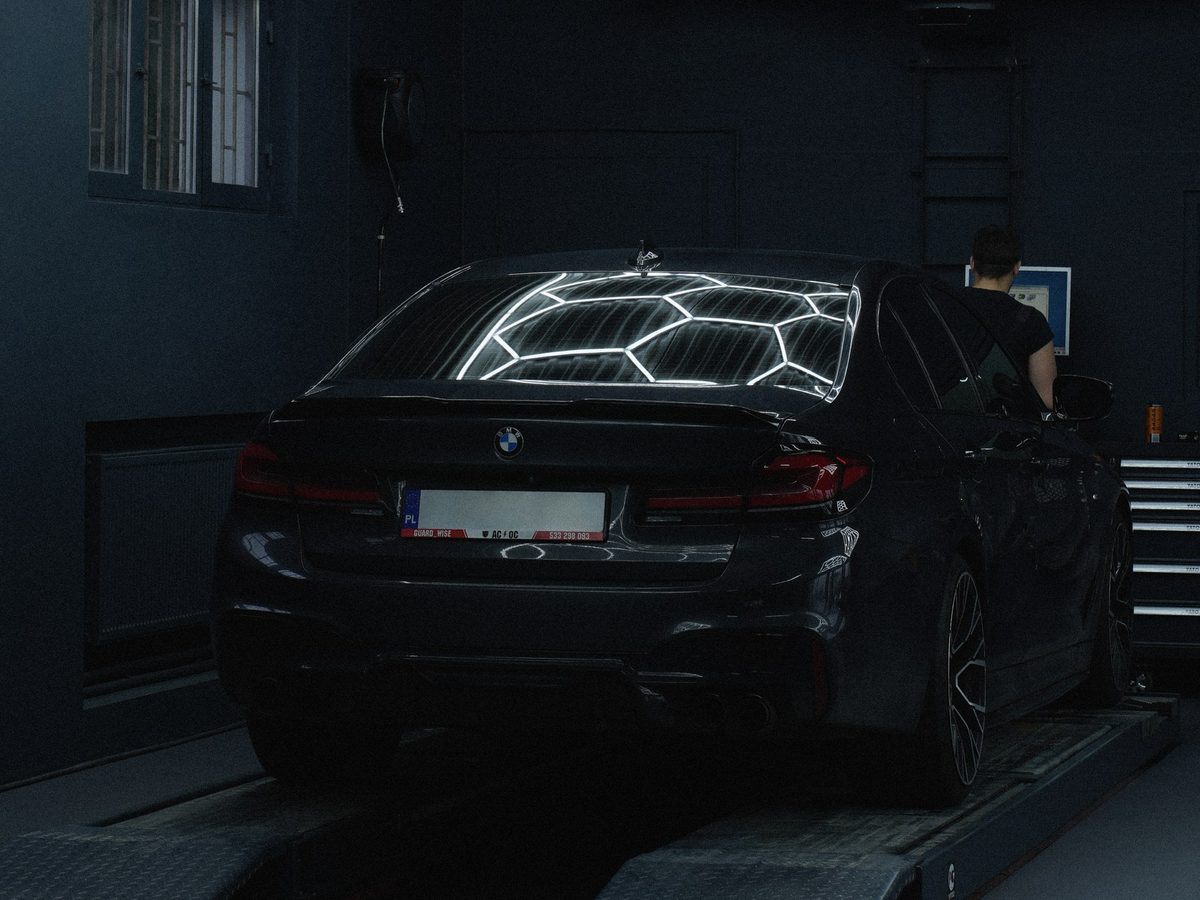
| Suspension and steering on a play detector | Play in control arms, stabilizer links, tie rod ends — you know right away what will need replacing. |
| Brakes | Condition of the discs, pads and brake fluid. |
| Underbody, sills and side rails | Corrosion, welds, signs of impacts and bodywork repairs. |
| Body | Signs of accident repairs, uneven panel gaps. |
| Gearbox and clutch (test drive) | Jerking, clutch slip, delayed or harsh shifts in an automatic. |
| Engine endoscopy (optional) | Condition of the cylinder walls and carbon on the pistons — without dismantling the engine. |
At the end you get clear information: what is fine, what needs fixing right away and what will need attention soon — with an approximate cost. We price repairs according to our price list, so you know how much you will realistically have to put into the car.
Engine endoscopy before buying — when it is worth paying extra
Endoscopy means inserting a camera through the spark plug or injector hole. You can see the cylinder walls, piston crowns and valves — scoring of the bore, excessive carbon or signs of overheating. Nothing has to be taken apart.
We recommend it for more expensive cars, turbocharged engines, engines known for oil consumption problems, and whenever the inspection or the history raises doubts. On a car worth tens of thousands of złoty, 300 zł for an endoscopy is a small cost compared with an engine rebuild.
If you hear a rattle on a cold start, read what engine rattling means and how much a timing replacement costs. That amount belongs in the price negotiation.
Test drive — what to watch for yourself
- Whether the warning lights go out after starting — especially check engine, ABS and airbags. We explain what a lit warning light can mean in our guide on the check engine light.
- Whether the car drives straight and does not pull under braking.
- Knocks over bumps and when turning the wheels while stationary.
- Smooth gear changes and how the clutch behaves when pulling away uphill.
- Steering wheel vibration when braking from higher speed.
- Air conditioning, windows, lights, infotainment and heating.
- Tyres: production date (DOT) and even wear — uneven wear may point to alignment or suspension problems.
Which documents to check when buying a used car in Poland
- Registration certificate (dowód rejestracyjny) — owner and co-owner details, VIN matching the number on the body and the identification plate.
- The seller’s identity — are they the owner named in the registration certificate? If the car has a co-owner, all owners (or an authorised representative) should sign the contract.
- Validity of the roadworthiness test and the OC third-party insurance.
- Service history, invoices and the vehicle card (karta pojazdu), if one was issued.
- For an imported car — documents from the country of origin and proof of registration-related fees.
- Keys — how many sets and whether they all work.
When buying from a private person you sign a sale contract (umowa kupna-sprzedaży) with the parties’ details, VIN, mileage, price and date. The buyer takes over the seller’s OC policy (it can be terminated), has 30 days to register the car at the vehicle registration office and generally 14 days to file the declaration and pay PCC tax (2% of market value, for cars worth over 1000 zł). Rules change, so it is worth confirming the details with the office.
Write the odometer reading into the contract and note that the car was checked at a workshop. The inspection report and photos taken at the viewing are your record of the car’s condition on the day of purchase.
Private seller, dealer or imported car — the differences
When buying from a private person you usually have the least protection. Contracts often limit the seller’s liability for defects, so whatever you fail to spot before signing in practice becomes your problem. All the more reason to have the car checked at a workshop.
A dealer or car lot selling to a consumer is liable for the goods’ conformity with the contract, although for used goods the liability period can be shortened. The details depend on the contract, so read it before signing. An inspection still pays off: pursuing claims takes time, and you need a working car right away.
With an imported car, the foreign history is often incomplete. Look for signs of bodywork repairs, the condition of the underbody after winters with road salt and whether the mileage matches the documents from the country of origin.
Red flags — when it is better to walk away
- The seller will not agree to a workshop visit or “has no time”.
- No fault codes, yet the readiness monitors are reset — codes may have just been cleared.
- A freshly washed engine — it can hide leaks.
- Mileage inconsistent with the CEPiK history and the wear of the steering wheel, pedals and seat.
- Timing rattle on a cold start, blue or thick white smoke from the exhaust.
- Welding marks on the side rails, fresh underbody coating in just one spot.
- Registration details that do not match the seller or the VIN on the car.
Inspection results and price negotiation
Most often the inspection does not end with a simple “buy or don’t buy” verdict, but with a to-do list: pads and discs, a stabilizer link, an oil change, brake fluid, sometimes the timing. That is normal for a used car. What matters is knowing these costs before you sign.
A specific list of faults with prices is the best argument in a price discussion. It is much harder to dismiss “front pads and discs, 300 zł labour plus parts” than a vague “something knocks”. If the total exceeds what you are willing to add, it is better to walk away and keep looking.
If the car has no documented history, also plan basic servicing after purchase: an oil and filter change, brake fluid and — if there is no proof of replacement — the timing system. With us an oil and filter change is 120 zł labour, a brake fluid change 200 zł and a timing belt from 600 zł.
How much a pre-purchase car inspection costs in Warsaw
| Service | Price |
|---|---|
| Pre-purchase inspection (lift, scanner, test drive) | 300 zł |
| Engine endoscopy — optional | +300 zł |
| Extended inspection — extended vehicle condition check | 250 zł |
| Computer diagnostics — separately | 100 zł |
| Suspension diagnostics — separately | 100 zł |
A standard pre-purchase inspection usually takes about an hour; with endoscopy and a longer test drive, a bit longer. We confirm the scope of the extended inspection when booking, tailoring it to the specific car. If you decide to have repairs done with us after buying, you get a quote to approve before any work starts, and labour comes with a 6-month warranty.
Pre-purchase car inspection in Warsaw Bielany
Pulsecar is a workshop at ul. Arkuszowa 176 in Bielany — convenient for buyers viewing cars in Żoliborz, Bemowo or Łomianki, and across Warsaw. We are open Monday to Friday 9:00–18:00 and Saturday 9:00–15:00, so it is usually easy to match a slot to your meeting with the seller.
Find out more about the service on our pre-purchase inspection page. Book a slot online or call +48 571 058 591.