Car heater not working — why it is cold inside, diagnosis and repair
Cold air from the vents with a warm engine is most often down to the thermostat, low coolant or air in the system. We explain how to find the cause, what to check yourself and when a lack of heat points to a more serious fault.
8 min read · Pulsecar team · updated:
Car heater not working — the short answer
If cold or barely lukewarm air comes from the vents even though the engine is warm, the cause is most often low coolant, air in the system or a thermostat stuck open. Less often it is a clogged heater core, a worn water pump, or faulty blend doors and actuators that do not direct air through the heater core.
A cold cabin is mainly a comfort and visibility problem, because the windows mist up faster. But it can be the first sign of a more serious fault: if coolant is disappearing and the temperature gauge is rising, do not wait — an overheated engine can end with a blown head gasket. Below we explain how to identify the cause, what to check yourself, when driving is risky and what the repair costs.
How the heating in a car works
The heater core is a small radiator hidden behind the dashboard. Hot coolant from the engine flows through it and the blower pushes air through it into the cabin. The vent temperature is usually set by a blend door, which sends part of the air through the heater core and part around it. In some cars coolant flow is also controlled by a heater valve or an auxiliary electric pump.
This gives three conditions for warm air: the engine must reach operating temperature, enough hot coolant must flow through the heater core, and the doors must send the air where it is needed. A failure of any of these gives the same result — a cold car. Economical diesels warm up more slowly, so many have a factory electric or fuel-fired auxiliary heater; if it does not work, you will clearly feel the difference in winter during the first few kilometres.
Symptoms and most common causes — table
| Symptom | Likely cause | What to do |
|---|---|---|
| Temperature gauge lower than usual, engine slow to warm up, only lukewarm air on the open road | Thermostat stuck open | Check coolant temperature in live data, replace the thermostat |
| Warm at higher revs, cold at idle, gurgling behind the dashboard | Low coolant or air in the system | Check the level on a cold engine, find the leak, bleed the system |
| Heater inlet hose hot, return hose clearly cooler | Clogged heater core | Flush or replace the heater core |
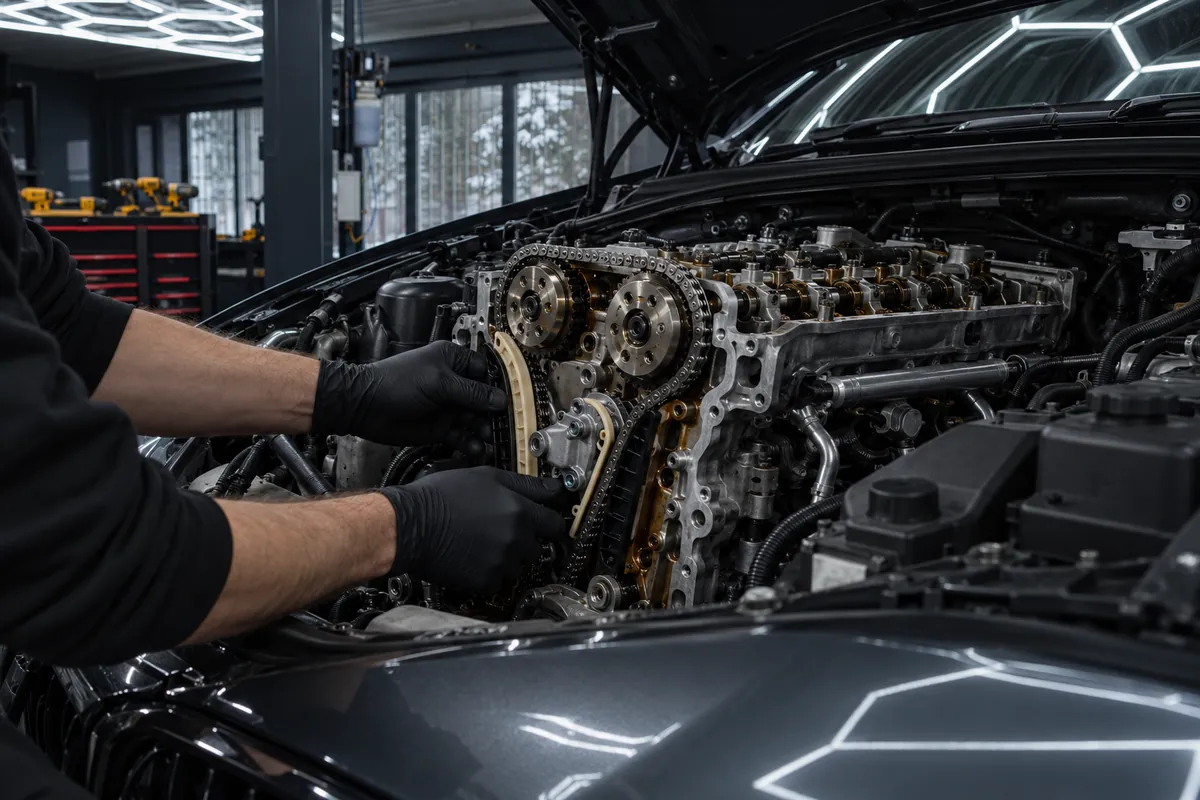
| Coolant loss, traces of a leak at the pump, whine or rumble, temperature rises under load | Worn or leaking water pump | Check the pump, replace it — often together with the timing belt |
| Clicking behind the dashboard, vent temperature does not change, heat on one side only | Faulty actuator or blend door | Read climate control fault codes, test actuators, calibrate |
| Coolant loss with no visible leak, sweet-smelling white smoke, bubbles in the expansion tank | Head gasket | Test for exhaust gases in the coolant, do not drive with an overheating engine |
| Sweet smell in the cabin, greasy film on the windows, wet carpet | Leaking heater core | Replace the heater core, top up and check the coolant |
The table shows typical links, but symptoms often overlap. A leaking pump lowers the coolant level, which in turn lets air into the system and cuts heat off from the heater core. That is why it is worth finding the root cause rather than just topping up coolant every week.
The thermostat and low coolant
The thermostat keeps the radiator circuit closed until the engine warms up. If it sticks open, coolant goes through the radiator straight away, and in winter on the road the engine may never reach operating temperature. Typical signs are a temperature gauge lower than usual or dropping while driving, lukewarm air, higher fuel consumption and sometimes fault code P0128. In many cars the dashboard gauge is damped and sits in the middle for a wide range — only live data from the control unit shows the truth.
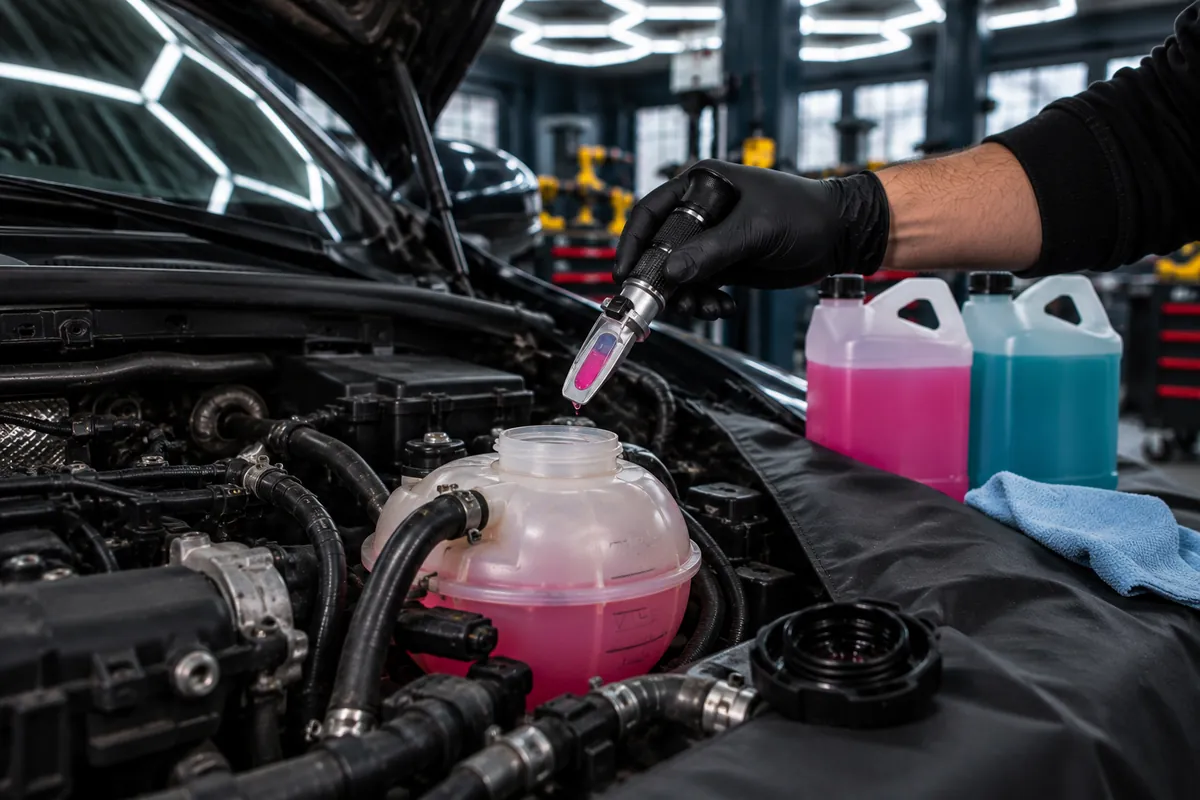
Low coolant is the second most common cause. The heater core usually sits high in the system, so when coolant is short it is the first place air reaches — the heating works at higher revs and goes cold at idle. Coolant does not vanish by itself: if you have to keep topping it up, there is a leak somewhere — a hose, the radiator, the pump, the heater core or inside the engine. Which coolant to choose and whether it can be mixed is explained in our guide which coolant to use.
Check the coolant level only on a cold engine. Never open the expansion tank cap when the engine is hot — the system is under pressure and hot coolant can scald you.
An airlock and a clogged heater core
Air gets into the system most often after a coolant change, a repair of the pump, thermostat or hoses, or because of a leak. Signs include gurgling and the sound of liquid sloshing behind the dashboard, air switching between warm and cold, and sometimes a jumping temperature gauge. Many cars have bleed screws and a simple procedure, but some engines need a specific sequence: heating on maximum, running at raised revs, sometimes switching on the electric pump with a diagnostic computer. A poorly bled system can overheat the engine locally, so after changing coolant yourself, watch the temperature for a few days.
A heater core clogs gradually: with deposits from old coolant, the effect of mixing incompatible coolants, rust, or sealants poured into the system. The typical sign is a hot inlet hose to the heater core and a clearly cooler return hose with a warm engine and the correct coolant level. Flushing sometimes helps, but with a badly blocked core only replacement works. In many cars it requires taking apart part of the dashboard, so we give the labour cost after checking the specific model.
Do not pour “quick fix” sealants into the cooling system. They may stop a small leak for a while, but they often settle in the heater core and the narrow channels of the radiator.
Water pump, blend doors and actuators
- Water pump: a worn or corroded impeller (plastic in some cars) moves too little coolant — the heating weakens and the engine may overheat under load. A leak from the weep hole, traces of coolant under the pump and a whining or rumbling bearing are signs it needs replacing.
- Pump driven by the timing belt: if it needs replacing, this is usually done together with the timing belt, because access to it requires the same work.
- Electric pump or auxiliary heater pump (in some newer cars): a failure usually stores a fault code in the control unit and shows up in computer diagnostics.
- Blend door and actuators: when an actuator or its gear fails, the door stays in the “cold” position. Signs are clicking behind the dashboard, no response to temperature changes, or heat on one side only with dual-zone climate control.
- Older cars with cables: a broken or slipped temperature control cable has the same effect as a failed actuator.
With blend door and actuator faults the cooling system can be in perfect order — both heater hoses are hot, yet cold air comes into the cabin. This is an important clue that immediately separates a coolant problem from an air distribution problem.
What you can check yourself
- 1On a cold engine, check the coolant level in the expansion tank — it should be between MIN and MAX.
- 2Look around the engine bay and where the car is parked: wet patches, dried coolant crystals on hoses, the radiator and the pump.
- 3Warm the engine up and watch the temperature gauge: does it reach its usual position and does it drop while driving?
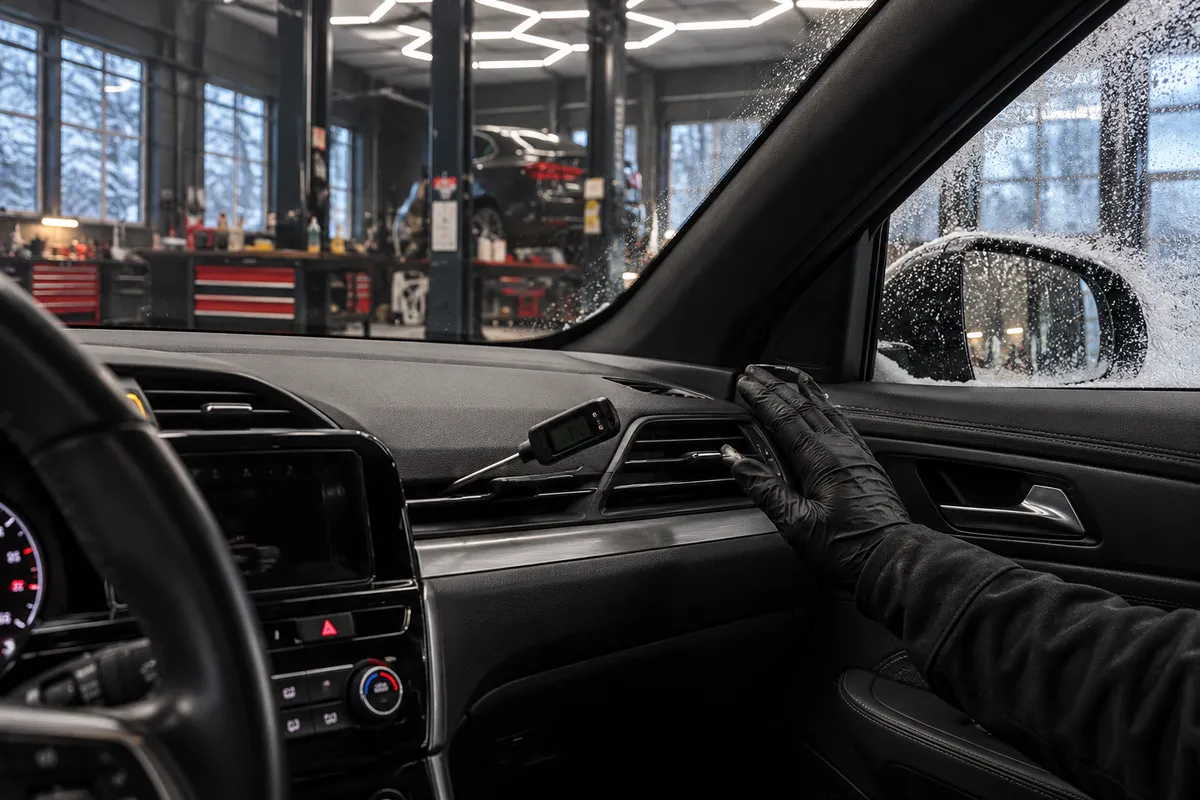
- 4With a warm engine, carefully touch both hoses going to the heater core at the bulkhead — one clearly colder points to a blockage or no flow.
- 5Change the temperature and air direction settings while listening for clicking and the doors moving.
- 6Check for a sweet smell in the cabin and a greasy film on the windows.
Such observations speed up the diagnosis in the workshop a lot. Also note when the symptom appears: straight after starting, only on the open road, when stationary or only in low temperatures.
Hoses and engine parts can be very hot — touch them briefly and carefully. Keep your hands away from the radiator fan, which can switch on even after the engine is turned off.
When cold air from the vents is dangerous
- The temperature gauge rises or the temperature warning light comes on — stop in a safe place and switch off the engine. Cold air with an overheating engine often means the system has run out of coolant.
- Coolant keeps disappearing with no visible leak anywhere — it may be getting into the combustion chamber.
- Sweet-smelling white smoke from the exhaust after the engine warms up, bubbles in the expansion tank, hard hoses right after starting.
- Light, mayonnaise-like residue under the oil filler cap — although in winter it can also be caused simply by short trips.
- Misted windows with a greasy film and a sweet smell in the cabin — typical signs of a leaking heater core.
Coolant loss with white smoke and bubbles are classic signs of a failed head gasket — more in the article head gasket failure symptoms. Driving with an overheating engine can turn a cheap thermostat or hose repair into an expensive overhaul within minutes. Misting windows, in turn, reduce visibility — causes and fixes are in our guide car windows misting up.
How we check it at Pulsecar
- 1A talk with the driver: since when the problem has been there, whether coolant was topped up or changed, what repairs the car has had recently.
- 2Computer diagnostics: engine and climate/heating fault codes, coolant temperature in live data, operation of the thermostat and — if the car has one — the electric pump.
- 3Checking the coolant level and condition, and a pressure test of the system.
- 4Measuring the temperature at the heater core inlet and outlet and at the vents.
- 5Testing the actuators and blend doors, calibrating them if needed.
- 6If a head gasket problem is suspected — an additional test for exhaust gases in the coolant.
- 7Presenting the result with photos and a quote for approval — we start work only after you agree.
This approach avoids replacing parts “on spec”. A new thermostat will not help if the blend door actuator is to blame, and topping up coolant will not solve the problem when it is leaking out through the pump. More about cooling system repairs is on the cooling system page.
How much does a heater repair cost in Warsaw
| Service | Price (labour) |
|---|---|
| Computer diagnostics | 100 zł |
| Coolant change | from 200 zł |
| Head gasket replacement | from 1000 zł |
| Thermostat, water pump, heater core, blend door actuators | quoted after diagnosis |
Prices are for labour; parts are quoted separately depending on the model. The cost of replacing a thermostat, pump or heater core depends on the car’s design — in one model it is a short job, in another it means taking apart many components — so we give it in the quote after diagnosis. We give a 6-month warranty on labour, and new parts are covered by the manufacturer’s warranty. Current prices are in our price list.
Pulsecar is at ul. Arkuszowa 176 in Warsaw’s Bielany district. We are open Monday to Friday 09:00–18:00 and Saturdays 09:00–15:00. Book a visit online or call +48 571 058 591.