
Engine Temperature Light – What Does the Red Thermometer Mean?
A red engine temperature light usually means overheating or a serious cooling system warning. If it comes on while driving, stop the car safely and switch off the engine. Driving on can damage the head gasket, warp the cylinder head or harm other engine parts.
If the red thermometer lights up or an engine overheating message appears, stop in a safe place, switch off the engine and don't drive on until the cause has been found.
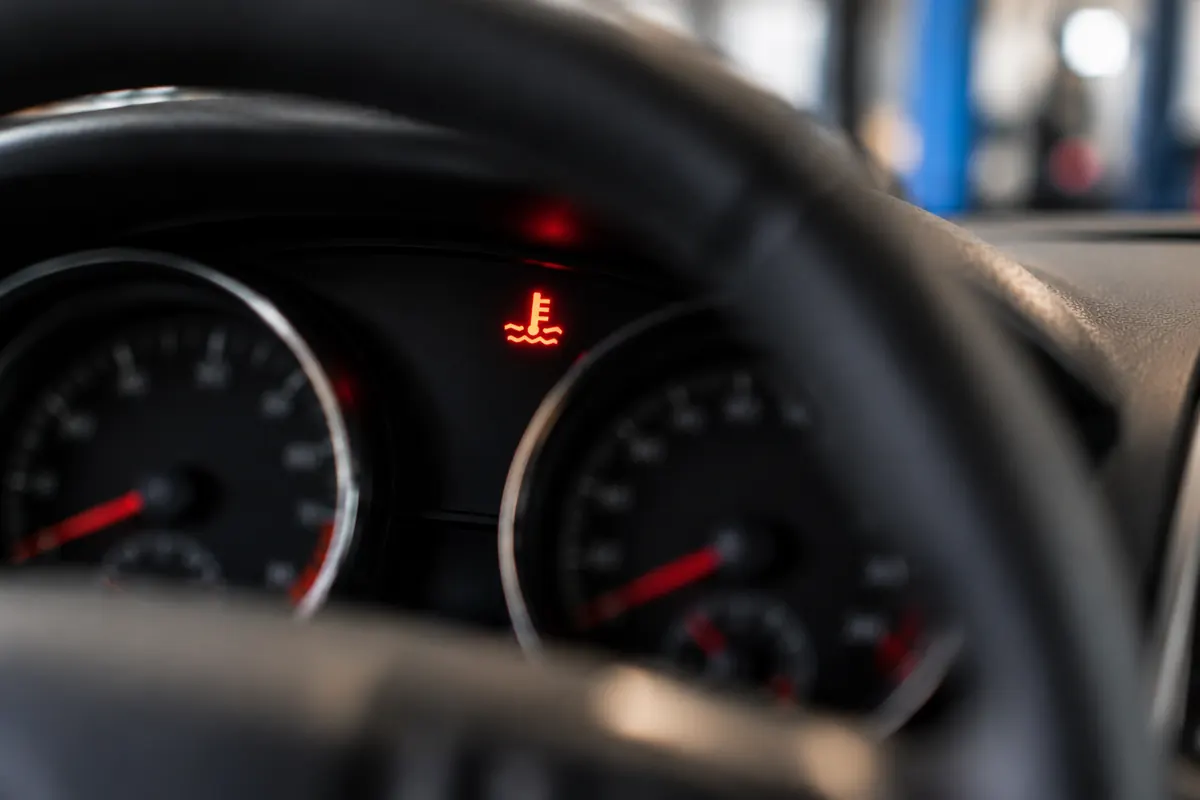
What does the engine temperature warning light mean?
The temperature symbol usually shows a thermometer immersed in wavy lines representing liquid. On many cars red signals excessive coolant temperature, while blue means the engine is cold. The exact symbols and meanings vary between manufacturers.
A blue light after starting a cold engine usually isn't a fault. It tells you the engine hasn't yet reached normal operating temperature. During this time it's best to avoid heavy loads and hard acceleration.
A red thermometer while driving calls for a different response. It may mean the temperature is too high, but on some models it can also indicate an incorrect coolant level. Check the message the car displays and the owner's manual.
Red thermometer on or flashing – can you drive?
- Blue thermometer after a cold start: usually just normal temperature information.
- Red thermometer while driving: stop the car and switch off the engine.
- Red symbol flashing: check the manual, but treat the warning as urgent.
- Temperature gauge rising fast: do not drive on.
- Steam from the bonnet or a coolant leak: don't open the hot cooling system.
If the light stays red, driving on is risky. The engine may be running above its permitted temperature, and overheating can lead to expensive damage.
A flashing red light can also mean a serious warning. On some cars the flashing pattern distinguishes a low coolant level from excessive temperature. Don't treat flashing as less urgent without checking the manual, though.
If steam is coming from under the bonnet, don't throw it open. Never open the expansion tank or radiator cap while the system is hot – coolant under pressure can cause burns.
Most common causes of the temperature warning light
| Cause | Other symptoms | Urgency |
|---|---|---|
| Coolant leak | Coolant loss, wet hoses, puddles under the car | Immediate |
| Faulty thermostat | Rapid temperature rise, coolant circulation problem | Immediate |
| Fan failure | Overheating, especially when stationary | Immediate |
| Water pump problem | Poor circulation, rising temperature | Immediate |
| Low coolant level | Level warning, heater may be weak | Check urgently |
| Blown head gasket | Coolant loss, possible gases in the system | Immediate if overheating |
| Temperature sensor or wiring | Illogical readings, other fault codes | Diagnose urgently |
Overheating can have several causes. Simply replacing the coolant won't solve the problem if the thermostat, fan or another cooling system part is faulty.
What to do when the red temperature light comes on
- 1Ease off the engine load and pull off the road safely.
- 2Stop the car and switch off the engine.
- 3If you can see steam, keep your distance from hot components.
- 4Don't open the expansion tank cap while the system is hot.
- 5Once it has cooled, check the coolant level only as described in the owner's manual.
- 6If the engine has overheated, arrange safe transport and book a cooling system check.
The priority is to stop the overheating without putting the driver and passengers at risk. Don't try to drive a few more kilometres with a persistent red warning.
Topping up coolant once the engine has cooled doesn't confirm the fault is gone. If coolant keeps disappearing or the temperature climbs again, the car needs diagnostics.
How we diagnose engine overheating at Pulsecar
Computer diagnostics costs 100 zł. We read the available fault codes and temperature data where the car's control unit provides them. The scope of further checks then depends on the symptoms.
The inspection may cover the coolant level, visible leaks, hoses, fan operation and the components responsible for coolant circulation. If there are signs of an internal leak, the engine may need further assessment.
Persistent overheating combined with coolant loss may justify checking the head gasket. That doesn't mean every cooling fault requires removing the cylinder head, though.
How much does a cooling system repair cost?
At Pulsecar a coolant change costs from 200 zł labour. Computer diagnostics costs 100 zł. Replacing the thermostat, radiator or water pump, or fixing a leak, is quoted after diagnostics.
If a blown head gasket is confirmed, the labour to replace it costs from 1000 zł. However, this repair shouldn't be assumed without first checking the cause of the overheating.
Before starting work we present a cost estimate for your approval. Labour comes with a 6-month warranty. Once the car is secured, you can pick a time via online booking.