
Tyre Pressure Warning Light – What Does TPMS Mean?
The tyre pressure warning light usually means the TPMS has detected low pressure in one or more tyres. It can also signal a faulty sensor or that the system needs recalibrating. First, stop the car safely and check the condition of the tyres.
If a tyre is clearly damaged or losing pressure fast, don't drive on; if the pressure drop is small and there's no damage, follow your owner's manual.
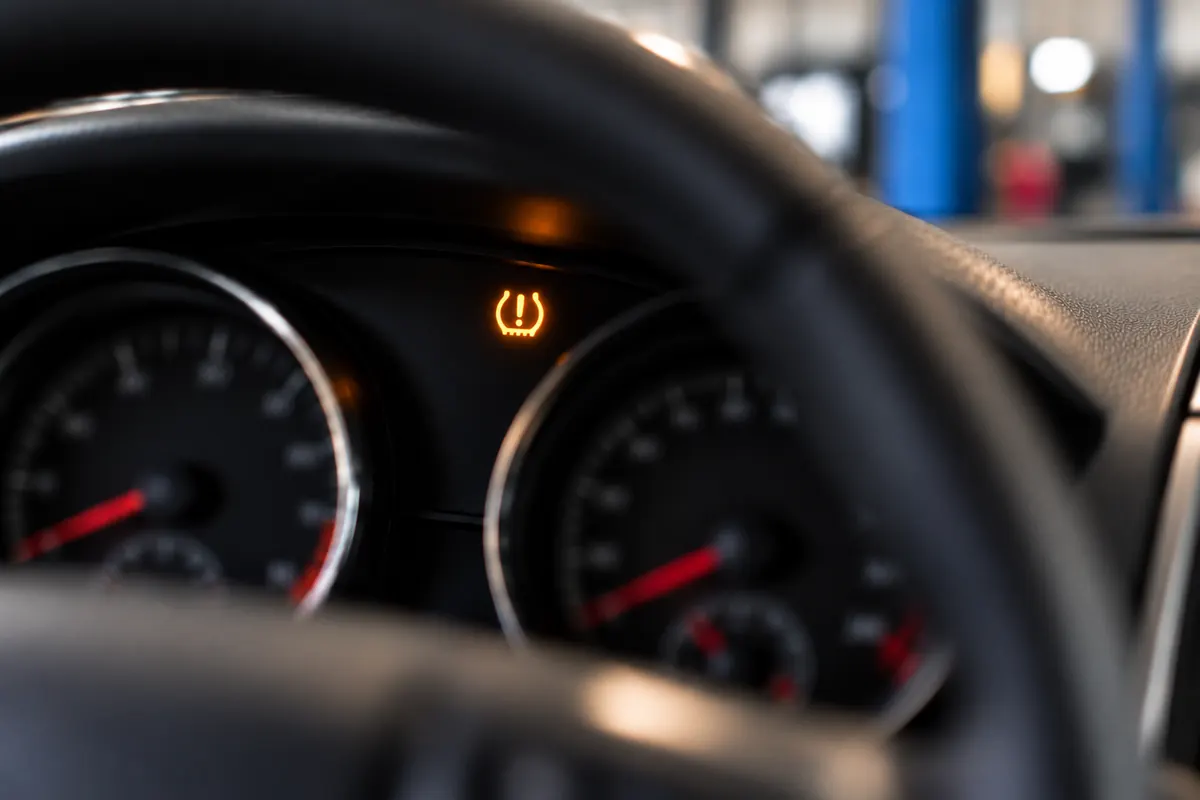
What does the TPMS light mean?
TPMS (Tire Pressure Monitoring System) monitors tyre pressure directly or indirectly. The light is usually yellow or amber and looks like a tyre cross-section with an exclamation mark. The exact symbol and how the system works depend on the car maker.
In a direct system, sensors at the wheels transmit pressure readings. An indirect system uses data from the wheel speed sensors and detects changes in how the wheels behave. Not every car shows exact pressure values for each tyre.
A brief flash when you switch on the ignition can be a normal test. A steady light while driving most often means a pressure warning. On many models, a light that flashes for a while and then stays on indicates a system fault.
Don't assume that no warning means correct pressure. The systems have set detection thresholds and don't always spot every change right away.
Tyre pressure light on or flashing – can you drive?
- Light stays on: check the pressure in all tyres.
- Light flashes, then stays on: possible TPMS fault.
- Tyre is visibly flat: don't drive on.
- Pressure is correct but the light stays on: check the calibration procedure.
- Warning appears when it gets colder: the drop in temperature may have lowered the pressure.
If the light comes on while driving, slow down and find a safe place to stop. Inspect all the tyres, looking for obvious flattening, sidewall damage and objects stuck in the tread.
If a tyre is clearly underinflated, driving on can overheat it and damage its structure. Don't keep driving on a tyre that won't hold pressure.
If there's no visible damage, measure the pressure with a gauge and compare it with the manufacturer's recommended values. These are usually on a sticker on the car or in the owner's manual – not on the tyre sidewall.
If the TPMS light flashes, the sensors or wiring may need diagnosing. Simply inflating the tyres doesn't always clear an electronic fault.
Most common causes of the TPMS light
| Cause | Other symptoms | Urgency |
|---|---|---|
| Puncture | Rapid pressure loss, car may pull | Immediate |
| Slow leak | Pressure drops over several days | Check urgently |
| Drop in temperature | Warning after a cold spell | Check pressure before driving |
| Faulty TPMS sensor | Light flashing, no reading | Diagnostics |
| No calibration after a wheel change | Light on despite correct pressure | Check settings |
| Indirect system problem | Warning without confirmed pressure loss | Diagnostics |
Pressure loss can result from natural temperature changes, a leak or tyre damage. On some cars the warning also appears after changing wheels without carrying out the required procedure.
What to do when the tyre pressure light comes on
- 1Slow down and stop the car safely.
- 2Inspect the tyres for damage and obvious flattening.
- 3Measure the pressure and compare it with the manufacturer's recommendations.
- 4If a tyre won't hold pressure, don't drive on – arrange appropriate assistance.
- 5Once the problem is fixed, calibrate the TPMS if your owner's manual requires it.
- 6If the light stays on, book computer diagnostics.
Don't reset the system before checking the actual pressure. In indirect systems, calibrating at the wrong values can make it harder to detect later changes.
It's best to check the pressure when the tyres are cold. It usually rises after driving, so don't automatically let air out of a warm tyre.
How we diagnose TPMS problems at Pulsecar
Computer diagnostics at Pulsecar costs 100 zł. We check the available messages and fault codes where the car allows them to be read. In direct systems, the sensors may also need checking.
It's important to tell genuine pressure loss apart from an electronics problem. If the cause is tyre damage, we need to assess whether it can be safely repaired or must be replaced.
If problems appear after a seasonal wheel change, it's worth checking the requirements of the specific system. Information about tyre services can be found on the tyre service page.
How much do TPMS diagnostics and repair cost?
Computer diagnostics costs 100 zł. Puncture repair, valve or sensor replacement and other TPMS-related work are priced after assessing the specific case.
Not every TPMS light means you need to buy a sensor. Sometimes restoring the correct pressure and carrying out the manufacturer's procedure is enough.
Before starting a repair we present a cost estimate for your approval. Labour comes with a 6-month warranty. You can book a visit via online booking.